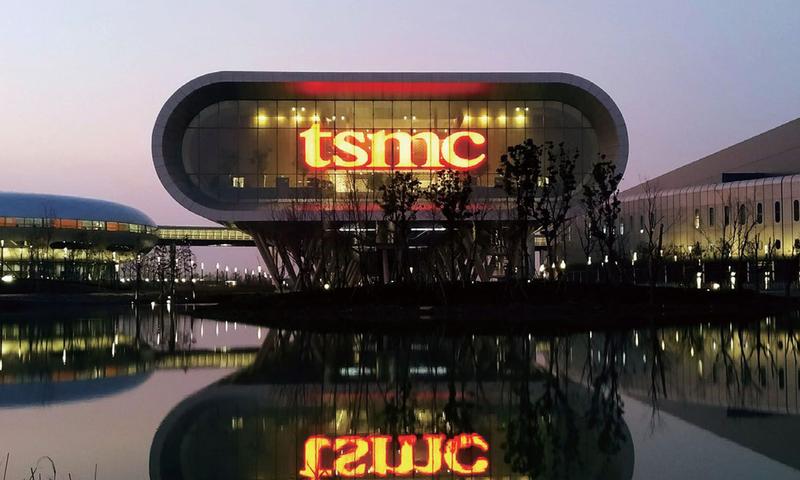
Taiwan Semiconductor Manufacturing reported record second-quarter profits driven by surging demand for AI chips, with revenue of NT$1.27 trillion(約200兆円) (roughly $40.2 billion(約6.4兆円)), up 36% year over year. The company raised its annual capex forecast to $60 billion(約9.6兆円)–$64 billion(約10兆円) and committed an additional $100 billion(約16兆円) to its Arizona facility for next-generation 2-nanometer chip production. TSMC's results contradict concerns about an AI bubble and underscore the company's critical role as the world's leading maker of advanced AI semiconductors.
Summaries like this, in your inbox every morning.
Sign up free →What happened
Taiwan Semiconductor Manufacturing reported second-quarter revenue of NT$1.27 trillion(約200兆円) (roughly $40.2 billion(約6.4兆円)), up 36% year over year, with net profit margin surging to 55.6% from 42.7%. The company raised its annual capex forecast to $60 billion(約9.6兆円)–$64 billion(約10兆円) (from $52 billion(約8.3兆円)–$56 billion(約9兆円)) and announced a $100 billion(約16兆円) additional investment in its Arizona facility, bringing total Arizona investment to $265 billion(約42兆円) for 2-nanometer chip production.
Why it matters
TSMC's record results are the clearest evidence yet that AI adoption continues to grow, contradicting concerns about an AI bubble. The company's dominance in advanced semiconductors—with 3nm, 5nm, and 7nm processes accounting for 74% of revenue—makes it a critical gatekeeper for the AI infrastructure that underpins the global AI buildout. For businesses and investors, TSMC's results signal sustained demand for AI hardware, though the aggressive capex increase may pressure margins near term.
What to watch
TSMC is guiding for third-quarter revenue of $44.6 billion(約7.1兆円)–$45.8 billion(約7.3兆円) (37% growth at midpoint), with gross and operating margins of 66% and 57% respectively. The company also noted that capital spending over the coming three years will be 'significantly higher' than the past three years, signaling sustained investment in advanced chip production capacity.
Taiwan Semiconductor Manufacturing delivered a record second quarter that stands as the clearest evidence yet that the AI revolution is sustaining momentum. For the period, TSMC generated revenue of NT$1.27 trillion(約200兆円) (roughly $40.2 billion(約6.4兆円)), representing 36% year-over-year growth. More striking were the company's profit margins: gross margin climbed 910 basis points to 67.7%, up from 58.6%, while net profit margin surged 1290 basis points to 55.6%, up from 42.7%. This dramatic margin expansion drove diluted earnings per share to a record NT$27.25, up 77% year over year and 23% quarter over quarter.
The growth was underpinned by exceptional strength across TSMC's most advanced process technologies. The company's 3-nanometer, 5-nanometer, and 7-nanometer wafers accounted for 30%, 33%, and 11% of revenue, respectively—collectively representing three-quarters of quarterly sales. Chips used in high-performance computing (HPC)—the primary compute engine for AI training and inference workloads—provided the lion's share of revenue at 66%, while smartphone chips made up 22%. This concentration of revenue in advanced nodes and HPC applications underscores that AI infrastructure spending is not scattered across legacy processes but concentrated in TSMC's most valuable product lines.
Looking ahead, TSMC signaled aggressive investment to meet continued demand. The company raised its annual capex forecast to $60 billion(約9.6兆円)–$64 billion(約10兆円), up from a previous guidance of $52 billion(約8.3兆円)–$56 billion(約9兆円), and disclosed that capital spending over the coming three years would be 'significantly higher' than during the past three years. In a separate development, TSMC announced an additional $100 billion(約16兆円) investment in its Arizona facility, bringing its total Arizona investment to $265 billion(約42兆円). CEO C.C. Wei stated that this expansion would 'build several or more semiconductor logical wafer fab for two-nanometer MP [mass production] technologies, as well as advanced packaging fabs to support the strong multi-year demand from our leading U.S. customers.' These 2-nanometer chips represent the next generation of TSMC's leading-edge semiconductors and signal the company's confidence in sustained, multi-year AI demand.
For the third quarter, TSMC is guiding for revenue of $44.6 billion(約7.1兆円) to $45.8 billion(約7.3兆円), which would represent 37% growth at the midpoint. The company is forecasting gross profit and operating profit margins of 66% and 57%, respectively. Notably, these projections run counter to industry concerns that demand for AI chips will slow. TSMC's robust results and strong forward guidance suggest that despite popular narratives about a potential AI bubble, adoption and infrastructure spending continue to expand. The company's near-monopoly in advanced semiconductors—evidenced by its dominant share in cutting-edge process nodes—and its modest valuation of 34 times current earnings and 25 times forward earnings underscore its critical position underpinning the global AI revolution.
TSMC's record second-quarter results reflect a fundamental shift in the semiconductor industry tied directly to AI buildout. The company's gross margin climbed 910 basis points to 67.7%, and its net profit margin surged 1290 basis points to 55.6%, driven by what the company describes as 'growing operating leverage.' This margin expansion is crucial because it demonstrates that TSMC is not merely benefiting from higher volume but also from improved efficiency in its most advanced processes—the ones that power AI infrastructure.
The composition of TSMC's revenue tells a clear story about where AI spending is concentrated. High-performance computing (HPC) chips—the workhorses behind data center AI training and inference—now account for 66% of quarterly revenue, compared to smartphone chips at 22%. More granularly, TSMC's three most advanced process nodes (3nm, 5nm, and 7nm) collectively generated 74% of revenue, signaling that AI demand is concentrated in the company's most profitable, cutting-edge manufacturing technologies. This concentration matters because it explains both the margin expansion and the company's aggressive capex plans: demand for these specific nodes is so strong that TSMC must invest heavily to expand capacity, even though near-term margin pressure from those investments is likely. CEO C.C. Wei's statement that the Arizona facility expansion targets 'the strong multi-year demand from our leading U.S. customers' reinforces that this demand is not a short-term spike but a structural shift in how tech giants allocate spending.
AI-summarized, only the topics you pick — one digest a day via Email, Slack, or Discord.
Free · takes 30 seconds · unsubscribe anytime
No discussion yet for this article
Get curated AI news from 200+ sources delivered daily to your inbox. Free to use.
Get Started FreeFree · takes 30 seconds · unsubscribe anytime
1 minute a day. The AI essentials.
200+ sources · Email / LINE / Slack
