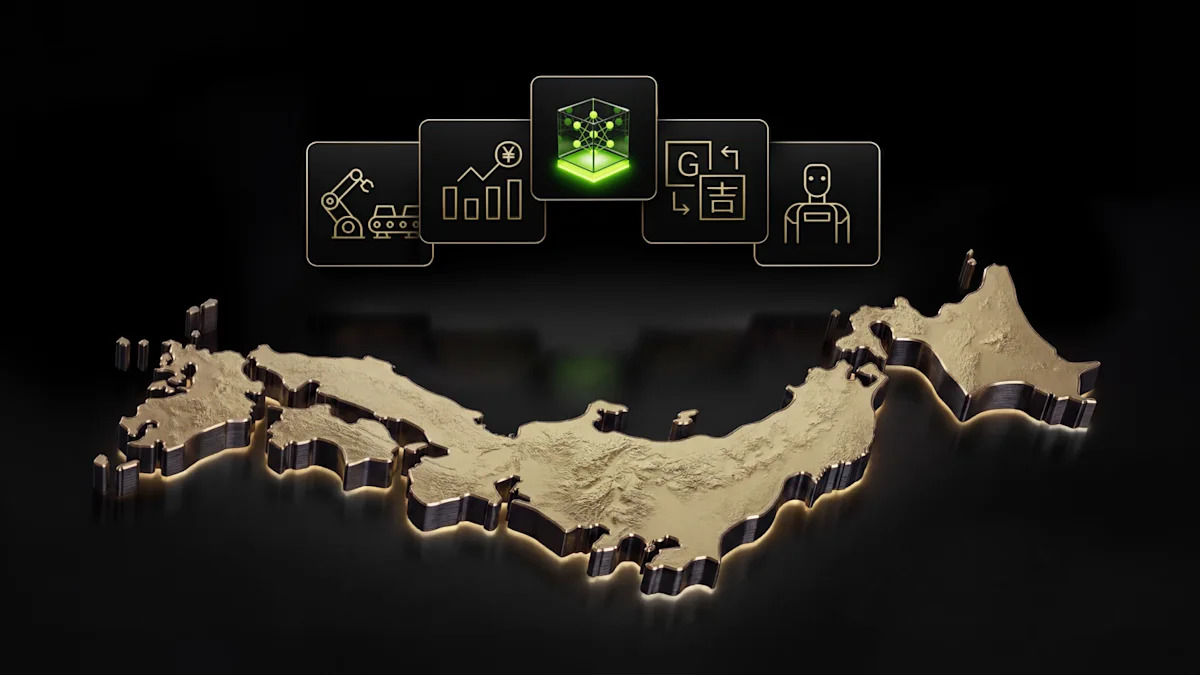
NVIDIA announced that major Japanese enterprises and research institutions are building industry-specialized AI using NVIDIA Nemotron open models to serve Japanese users, businesses and institutions. Institute of Science Tokyo developed the Swallow family of models using Nemotron datasets and NVIDIA NeMo software, enhancing Japanese language performance while preserving core capabilities in English, math and coding. This effort addresses Japan's aging population and workforce transition by enabling organizations to build and control AI tailored to their local industries and needs.
Summaries like this, in your inbox every morning.
Sign up free →What happened
NVIDIA announced on July 15, 2026, that leading Japanese enterprises, startups and research institutions—including Institute of Science Tokyo, SoftBank Corp.'s SB Intuitions, Stockmark, avatarin, ENEOS Holdings, Hitachi, NTT DATA and Sakana AI—are building industry-specialized AI models using NVIDIA Nemotron open models, data and libraries. Institute of Science Tokyo developed its Swallow family of foundation models using NVIDIA Nemotron datasets and NVIDIA NeMo software, enhancing Japanese language and reasoning while preserving English, math and coding capabilities.
Why it matters
Japan faces an aging population and workforce transition, creating demand for AI tailored to local industries. Open models give Japanese organizations control over their AI infrastructure—the ability to customize, deploy and govern AI they build themselves—enabling them to strengthen the workforce, sustain productivity and accelerate innovation without dependence on foreign vendors.
What to watch
Enterprises are already customizing and deploying Swallow for specialized use cases including financial-document translation and asset-management report generation. Sakana AI is integrating NVIDIA Nemotron into its Fugu model-routing platform to intelligently orchestrate and select the best model for each task.
On July 15, 2026, NVIDIA announced that leading Japanese enterprises, startups and research institutions are building industry-specialized AI models and applications with NVIDIA Nemotron open models, data and libraries. The initiative aims to accelerate development of AI tailored to Japan's language, industries and workforce at a time when the country faces an aging population and workforce transition.
Institute of Science Tokyo has developed its Swallow family of open foundation models using NVIDIA Nemotron datasets and the NVIDIA NeMo software stack for continual pretraining and post-training. Swallow models enhance Japanese language and reasoning performance while preserving the underlying models' core English, math and coding capabilities. Enterprises are already customizing and deploying Swallow for specialized use cases, including financial-document translation and asset-management report generation.
A broader set of Japanese organizations are building Japanese-language AI applications with NVIDIA Nemotron. SoftBank Corp.'s SB Intuitions and Stockmark are adopting Nemotron to build locally developed AI models designed to serve Japanese users, businesses and institutions. Meanwhile, enterprises avatarin, ENEOS Holdings, Hitachi and NTT DATA are building applications ranging from remote-presence robotics to enterprise agents and specialized medical and contact-center solutions. Sakana AI is integrating NVIDIA Nemotron into its Fugu model-routing platform, expanding the set of AI models Fugu can intelligently orchestrate to dynamically select the best model for each task.
NVIDIA founder and CEO Jensen Huang framed the initiative in terms of national capability and autonomy: "Every nation and every company should own and control its intelligence infrastructure. Open models make that possible. They give countries, enterprises and researchers the freedom to inspect, improve, adapt, secure and deploy AI for their own needs." The emphasis on open models reflects the broader strategic argument that Japanese organizations need to build and govern their own AI systems rather than depend entirely on foreign vendors, particularly as the country navigates demographic and economic transitions.
Japan's adoption of NVIDIA Nemotron reflects a strategic shift toward domestically controlled AI infrastructure. The country faces well-documented demographic challenges—an aging population and workforce transition—that make locally tailored AI solutions particularly urgent for maintaining productivity and innovation capacity. By building on open models rather than relying solely on closed proprietary systems, Japanese organizations can customize AI for their specific industries, languages and regulatory environments.
The announcement clusters around two complementary approaches: foundational model development (Institute of Science Tokyo's Swallow family) and application-layer integration (enterprises building Japanese-language applications and Sakana AI's model orchestration). This breadth suggests that Nemotron is being adopted across the stack—from model training through downstream deployment. The specificity of use cases mentioned (financial-document translation, asset-management reporting, remote-presence robotics, medical and contact-center agents) indicates that this is not a generic pilot but rather targeted problem-solving in economically critical domains.
AI-summarized, only the topics you pick — one digest a day via Email, Slack, or Discord.
Free · takes 30 seconds · unsubscribe anytime
No discussion yet for this article
Get curated AI news from 200+ sources delivered daily to your inbox. Free to use.
Get Started FreeFree · takes 30 seconds · unsubscribe anytime
1 minute a day. The AI essentials.
200+ sources · Email / LINE / Slack
