AI Coding Assistants
Jul 24, 2026
The Gist
AI coding assistants continue to advance with Claude improving its API documentation routing and accuracy, while open-source alternatives are emerging that reduce costs significantly by learning codebases more efficiently. New tools like Corv are expanding what AI agents can do by supporting advanced features like detached jobs, and creative projects like pixtuoid are reimagining how developers interact with AI coding helpers. Researchers are also pushing boundaries with novel approaches such as compiling computation graphs directly into transformer weights without traditional training.
Today's Stories
- 1
Claude gets ROS 2 docs routing, cuts API guesses in half
Anthropic has added skill documentation to Claude that routes users to official ROS 2 Jazzy documentation instead of generating guesses about APIs. A before-and-after test shows the change cut incorrect API references in half. Robot developers using ROS 2 Jazzy now get accurate, official documentation links rather than fabricated API calls. This reduces the time spent debugging incorrect code and improves the reliability of Claude for robotics work.
The measured improvement (50% reduction in API errors) suggests this pattern—grounding AI responses in official docs—could extend to other technical frameworks where accuracy is critical.
- 2
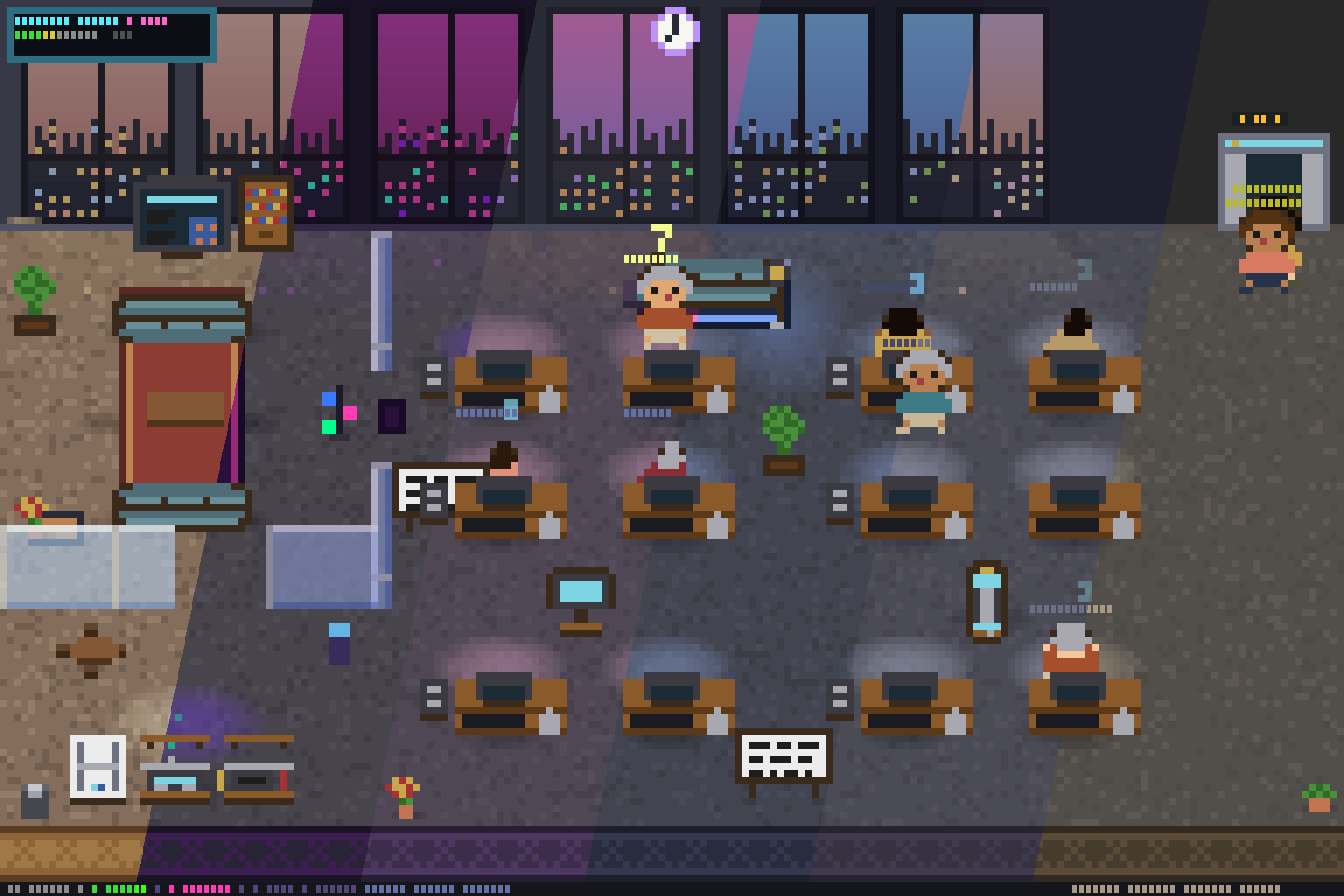
pixtuoid: AI coding agents shown as pixel-art office coworkers
pixtuoid, a new open-source tool, visualizes multiple AI coding agents running in parallel as animated pixel-art characters working at desks in a shared terminal office. Users can monitor agent status—typing, waiting for input, or idle—by glancing at a single dashboard instead of alt-tabbing between terminals. Running several coding agents at once creates friction: developers must switch between terminals to track who is stuck, who needs permission, and who has finished. pixtuoid collapses that into one "glanceable multi-agent dashboard," letting teams see the whole room's activity at once. The tool supports ten agent CLIs (Claude Code, Codex, Antigravity, DeepSeek-Reasonix, and others) with no separate install step—users connect via the Sources panel and agents appear automatically.
pixtuoid is open-source (MIT license) and available now via Homebrew, npm, Cargo, and prebuilt binaries. Installation and setup are documented on the project site; contributions are welcome, especially new themes and adapters for additional agent CLIs. The tool is local-only with no network connections or telemetry.
- 3
Corv v1.1 SSH client for AI agents now supports detached jobs and warm connections
Corv v1.1, an SSH client designed for AI agents, was released with features including connection reuse through a local broker, structured JSON output, detached long-running jobs with resume capability, and encrypted credential storage. Agents can execute commands by connection name without exposing passwords or private keys. AI agents (Claude, Codex, and others) traditionally struggle with SSH—they must manage authentication, connection details, and terminal parsing themselves. Corv eliminates that overhead by providing a unified interface that keeps secrets local, reuses warm authenticated connections to avoid repeated setup costs, and returns structured output agents can parse directly. This reduces the infrastructure burden on agent workflows across Windows, macOS, and Linux.
The tool is available for immediate install via curl, PowerShell, or Go (go install github.com/khalid-src/corv-client/cmd/corv@latest). Ready-to-use integrations for Claude and Codex are included in the repository (integrations/claude/corv-ssh and integrations/codex/AGENTS.md). The local broker automatically exits after 15 minutes of idle time and installs nothing on the remote server.
- 4
Researcher builds compiler turning computation graphs into transformer weights—no training needed
A researcher created a compiler (named Torchwright) that converts computation graphs written in ordinary Python directly into the weights of a Phi-3-architecture transformer checkpoint. The output loads in standard Hugging Face with no custom code or trust_remote_code, and requires zero training. The work addresses a fundamental question about what algorithms transformers can express independent of learning. By compiling algorithms directly into weights rather than training them, it demonstrates that certain computations can be hardcoded into a transformer's structure—a finding relevant to understanding transformer capabilities and interpretability.
The researcher has published a detailed write-up and released twelve runnable examples in a public repository on GitHub, making the approach accessible for others to explore and build upon.
- 5
Open-source coding agent cuts costs 7%–75% by learning repos once
A developer built AutoDev Studio, an open-source AI coding agent that reuses a persistent knowledge base built from static analysis and a local embedding index, rather than re-exploring a repository from scratch for each task. On a test of 6 well-localized tasks across repositories up to ~82k LOC, it cost ~$1.70 per bug fix versus $6.83 for a cold Claude Code run, cutting costs by 7%–75%. Most AI coding agents spend money and tokens re-learning repository structure on every new task. By paying the localization cost once and turning future tasks into lookups, AutoDev Studio reduces the waste that makes AI-assisted development expensive for large codebases. The full benchmark, including cases where it loses, is documented in the README.
The agent uses a multi-stage workflow—PM agent drafts tickets, Dev agent writes code on an isolated branch, QA runs tests, and a different model family reviews the diff before opening a real Git pull request. The tool is open-source, so adoption and community feedback will determine whether the cost savings hold across different repository types and task complexity.
What to Watch
As AI coding assistants become more integrated into development workflows, watch for documentation-grounded approaches like pixtuoid to expand across other technical frameworks where accuracy is mission-critical—potentially reducing hallucinations industry-wide. Simultaneously, keep an eye on whether multi-stage agent workflows that separate concerns (drafting, coding, testing, review) can maintain their cost and quality gains as they scale to larger codebases and more complex tasks, with open-source adoption serving as the real test of their practical value.
Sources
- Claude Code skills for ROS 2 Jazzy that route to official docs instead of guessing APIs (measured before/after included)
- Ask HN: What's the best AI coding tool today?
- pixtuoid: AI coding agents, visualized as pixel-art coworkers in terminal office
- Show HN: Corv v1.1 is out! Solving SSH execution for AI agents
- I built a compiler that turns computation graphs into the weights of a vanilla transformer — no training anywhere [P]
- I built an open-source multi-agent SDLC harness that beats a cold Claude Code run on large repos, by learning the repo once. Real benchmarks (incl. where it loses) inside. [P]
- Anthropic launches Claude Opus 5, a cheaper AI model for coding, agents and enterprise workflows
- Why Cognition bought Poke: AI personality is becoming a competitive advantage
- Sakana claims its AI model router Fugu Ultra v1.1 now beats Fable 5 without even including it in the pool
- I Tried Building a Real App with AI. It Took a Year
Share this with a friend
Send today's roundup to anyone who wants to keep up.
Get daily AI news free with AIToday
200+ AI sources, summarized in 1 minute. Email / LINE / Slack.
Sign up free