Image Generation
Oct 3, 2026
The Gist
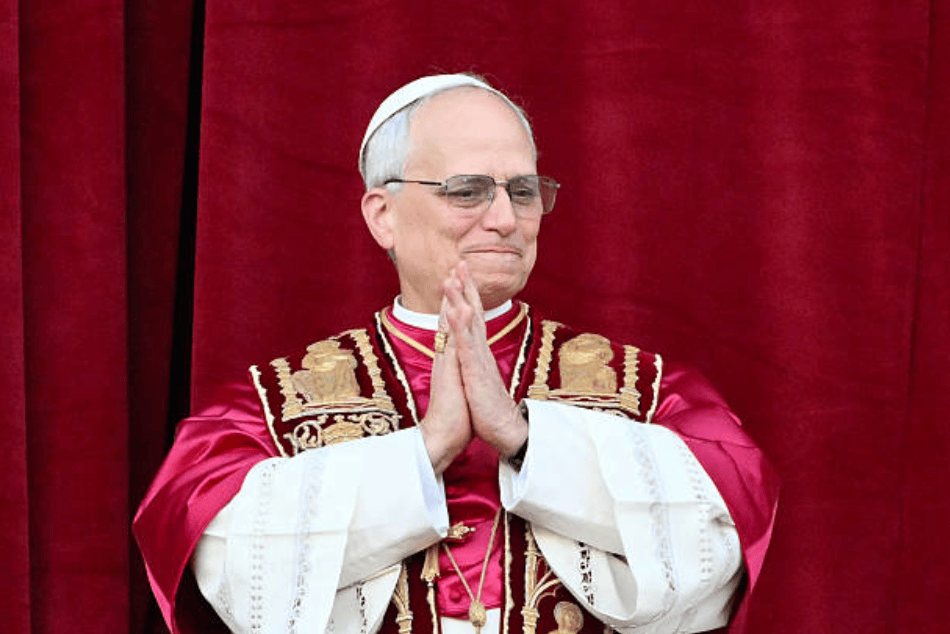
Today's image-generation news is split between technical leaps and a moral debate. Black Forest Labs launched Flux 3 for 4K images with multi-step editing, ChatGPT added virtual clothing try-on, Ideogram 4.5 can edit just parts of a picture for under a cent, and Alibaba open-sourced its Qwen-Image-2.1 model. Meanwhile, Pope Leo XIV said algorithms lack the spark of humanity.
Today's Stories
- 1
Pope Leo XIV: "Algorithms lack the spark of humanity"
Pope Leo XIV said in an X post Friday morning that "it is becoming urgent to distinguish human art from what machines produce," and that there is an "ontological difference" between the two. The pontiff's statement frames the output of machines as fundamentally different from human-made work rather than merely different in style or skill, a claim made as part of a call to protect human art.
The pope gave a fuller statement on AI in an encyclical in May, so watch whether this post is followed by further formal teaching; Anthropic has lobbied the Vatican on the non-human consciousness question, per a recent New York Times report, apparently without success.
- 2
Black Forest Labs launches Flux 3 Image with multi-step editing
Black Forest Labs released Flux 3 Image, an image model that it says can make multi-step edits without changing other parts of the image, handle text-to-image and image-to-image, and output up to 4K. The pitch that edits leave the rest of the picture untouched addresses a common problem in AI image tools, where changing one element can shift the whole picture.
Commercial weights can be licensed to run and fine-tune on a company's own infrastructure, and an open-weight version is expected in the coming weeks; the test is whether it matches the claim.
- 3
ChatGPT adds Try on virtual fitting, built on Images 2.5
OpenAI added a "Try on" button in ChatGPT, based on ChatGPT Images 2.5 announced on September 8, 2026. Tapping it prompts users to take or select a selfie, and the model generates them wearing the item. Users can also upload screenshots or product images and ask ChatGPT to put the item on them, so virtual fitting becomes a prompt away inside a chat app rather than a separate shopping tool.
A second new feature saves presented items to favorites, and OpenAI says try-on images get saved with them. Whether shoppers welcome this is unclear — the article notes Instinct's proactive product suggestions drew some user complaints.
- 4
Black Forest Labs drops FLUX 3 Image with 4K generation
Black Forest Labs released FLUX 3 Image, built on its FLUX 3 foundation model, offering up to 4K generation, bounding-box placement of subjects, pixel-level partial edits, and up to 10 reference images. Bounding-box control lets creators specify exactly where each subject sits in a scene, a level of precision that likely appeals to designers and marketers who currently rely on trial-and-error prompting.
The open-model version arrives within weeks, so the test is whether it matches the paid service's features. Watch whether Japanese text generation, shown in an example, ships in that version.
- 5
Ideogram 4.5 edits only selected image areas, from 0.8 cents
Ideogram launched Ideogram 4.5, which it says only touches the area users tell it to edit. It costs 0.8 to 22 cents per image across four quality tiers at native 2K resolution, and is live on the Ideogram platform and API. If the claim holds, creators editing a product shot or portrait can change one element without redoing the whole image. Ideogram says an open-weight release is coming soon, which could let others run a similar model themselves.
The test is whether consistency holds after many edits, since even leading models still tend to produce artifacts after repeated changes. Ideogram has not said when the open-weight release will arrive.
- 6
Alibaba's Qwen-Image-2.1 goes open-source at 7B
Alibaba's Qwen team open-sourced Qwen-Image-2.1 on September 20, 2026 — a 7B model generating 2048×2048 images in about 20 seconds at 25 steps. Because generation and editing now run through one set of weights, the multi-tool pipelines image AI users have relied on can be replaced by a single model on an ordinary PC, cutting workflow steps.
The license is the Qwen Research License, so commercial use needs a separate license — the test is whether teams building commercial products can secure those terms.
What to Watch
Watch whether the Vatican follows the pope’s May encyclical with further formal teaching on AI, and whether Anthropic gains any ground there after its reported lobbying push. Also keep an eye on the coming open-weight releases: the real test is whether they match the paid versions' features and hold up after many edits.
Sources
- Pope Leo XIV is not a fan of AI-generated art
- Black Forest Labs launches Flux 3 Image with multi-step editing that leaves the rest of your picture alone
- ChatGPTが服をバーチャル試着できる新機能を追加
- 画像生成AI「FLUX 3 Image」が登場、「最大4K生成」「被写体の位置指定」「一部分のみ編集」など高機能でオープンモデル版も数週間後に登場予定
- Ideogram says its new model can edit part of an image without messing up the rest
- Qwen-Image-2.1徹底解剖:2Kネイティブ出力+マルチ画像編集をComfyUIで完全制覇
- 画像から使いやすいAI画像プロンプトを作るための3つの視点
- DGX Sparkでゼロから始めるAIワークステーション AI監視カメラシステム、DGX Sparkで作るとどうなる?
- 画像生成AIのしくみ(第七話)
- AMDが3D世界を構築するAI企業「World Labs」を買収、「AIのゴッドマザー」が率いる画像・動画・3D空間の生成が可能な世界モデルの開発企業
- Corey Danaher’s Majestic Cityscapes: AI-Driven Architecture That Transforms Urban Visions
- Generate images and video with vLLM-Omni on SageMaker AI – Part 2
- Gemini、ClaudeとAdobeが連携 AIで作った画像や文書の編集、仕上げまで効率化
- 画像・動画生成AIのAPIを安さや制限の緩さで選んで簡単に使えるようにする「Comfy Router」が登場、OpenRouterのコンテンツ生成版
- アシックスの意外なAI活用 撮影・モデルなしで商品着装イメージ生成
- Adobe Stock And 2 Other AI Stocks To Own
Share this with a friend
Send today's roundup to anyone who wants to keep up.
Get daily AI news free with AIToday
Today's AI, for Today's work. Email / LINE / Slack.
Sign up free