Image Generation
Jun 20, 2026
The Gist
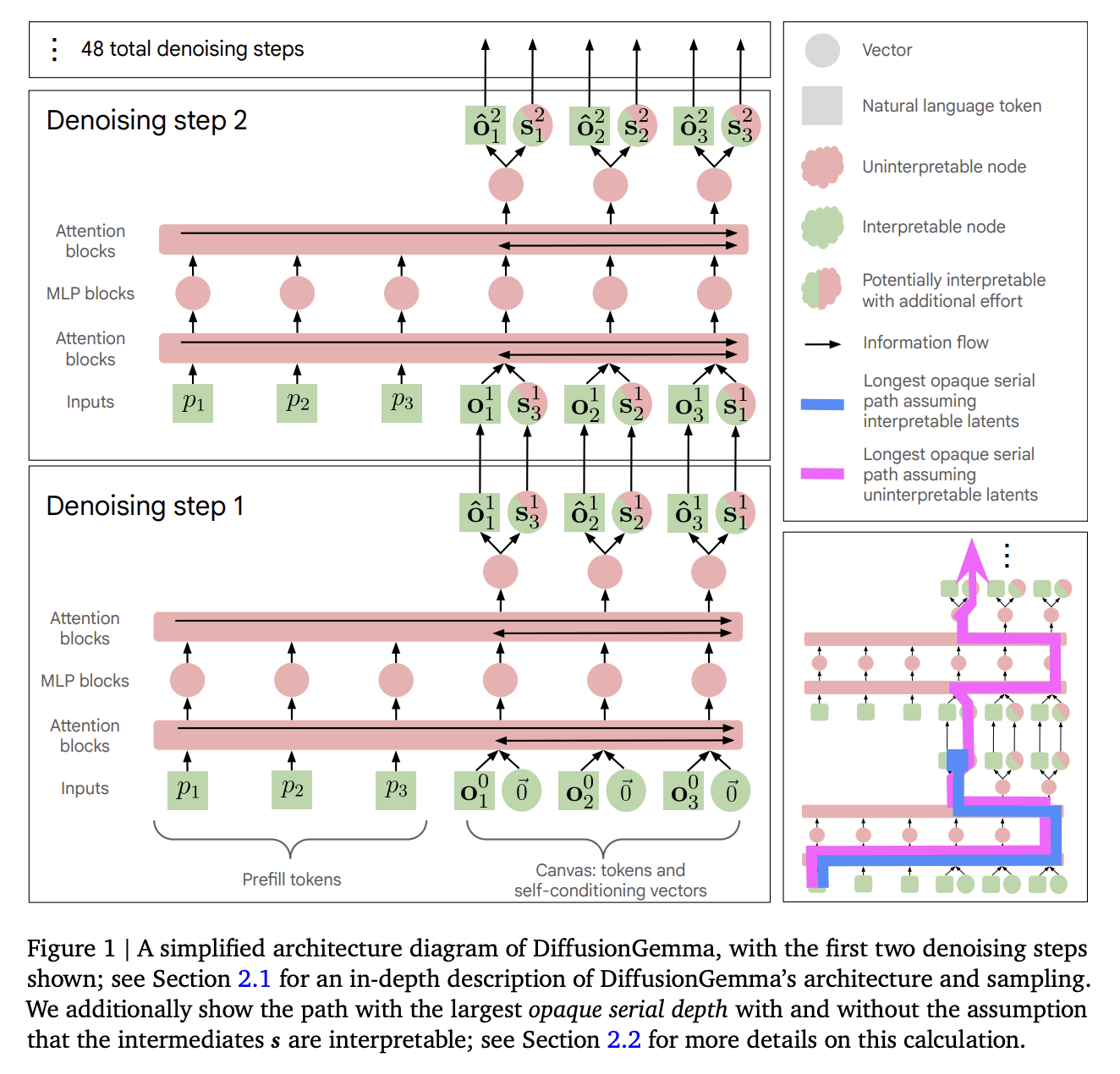
[Linkpost] How Transparent Is DiffusionGemma (and why it matters). Midjourney just built something you'd never expect. A software engineer argues LLMs should be used like editors for system design plans, not as replacements for skilled developers, to avoid long-term workforce and technical debt problems.
Today's Stories
- 1
[Linkpost] How Transparent Is DiffusionGemma (and why it matters)
[Linkpost] How Transparent Is DiffusionGemma (and why it matters)
- 2
Midjourney just built something you'd never expect
Midjourney just built something you'd never expect
- 3
A software engineer argues LLMs should be used like editors for system design plans, not as replacements for skilled developers, to avoid long-term workforce and technical debt problems.
An experienced software engineer reflected on how a colleague was using Claude (an AI assistant) to build code from detailed design documents—documents that closely resembled the formal requirements specifications used in traditional engineering decades ago. The engineer observed that LLMs are being positioned to automate work across multiple levels of system development, from architecture review to junior developer tasks. The engineer argues that LLMs are best suited to ensure consistency and catch missing elements in system designs—work similar to an editor's role—because they excel at "ensuring normalcy." Using LLMs to make major technical decisions (like team assignments) or to build critical systems directly risks creating undetected technical debt and losing the ability to develop skilled engineers who learn by doing. The concern is not that LLMs cannot perform these tasks, but that outsourcing core development work damages long-term organizational capability.
The engineer expresses skepticism that traditional engineering practices will be restored in modern workplaces, expecting instead that cost-focused leadership will prioritize short-term savings over workforce viability—a dynamic the author suggests is driven by leaders who may move to other roles before long-term consequences appear.
- 4
I made SHORT SQUEEZE, a finance movie trailer created with AI
I made SHORT SQUEEZE, a finance movie trailer created with AI
- 5
AI models trained on genomic data promise shortcuts to understanding disease, but biologists warn that the genome's regulatory complexity may resist the computational approach these algorithms assume.
Genomic foundation models such as Evo 2, Genos, and Google DeepMind's AlphaGenome are being trained on vast quantities of genomic data to make predictions about how DNA differences affect biological processes and disease risk. These algorithms use patterns learned from known cases rather than simulating the actual regulatory mechanisms. The human genome is far more complicated than a blueprint or algorithm. While only about 2% of the 3 billion DNA building blocks code for proteins, gene regulation—how genes are turned on and off—involves overlapping systems of control across hundreds of thousands or millions of regulatory elements called enhancers. Biologists have known about gene regulation since the 1960s, but in complex organisms like humans the logic operates on an 'AND' basis, integrating many signals at once, rather than the simple 'OR' logic of bacteria. This may mean a computational black box, however accurate, will not satisfy researchers who seek genuine understanding of how the genome actually works.
A leading genome biologist stated it is 'embarrassing that 25 years after the Human Genome Project, we don't know where all the enhancers are in the genome, let alone what they do when they act and which genes they control.' The mismatch between enhancers' physical distance from the genes they regulate—sometimes millions of nucleotides apart—poses a foundational puzzle that AI-driven pattern-matching may not resolve.
- 6
An AI-literate patient used frontier AI models with a structured four-step process to diagnose mystery fatigue symptoms that had eluded her primary care doctors, achieving consistent symptom relief for a month.
The author, who has a prolactinoma (a pituitary gland tumor) and experienced recurring fatigue episodes, developed a repeatable diagnostic method combining symptom tracking, testing, data analysis, and lifestyle experimentation—guided by reasoning models such as Claude Opus 4.8 or GPT 5.5. The models raised nearly every hypothesis her neuroendocrinologist's nurse practitioner offered and flagged a specialized test the NP independently ordered, despite not outperforming her top-specialist neuroendocrinologist. Most primary care visits are constrained by insufficient data, time, context, and physician presence; a thoughtful AI-guided process can overcome these structural limits. The author argues that the models easily beat every primary care doctor she saw, and that many people delay treating non-debilitating but impairing symptoms because prior visits yielded high bills and no solutions—a gap this approach may help fill.
The author provides a plug-and-play system prompt and coding-agent skill in the article's appendix, and emphasizes using paid-tier models with high reasoning effort as "the most worthwhile $20 I've spent in my health journey." The method requires uploading medical records and being detailed about test values and reference ranges, and does not apply to risky medical actions without physician approval.
What to Watch
The engineer expresses skepticism that traditional engineering practices will be restored in modern workplaces, expecting instead that cost-focused leadership will prioritize short-term savings over workforce viability—a dynamic the author suggests is driven by leaders who may move to other roles before long-term consequences appear. A leading genome biologist stated it is 'embarrassing that 25 years after the Human Genome Project, we don't know where all the enhancers are in the genome, let alone what they do when they act and which genes they control.' The mismatch between enhancers' physical distance from the genes they regulate—sometimes millions of nucleotides apart—poses a foundational puzzle that AI-driven pattern-matching may not resolve.
Sources
- [Linkpost] How Transparent Is DiffusionGemma (and why it matters)
- Midjourney just built something you'd never expect
- Getting Back to Basics by Abusing AI
- I made SHORT SQUEEZE, a finance movie trailer created with AI
- Why the Human Genome's Tangled Physicality May Confound AI
- I Solved My Mystery Fatigue with AI
- Automating model design for edge AI
- The data black hole at the center of AI
- One AI, two AI, red AI, blue AI
- IEA warns of oil supply glut
Share this with a friend
Send today's roundup to anyone who wants to keep up.
Get daily AI news free with AIToday
200+ AI sources, summarized in 1 minute. Email / LINE / Slack.
Sign up free