Top Companies' AI Moves
Jul 24, 2026
The Gist
Major tech and telecom companies are doubling down on AI infrastructure this week: Verizon is launching an AI inference business following strong earnings, NextEra Energy is planning AI data center expansion in Florida, and Corning is betting on AI-fiber technology to reach $24.3B in revenue by 2029. Meanwhile, Uber is cutting staff as AI advances automate jobs, while Amex and T-Mobile are investing in AI-powered consumer services—Amex launching a Gen Z-focused dining platform and T-Mobile positioning AI alongside 6G as the next growth driver.
Today's Stories
- 1
Verizon enters AI inference business after earnings beat
Verizon's stock rose following earnings results that exceeded expectations, and the company announced it is beginning to serve AI inference (the computational step where an AI model produces an answer) to enterprise customers. The move positions Verizon as a provider of cloud computing services for AI workloads, diversifying its business beyond traditional telecom. This represents entry into a high-value segment as enterprises build out their AI infrastructure.
The specific pricing, customer base size, and geographic availability of Verizon's inference service have not yet been detailed in public statements.
- 2
NextEra Energy eyes Florida for AI data center expansion
NextEra Energy, a major U.S. utility, is positioning Florida as a key market for powering artificial intelligence data centers, viewing the state as the next growth frontier for this emerging demand. Data centers running AI models consume enormous amounts of electricity, and utilities compete to provide reliable power to operators seeking new locations. NextEra's focus on Florida reflects how the AI infrastructure boom is reshaping energy markets and regional investment priorities.
The expansion depends on NextEra's ability to secure grid capacity and handle AI data centers' power demands alongside Florida's existing residential and commercial needs.
- 3
Uber cuts staff as AI advances threaten more job losses
Uber has laid off workers, with the article raising concerns that advances in artificial intelligence could displace additional jobs across the American workforce. The layoffs highlight a pattern where technology companies are shedding headcount as AI capabilities grow. This signals that AI-driven automation may increasingly affect employment across sectors, not just within tech.
The scope and pace of AI-related job displacement in major corporations and what policy responses emerge to address workforce transitions.
- 4
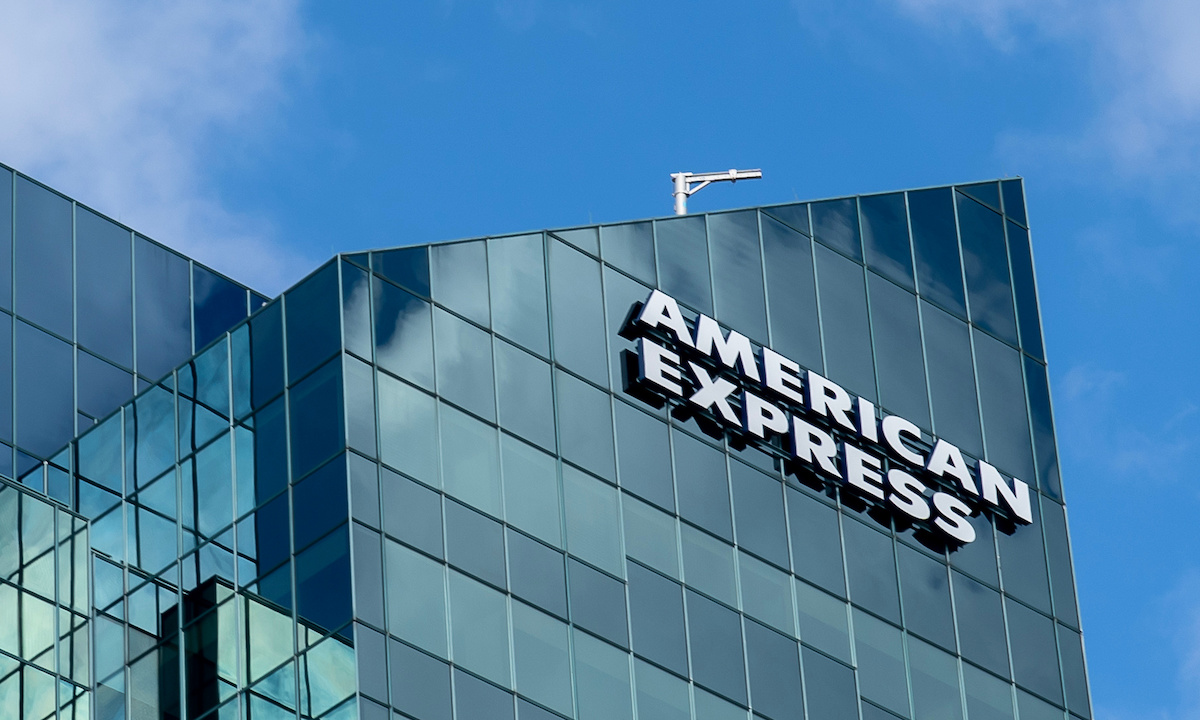
Amex Taps Gen Z Spending Surge, Builds AI-Powered Dining Platform
American Express reported 9% card spending growth (FX-adjusted) in Q2, driven by Gen Z spending up 40% year-over-year and millennials/Gen Z now accounting for 38% of U.S. consumer-billed business and 65% of new global consumer accounts. Consumer spending in the U.S. climbed 11%, its fastest growth since early 2018 excluding pandemic-distorted periods. Amex is positioning its closed-loop data—knowing both what customers intended and what merchants delivered—as a competitive edge for managing fraud and supporting agentic commerce (AI agents that make purchases on behalf of users). The company is building dining into a loyalty and data-collection platform through Resy, Tock, and its proposed acquisition of TheFork (adding 50,000 restaurants across 11 European countries), turning restaurant reservations and payments into touchpoints that feed AI and personalization.
Amex raised its full-year revenue growth forecast to 10% (from a range of 9% to 10%), though Q2 revenue growth of 10% came in below Wall Street expectations and shares dipped 5% in early trading Friday. The company is investing in agentic commerce initiatives not previously planned for 2026, signaling management sees AI-driven purchasing as material to its near-term roadmap.
- 5
T-Mobile eyes 6G and AI to replicate 5G success
T-Mobile is positioning itself to lead in 6G technology and artificial intelligence, aiming to build on the competitive advantage it gained through its early 5G deployment. The carrier's strategy reflects the telecom industry's shift toward next-generation networks and AI integration. For T-Mobile, success in 6G could cement its market position and drive subscriber growth, similar to how aggressive 5G rollout helped it gain ground on rivals.
Details on T-Mobile's 6G timeline, investment levels, and partnerships with technology vendors—the company has not yet disclosed specific deployment dates or funding commitments for these initiatives.
- 6
Corning's AI-fiber push targets $24.3B revenue by 2029
Corning is positioning its Optical Communications and Solar businesses as growth engines, backed by a multiyear partnership with NVIDIA to expand U.S.-based optical connectivity manufacturing for AI data centers. The company's Springboard plan targets $24.3 billion(約3.9兆円) revenue and $3.4 billion(約5400億円) earnings by 2029, requiring 15.8% yearly revenue growth. Corning aims to become a critical optical supplier for AI infrastructure, converting multi-billion-dollar supply commitments into sustained growth. However, the strategy carries concentration risk: a slowdown in AI or solar demand, or shifts in policy or technology, could undermine those projections and the narrative supporting current valuations.
Corning reports earnings on July 28. Execution in Optical Communications is the near-term catalyst, but the company's heavy reliance on AI and solar spending cycles means investors should monitor whether demand holds and whether competitive or policy headwinds emerge.
What to Watch
Watch for Verizon and T-Mobile to clarify pricing, availability, and investment timelines for their AI infrastructure services, as these details will determine how quickly they can compete in the booming market for AI compute capacity. Additionally, monitor whether companies like Amex, NextEra, and Corning can sustain their AI-driven growth forecasts amid rising energy demands, workforce disruptions, and potential policy shifts—with Corning's July 28 earnings providing an early signal of whether the AI spending momentum holds across the sector.
Sources
- Verizon’s stock rises after earnings — and a surprise entry into a new AI business area
- NextEra Energy sees Florida as next frontier for AI data center boom
- Do Uber AI Layoffs More American Jobs At Risk?
- Amex Turns Gen Z Loyalty Into an AI Advantage
- T-Mobile hopes to repeat its 5G magic with 6G and AI
- How Corning’s AI-Fiber Pivot and Springboard Plan May Reshape GLW’s Investment Narrative
- Intuitive Surgical (ISRG) Unveils Five Layer AI Plan And Live Telesurgery Demo
- Amphenol (APH) Rides AI Demand And Estimate Upgrades As Valuation Stays In Focus
- How AI is changing work at Amex
- Is Booking Holdings' $700 Million Reinvestment a Game Changer for 2026
Share this with a friend
Send today's roundup to anyone who wants to keep up.
Get daily AI news free with AIToday
200+ AI sources, summarized in 1 minute. Email / LINE / Slack.
Sign up free