Image Generation
Sep 14, 2026
The Gist
Hitachi has cut image AI processing time in half with a new re-encoding method, while TwelveLabs' Marengo Embed 3.0 is now available in Amazon Bedrock Knowledge Bases. Apple is adding a "Reference Image" feature to prove iPhone 18 Pro photos are real, and Google DeepMind recreated a 70-year love story in a piece called "Love, Rendered."
Today's Stories
- 1
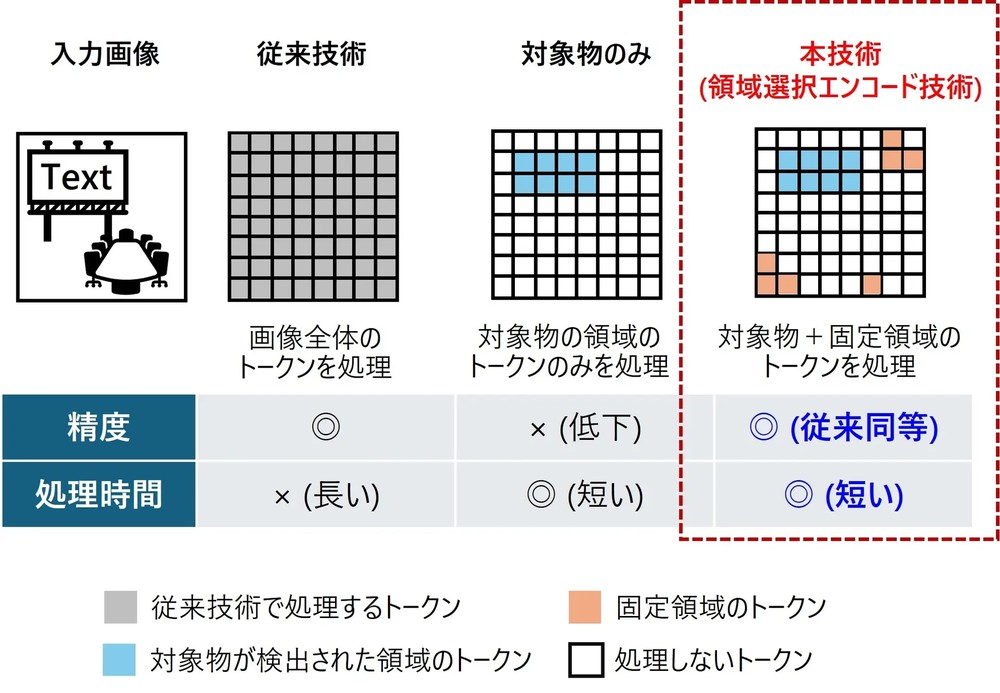
Hitachi unveils selective re-encoding that halves ViT image AI processing time
Hitachi announced on August 25, 2026 a selective re-encoding technology that reduces the average processing time for image data in AI analysis by half while maintaining accuracy, verified using Vision Transformer (ViT). Previously, ViT generated tokens for the entire image, leaving the processing time and computational load as a major challenge; the new method re-encodes only the tokens corresponding to regions deemed necessary, cutting token counts and halving processing time.
The value of the technology will be tested in real-world use cases, starting with image and video recognition AI, toward application to AI and social infrastructure; watch for deployment linked to Hitachi's AI strategy 'Lumada 3.0'.
- 2
TwelveLabs Marengo Embed 3.0 lands in Amazon Bedrock Knowledge Bases
AWS announced the general availability of TwelveLabs Marengo Embed 3.0 as an embedding model in Amazon Bedrock Knowledge Bases, a fully managed RAG service that ingests video (MP4, MOV), images (JPEG, PNG), and audio. Previously, semantic search over video meant stitching together transcription, frame extraction, embedding models, vector databases, and synchronization logic; AWS says Managed MKB now handles segmentation, frame sampling, and transcription internally.
Availability is limited to the US East (N. Virginia) and US West (N. California) Regions, so the test is whether AWS expands to more Regions. Embeddings generation with Marengo Embed 3.0 is charged at the standard Amazon Bedrock model invocation rate.
- 3
Apple Reference Image proves iPhone 18 Pro photo authenticity
Apple announced Apple Reference Image at its Surprise and Shine event. The feature creates an unalterable image from signed sensor data to verify a photo's authenticity. This addresses the challenge of AI-altered images, giving photojournalists and photographers a way to prove their iPhone 18 Pro photos are genuine. It is a real feature, not a concept.
The feature's success hinges on adoption by developers and support for standards like SynthID. Its effectiveness depends on how widely the APIs and verification methods are integrated.
- 4
Adobe on Photoshop in the Generative AI Era: The 'Professional' Standard
In an interview, an Adobe leader discussed Photoshop's role in the generative AI era and described the conditions for being considered a professional. This marks a shift from focusing on tool features to emphasizing the professional judgment and standards that AI tools alone may not provide, positioning professionals as those who uphold these standards.
The outcome hinges on whether Adobe's definition of the 'professional condition' will influence how Photoshop integrates generative AI features and how it addresses professional users' needs.
- 5
Apple's 'Reference Image' to prove photos aren't AI
Apple's new 'Reference Image' feature arrives with the iPhone 18 Pro lineup later this month, using the camera sensor to 'sign every pixel it sees.' Unlike existing labels like SynthID and C2PA, Apple builds authentication directly into hardware, creating an 'unalterable reference image' to compare edits.
The feature won't be available at launch in the EU, but users there can still develop and view images in iOS 27, iPadOS 27, and macOS 27.
- 6
Google DeepMind recreates 70-year love story in 'Love, Rendered'
Google DeepMind and Primordial Soup produced 'Love, Rendered,' a documentary short directed by Liz Garbus, recreating the Shatzes' unrecorded first meeting. The film uses image restoration and performance capture to map the couple's present-day micro-mannerisms onto younger likenesses, showing how AI can preserve fading memories.
The film's success hinges on whether AI recreations feel authentic; the Shatzes told the team the generated 'memory' felt authentic.
What to Watch
Keep an eye on whether AWS expands this beyond the US East and West Regions and whether developers widely adopt the APIs and verification standards like SynthID, since that will determine how quickly these tools reach real-world use. Also watch how Adobe's view of the "professional condition" shapes Photoshop's generative AI features, how the EU launch gap for iOS 27, iPadOS 27, and macOS 27 plays out, and whether AI-generated recreations, like the "memory" the Shatzes called authentic, truly feel real to audiences.
Sources
- 画像データのAI処理時間を半減する新技術を開発:人工知能ニュース
- Video and image search in Amazon Bedrock Knowledge Base using Marengo 3.0
- Apple has a new way prove your iPhone photos aren’t AI slop
- 生成AI時代、Photoshopが守るものとアドビの責任者が語る「プロの条件」
- Apple’s new iPhone camera mode promises to prove your photo isn’t AI
- Recreating a 70-year love story frame by frame
- ChatGPT Images 2.5: Faster, more precise, but not the same for everyone
- OpenAI’s ChatGPT Images gets faster, with sharper details and more refined edits
- 「ChatGPT Images 2.5」登場 特定部分の編集を強化、落書きの清書やテンプレート機能も
- Introducing ChatGPT Images 2.5
- 生成AI画像はなぜ“キショい”のか 消費者が抱く違和感の正体 広報のプロが解説(ITmedia NEWS)
- ChatGPT Sketch turns your bad drawings into detailed AI images
- Why vision AI is the safety backbone of the automated job site
- Introducing ChatGPT Images 2.5
- マラソン大会のポスターが“AIっぽい”と波紋 「説明に不適切な部分があった」と事務局声明
- Adobe is trying to make its AI generators idiot-proof in Premiere
Share this with a friend
Send today's roundup to anyone who wants to keep up.
Get daily AI news free with AIToday
Today's AI, for Today's work. Email / LINE / Slack.
Sign up free