Video Generation
Jul 17, 2026
The Gist
PixVerse, a video generation startup, has reached a $2 billion valuation following a $439 million Series C funding round, signaling strong investor confidence in the sector. Meanwhile, OpenAI has shut down its ChatGPT Atlas browser after less than a year, while Apple researchers are working on technology to generate synchronized video and audio from text descriptions. The broader AI landscape is shifting, with demand for AI capabilities expanding globally beyond the US as companies pursue sovereign AI strategies, though ROI for AI investments outside the tech industry may take longer to realize.
Today's Stories
- 1
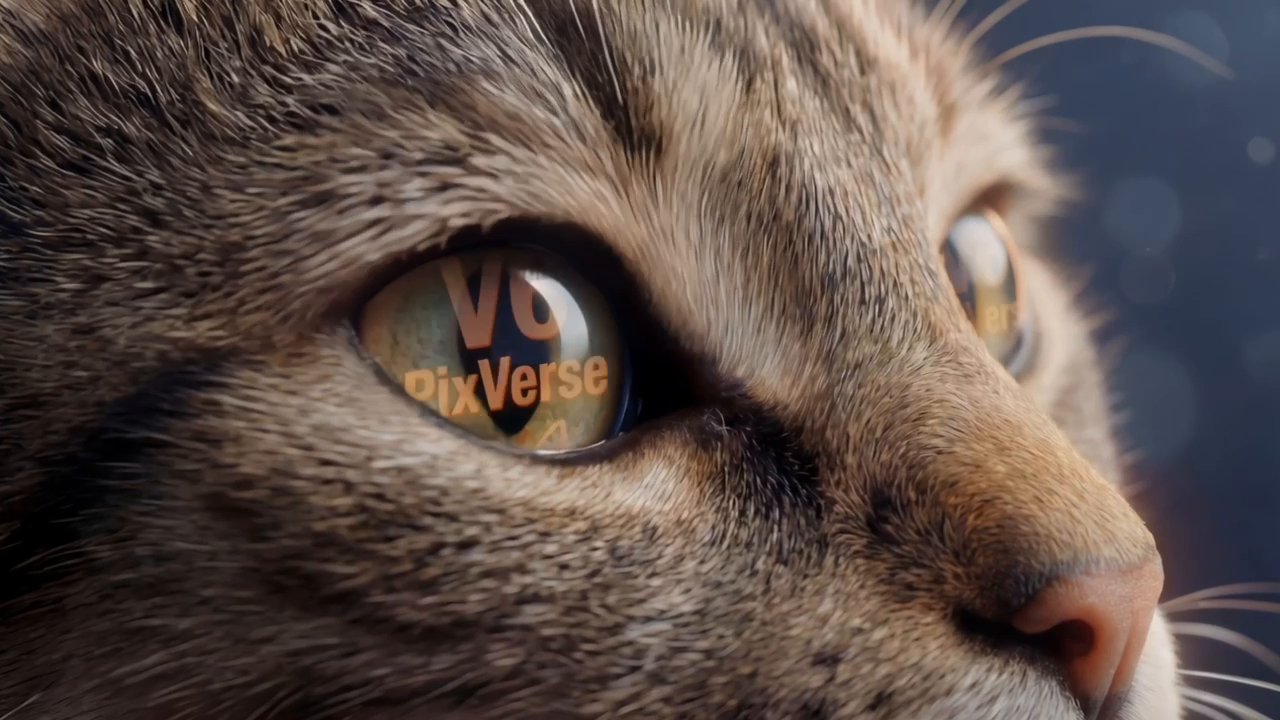
PixVerse reaches $2B valuation on $439M Series C funding
Singapore-based AI video startup PixVerse closed an extended Series C round at over $2 billion(約3200億円) valuation, raising $439 million(約700億円) from investors including Alibaba, Lollapalooza Capital, and Mirae Asset. The company, founded in 2023 by Wang Changhu (formerly of ByteDance) and Jaden Xie, offers models for video generation, film production, and world models for game development. PixVerse's valuation signals investor confidence that the AI video generation market has room for winners beyond OpenAI and established players. Co-founder Xie argues that only a handful of companies can deliver the quality needed—pointing to OpenAI's shutdown of Sora 2 and Meta and Tencent's struggles to build high-quality video models. The company's competitive edge stems partly from Changhu's experience building visual AI and data-labeling systems at ByteDance, a precision-labeling capability that now powers PixVerse's video platform.
PixVerse reports more than 150 million registered users and 15 million monthly active users. Competition remains intense, with ByteDance, Midjourney, Google, Runway, Luma, and others advancing video and world models at a similar pace.
- 2
OpenAI shutters ChatGPT Atlas browser after less than a year
OpenAI is shutting down ChatGPT Atlas, its browser launched in October, with deprecation targeted for August 9th. The company is rolling the lessons learned from Atlas into updated browser features in the desktop ChatGPT app and a new cloud browser for work mode. Atlas was designed to help users accomplish tasks on the open web on their behalf. OpenAI is consolidating what it learned from the experiment into more integrated productivity tools as it works to reduce side projects and catch up with Anthropic on work-focused features.
The August 9th sunset date for Atlas marks one of several recent product shutdowns by OpenAI, including the video generation app Sora and a paused ChatGPT "adult mode," suggesting the company is refocusing its priorities.
- 3
Wistron chair: AI demand expands beyond US as sovereign AI broadens
Wistron chairman Simon Lin stated that AI demand is expanding beyond the US as sovereign AI projects gain traction in more countries, marking entry into a new phase rather than a bubble. The shift toward sovereign AI (AI systems developed and controlled by individual nations) suggests wider adoption and more paid services globally, potentially extending the runway for AI infrastructure spending that benefits hardware makers like Wistron.
Lin's framing rejects the notion of an AI bubble, implying sustained long-term demand for AI infrastructure across geographies—a signal investors and vendors watch closely for capital spending forecasts.
- 4
Apple researchers tackle synchronized video-audio generation from text
Apple researchers published a study on Text-to-Sounding-Video (T2SV) generation, a technique that creates videos with synchronized audio from text descriptions, addressing two core technical problems: text conditioning bottlenecks and optimal cross-modal feature interaction. Generating videos where audio and visuals are naturally synchronized from a simple text prompt could streamline content creation for media professionals and developers, reducing manual audio-video synchronization work.
The research identifies shared captions as a source of modal interference and a gap between training captions and user prompts at inference time, signaling where future improvements in text-to-video-audio systems may focus.
- 5
AI ROI outside tech may take longer to materialize
An analysis of AI adoption patterns suggests that return on investment (ROI) timelines differ significantly between the technology sector and other industries, with non-tech sectors facing potentially extended periods before AI investments yield measurable financial returns. Companies outside tech—in finance, healthcare, manufacturing, and other sectors—may need to adjust expectations about when AI implementations will boost profitability. A longer ROI runway could affect capital allocation decisions and investor patience for AI-driven transformation projects.
Whether enterprises in non-tech industries report concrete productivity gains or revenue uplift from AI initiatives in the next 12–24 months, or whether initial deployments remain largely experimental with deferred financial impact.
What to Watch
Watch whether enterprises across non-tech industries can translate their AI investments into measurable productivity gains and revenue uplift over the next year or two, as this will signal whether the sector has moved beyond early experiments to delivering real business value. Simultaneously, keep an eye on how the intensifying competition between ByteDance, Google, Runway, and other players advances video generation capabilities—particularly their progress on resolving technical challenges like caption-induced interference—while OpenAI's recent product shutdowns suggest the field may be consolidating around fewer, more focused offerings rather than expanding broadly.
Sources
- PixVerse's $2B valuation shows investors still believe AI video generation has room for another winner
- The ChatGPT browser is already dead
- Wistron chair: AI demand remains strong as sovereign AI broadens global market
- Taming Text-to-Sounding Video Generation via Advanced Modality Condition and Interaction
- 1年でAfter AIの組織に生まれ変わったソラコム、「トークン資本」の安全な器へ
- AI: The ROI Runway Could Be Long Outside the Tech Sector
- OpenAI’s Sora shutting down as Disney exits deal
- VideoFlexTok: Flexible-Length Coarse-to-Fine Video Tokenization
- AI Music Video Generation: 10 Tools That Automate Your Creative Workflow in 2026
- Google launches Nano Banana 2 Lite for fast AI images and Gemini Omni Flash for video via API
Share this with a friend
Send today's roundup to anyone who wants to keep up.
Get daily AI news free with AIToday
200+ AI sources, summarized in 1 minute. Email / LINE / Slack.
Sign up free