Autonomous Driving
Sep 30, 2026
The Gist
Today's autonomous driving news highlights that Turing's self-driving feels natural but its AI decisions remain hard to interpret, while desynced sensor feeds can quietly corrupt vision-language-action and ADAS models. Tesla is forecasting FSD V15 and unsupervised driving soon, and Archer's Boeing unit deal has cleared the Hart-Scott-Rodino waiting period. Turing's smooth driving still comes with AI that cannot be read.
Today's Stories
- 1
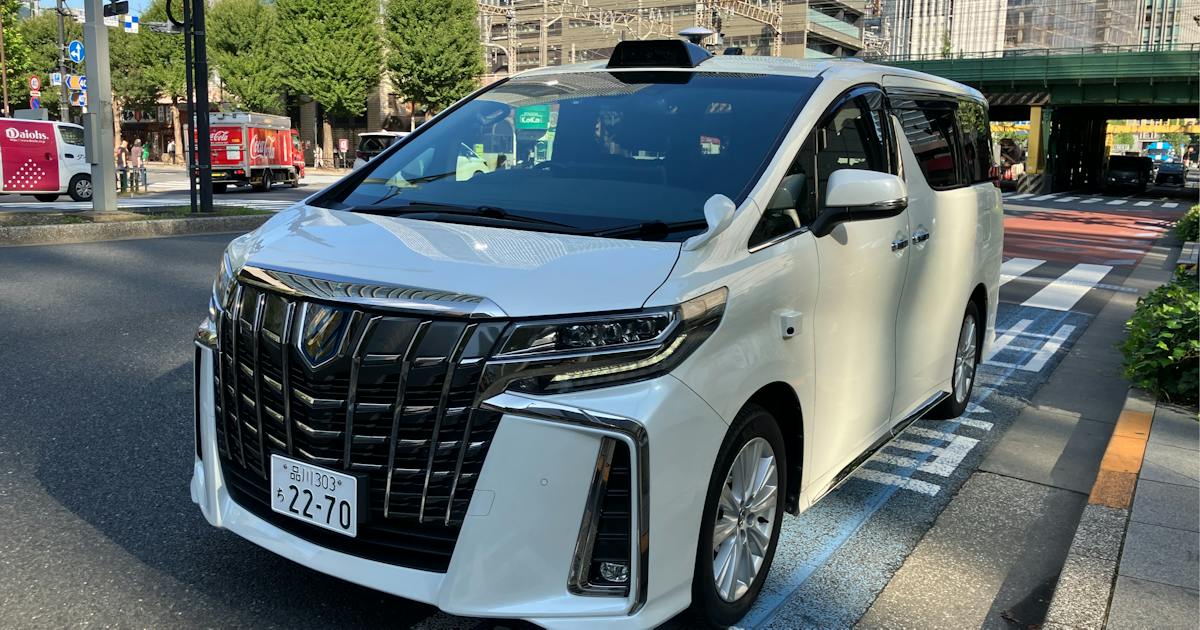
Turing autonomous drive feels natural, but AI unreadable
A test ride in Turing's self-driving car showed natural-feeling driving, yet there were moments the AI's thinking could not be read. The ride suggests Turing's autonomous driving may be smooth in practice, but its AI's decision-making appears hard to follow, which could complicate trust.
Whether Turing can make its AI's reasoning understandable will likely shape how riders and regulators judge it.
- 2
Desynced sensor feeds can silently corrupt VLA and ADAS models
The article uses an Xpeng owner's Reddit complaints — Spotify streaming dropouts, mistimed ADAS alerts, and a cabin thermometer reading 2 degrees off — as analogies for cross-modal misalignment in VLA training data. Each modality can pass its own quality check while sync errors slip through, so the model absorbs the contradiction into its weights and stops reflecting real-world physics, the article says.
The piece suggests source-level synchronization, not post-hoc alignment, is the fix, but the checklist is self-assessment guidance rather than a proven fix, and it ends with a Bright Data free trial offer for engineers.
- 3
Microsoft merges Office and coding into a single Copilot
Microsoft is consolidating Home, Code, and an OpenClaw-based Autopilot into Copilot. Autopilot's agents are an enterprise product that executes tasks unattended, raising the possibility that routine clerical and development work shifts to AI agents.
Home and Code are only slated for testing in Frontier, while Autopilot is unscheduled until the end of September 2026 and unproven.
- 4
Tesla's Ara bot forecast: FSD V15, Unsupervised driving soon
CleanTechnica writer Fritz Hasler says Tesla's in-car Grok bot, Ara, offered an unprompted forecast that FSD V15 will be released at the end of this year or the beginning of next, with Unsupervised Full Self Driving. If that forecast holds, a driver-assistance suite the author already calls essentially flawless on highways could arrive without a person at the wheel, which he sees as a major step for long trips.
The forecast is the bot's, not a Tesla announcement, and the author doubts V15 lands before next year — so the test is whether Unsupervised FSD is limited to highways or elsewhere. Watch the $99/month price.
- 5
Archer's Boeing unit deal clears Hart-Scott-Rodino wait
Archer Aviation's planned purchase of Boeing's Wisk Aero, SkyGrid and Insitu units passed the Hart-Scott-Rodino waiting period, which expired at 11:59 p.m. EDT on Sept. 18. The deal would fold autonomous flight systems, airspace software and uncrewed aircraft into Archer's platform for aerospace and defense.
The deal still needs other regulatory approvals and customary closing conditions; Archer expects it to close by the end of 2026.
- 6
AI Reaches Math Olympiad Gold Medal Level, 5 Years Ahead of Expert Forecasts
The Forecasting Research Institute announced that AI reached gold medal level at the International Mathematical Olympiad in July 2025, five years earlier than the median expert forecast. This milestone arrived years ahead of predictions by leading experts and seasoned superforecasters, suggesting AI capabilities may outpace expert judgment and policy tracking.
There were also overpredictions. Experts forecast autonomous vehicles would account for 7.3% of U.S. ride-hailing services in 2027, but LLM predictions came in at 2.5%. Whether FRI's rapid methodology can close the gap will be a key test.
What to Watch
For Turing, the key question is whether its AI can explain its own reasoning clearly enough for riders and regulators to trust it. And as FRI pushes its rapid forecasting method, watch whether it can close the gap between hype and reality—like the 7.3% vs. 2.5% ride-hailing divide—while Unsupervised FSD's $99/month price and its highway-only limits get tested.
Sources
- チューリングの自動運転に試乗 走行は自然、AIの思考読めぬ場面も
- 不適切なセンサーフィードは優れたVLAモデルを台無しにする:その根拠と対策
- Microsoft製AI「Copilot」にWord・Excel・PowerPointが統合される&OpenClawベースの「Autopilot」も追加されて単一アプリで事務処理からコーディングまで可能に
- Tesla Full Self Driving Unsupervised Soon? And Further Conversations with Ara (the Grok AI Bot)
- Archer’s Boeing Subsidiary Deal Moves Closer to Closing, Expanding Physical AI Push in Aerospace
- Top AI experts badly underestimated how fast the field is moving, study finds
- Shield AI, Waabi, and General Motors on building AI when failure is not an option at TechCrunch Disrupt 2026
- 中国吉利汽車、EV充電をAIで改良 70%まで4分半で
- After multiple deaths and injuries, NHTSA is investigating comma.ai
- Matthew Stafford fires four touchdown passes as Rams cruise past Giants
- augmenting large datasets to have more edge case data for training [D]
- エッジAI半導体 厳選22銘柄|クラウドAIバブルの次に来る"現場のAI"で、日本株が世界と戦える本当の主役はどこか
- Physical AI drives autonomous driving upgrade; three efficiency factors lift AI accelerator demand
- AI画像解析技術を活用し、ワンマン運転を行う運転士のドア閉扉判断を支援する「乗務員支援ホーム監視AIシステム」を東横線全駅(渋谷駅除く)に導入 | 企業・法人向けソリューション | 製品・サービス | プレスリリース
- Americans are so concerned about autonomous vehicles that Minneapolis is considering requiring drivers to sit inside Waymos
- LEOTEK completes real-world test of AI traffic system at US smart city lab
Share this with a friend
Send today's roundup to anyone who wants to keep up.
Get daily AI news free with AIToday
Today's AI, for Today's work. Email / LINE / Slack.
Sign up free