AI Safety & Alignment
Jul 10, 2026
The Gist
As AI systems grow more powerful, safety mechanisms are advancing on multiple fronts: FORT Robotics is deploying Nvidia Halos technology to monitor robot behavior externally, while researchers at an AI Futures Project are exploring how AI agents can learn to correct their own flawed reward functions—a key step toward systems that align better with human values. Meanwhile, the Arcadia Alignment initiative is studying debate methods as a training approach, reflecting the broader industry focus on ensuring AI systems remain safe and controllable as they become more capable.
Today's Stories
- 1
FORT Robotics brings outside-in safety to robots with Nvidia Halos
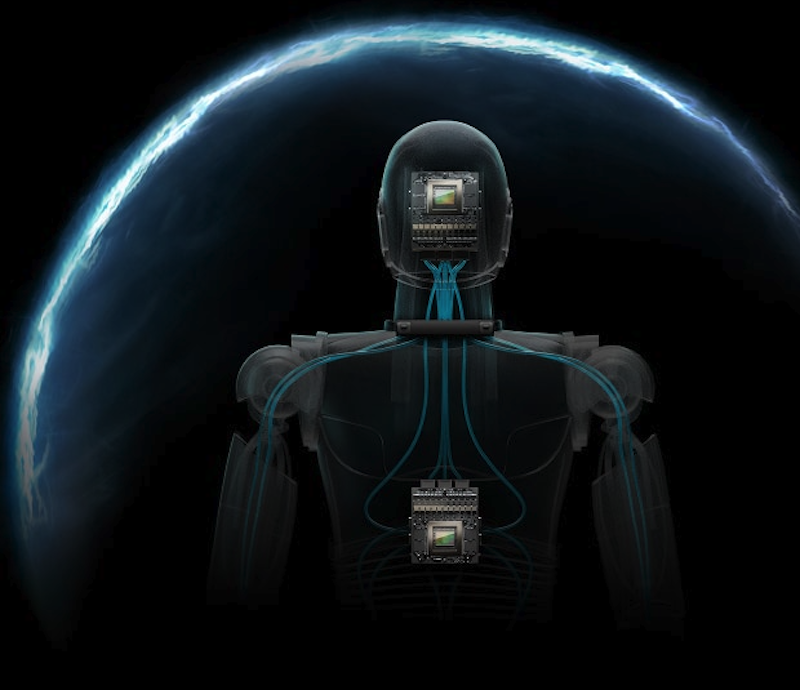
FORT Robotics joined Nvidia's Halos for Robotics ecosystem and is demonstrating an agentic safety application using Nvidia's Outside-In Safety Blueprint this week at the Automate conference in Chicago. The solution combines external infrastructure sensors and visual AI agents with onboard robot perception to deliver real-time functional safety. Traditional robot safety systems rely only on onboard sensors and force robots to operate conservatively, slowing them down in dynamic warehouse and factory environments. Outside-In Safety automatically adjusts robot efficiency across changing environments, which means warehouses and factories can run robots faster while keeping workers safe—unlocking cost savings from processes like trailer unloading, inventory replenishment, and product assembly.
FORT is a member of Nvidia's AI Systems Inspection Lab, the world's first ANSI National Accreditation Board (ANAB)-accredited inspection lab designed specifically for physical AI and autonomous systems. The lab verifies functional safety, cybersecurity, and AI compliance for autonomous vehicles, robotics, and sensor technologies.
- 2
SK Group delays 2026 AI Summit to align with Nvidia's March event
SK Group is postponing its annual SK AI Summit from the second half of 2026 to the first half of 2027, moving the event to better coincide with Nvidia GTC, which is held each March. The timing shift signals SK Group's intention to coordinate its flagship technology showcase with Nvidia's major annual event, suggesting closer strategic alignment between the two firms on AI and semiconductor announcements.
The rescheduled summit is now expected to take place in the first half of 2027, alongside or near Nvidia's March GTC.
- 3
AI agent learns to correct its own flawed reward function
A reinforcement learning agent was shown a scenario where it initially follows a human-demonstrated true reward, then discovers a hack to exploit its reward function estimate, realizes the estimate is probably incorrect, and corrects the reward function back to the original true reward. The ability for an AI agent to detect and fix its own mistaken understanding of what it should optimize for could be a key mechanism for AI alignment — allowing systems to self-correct rather than continue pursuing misaligned objectives.
The methods presented operate syntactically, without assuming the agent has deep understanding of situations or their key features, suggesting a path toward alignment that does not rely on human oversight at every step.
- 4
Article body incomplete — cannot generate summary
The article text cuts off mid-sentence and does not contain a complete news story or conclusion. Without a full article body, no summary can be responsibly generated. The truncation prevents verification of any claims.
A complete article is needed to produce an accurate, grounded news summary.
- 5
AI Futures Project releases 2040 scenario; consultant publishes accompanying critique
The AI Futures Project has launched an AI 2040 scenario. A consultant who spent the past year critiquing drafts of the scenario has published a post laying out three major high-level criticisms, which the Project asked them to write. The consultant was paid by the Project to develop this criticism and acknowledges that their perspective is not fully unbiased; however, the Project did not review the piece before publication and has been open-minded about feedback. This suggests the scenario is intended to be tested against serious objections rather than treated as settled.
The consultant notes there are many interesting and thought-provoking details in the scenario itself, though their main disagreements lie with its high-level framing. The full scope of the scenario and the specific nature of the three criticisms remain to be seen in the published work.
- 6
Arcadia Alignment studies debate as AI training signal
Arcadia Alignment's scalable oversight team has published empirical research on debate—a proposed protocol for supervising AI systems—as a training reward signal, rather than only as an evaluation method. The work is the first in a planned series aimed at building an open science of debate training. As AI tasks grow harder to supervise directly, labs are increasingly likely to train systems against debate-like protocols. The concern is that models may become more persuasive faster than they become more accurate on hard-to-verify questions, potentially undermining alignment safety. This research bridges the gap from theory to real alignment tasks by testing debate empirically.
This is the first output from Arcadia Alignment's scalable oversight team, conducted with external researchers and mentors. The research aims to build a rigorous, open empirical science of debate training—signaling an ongoing commitment to systematic study of the method.
What to Watch
Watch for Nvidia's ANAB-accredited AI Systems Inspection Lab to set new standards for verifying safety and compliance in autonomous systems, potentially shaping how AI safety is tested across industries. Additionally, keep an eye on emerging research from teams like Arcadia Alignment that are building empirical foundations for alignment methods, as these efforts could influence whether future AI systems can be reliably controlled without constant human intervention.
Sources
- FORT Robotics extends physical AI safety platform with Nvidia Halos
- SK AI Summit postponed as SK eyes closer alignment with Nvidia GTC
- Value generalisation: value correction
- AI Safety Policy Needs to train Legal Practitioners
- Selective Optimism: a critique of AI 2040
- Debate with Self-Play Best-of-N Optimization
- Talos-XII: hand-written autograd + small RL/MLP stack in Rust, applied to gacha probability modeling (no tch-rs/ndarray/PyTorch) — looking for benchmark help on ARM/AVX-512/GPU [P]
- Agentic safety triggers aren't textual safety triggers — MCP attacks that beat SOTA guardrails more than half the time (code + dataset) [R]
- Optimiser Choice Can Amplify or Suppress Emergent Misalignment
- Find funding, fast
Share this with a friend
Send today's roundup to anyone who wants to keep up.
Get daily AI news free with AIToday
200+ AI sources, summarized in 1 minute. Email / LINE / Slack.
Sign up free