AI in Healthcare
Jul 9, 2026
The Gist
AI is accelerating pharmaceutical research and attracting billions in investment from major players like Amgen and Anthropic, with Insilico's AI-discovered lung-fibrosis drug advancing to Phase III trials and Genesis's PEARL model demonstrating real-world accuracy breakthroughs. However, despite the technological progress, experts caution that AI remains a powerful tool rather than a replacement for traditional drug development processes, as clinical validation still lags behind the hype. The gap between AI's promise and proven results continues to narrow, signaling a maturing field moving from speculation toward tangible healthcare applications.
Today's Stories
- 1
Amgen, Scientists Say AI Speeds Drug Discovery but Is Not a Shortcut
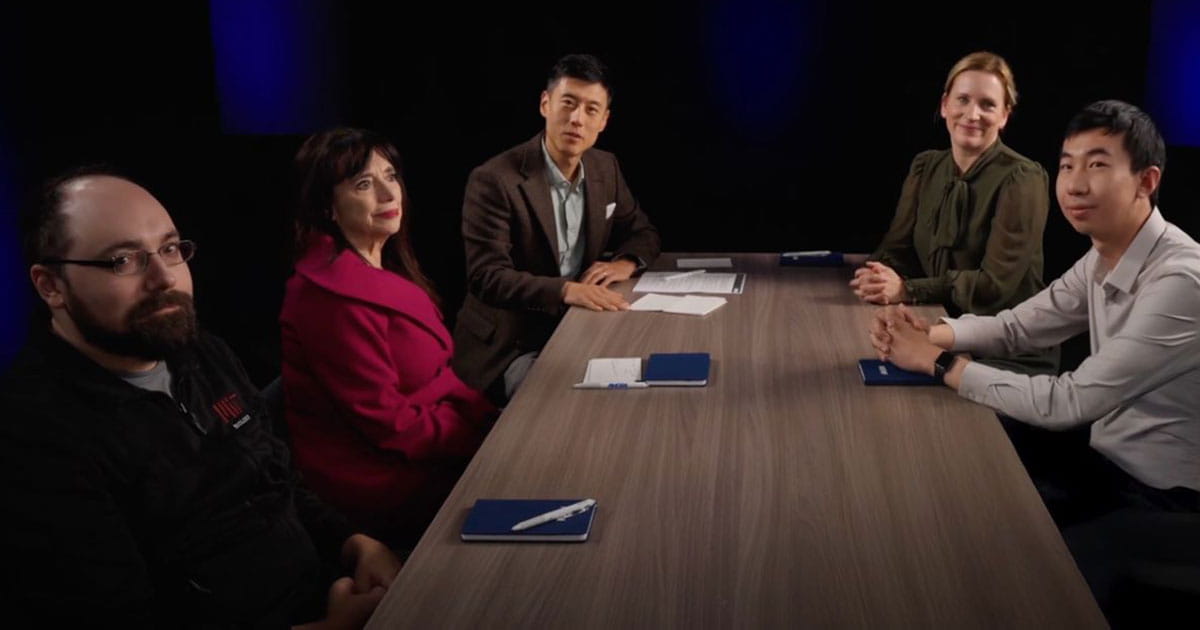
Amgen and leading academic institutions held a roundtable conversation (Meeting the Moment) exploring how AI is shaping drug discovery. The discussion underscores that while AI can help teams analyze complex data, generate hypotheses, and identify patterns, it does not replace the scientific process. Developing a new medicine typically takes more than a decade. AI offers the potential to help researchers learn faster, but key challenges remain—including predicting how drugs behave in the human body and ensuring safety. The conversation highlights that real progress depends on high-quality data, deeper biological understanding, and expertise and judgment of scientists working alongside these tools.
Amgen is investing in this direction through a recent South San Francisco lab expansion designed to support the Design, Make, Test, Analyze (DMTA) process, which brings together chemistry, biology, automation, and data science to generate insights faster and better connect decisions across the research process.
- 2
Insilico starts Phase III trial for AI-discovered lung-fibrosis drug
Insilico Medicine initiated a Phase III clinical trial for Rentosertib, an oral small-molecule inhibitor targeting TNIK for idiopathic pulmonary fibrosis (IPF). The drug was discovered using Insilico's AI platforms—PandaOmics identified TNIK as a high-priority fibrosis target, and Chemistry42 designed the molecule. The Phase IIa trial showed manageable safety and tolerability, with the 60 mg once-daily arm demonstrating mean forced vital capacity improvement of +98.4 mL at 12 weeks. IPF is a progressive lung-scarring disease with median survival commonly reported at approximately two to four years after diagnosis, and current approved antifibrotic therapies can only slow progression but do not reverse the disease. Rentosertib represents a potentially first-in-class medicine whose target was identified by AI, whose chemical structure was designed by generative AI, and whose development is aimed at this severe age-related disease with high unmet medical need. This marks a major late-stage milestone for AI-driven drug discovery moving from research into late-stage clinical validation.
The Phase III trial is expected to enroll 320 patients with IPF and is designed to systematically evaluate efficacy and safety of once-daily Rentosertib administered over 52 weeks. The trial will be led by Professor Zuojun Xu of Peking Union Medical College Hospital as Leading Principal Investigator, with Academician Nanshan Zhong and President Chang Chen as Co-Leading Principal Investigators.
- 3
When the sovereign AI diagnosis goes prime time
When the sovereign AI diagnosis goes prime time
- 4
Pharma Giants Back AI Drug Discovery with Billions as Clinical Proof Lags
Isomorphic Labs raised $2.1 billion(約3400億円) in May led by Thrive Capital and secured major partnerships with Novartis, Eli Lilly, and Johnson & Johnson. The company's IsoDD platform predicts protein-ligand interactions and identifies cryptic binding pockets to expand the druggable landscape. Separately, Genesis Molecular AI and Incyte announced an expanded collaboration worth potentially over $1 billion(約1600億円), while Chai Discovery licensed its Chai-3 antibody design model to Pfizer, and Inceptive partnered with Alnylam Pharmaceuticals in a deal worth up to $2 billion(約3200億円) with $30 million(約48億円) upfront. The investments reflect conviction in AI platforms and proprietary datasets as the foundation of drug discovery, even though few AI-designed drugs have reached the clinic. For pharma companies, embedding AI-driven workflows into R&D pipelines—using foundation models trained on internal genomics, transcriptomics, and proteomics data—may unlock previously intractable problems like neurological disease and accelerate candidate nomination timelines. However, commentators note the valuation cycle may have decoupled from clinical proof, meaning capital is chasing computational promise before real-world efficacy is proven.
Foresite-backed Xaira Therapeutics, which launched in 2024 with more than $1 billion(約1600億円) in funding, is building virtual cell models to advance target discovery. Inductive Bio gained external validation in February by placing first in the OpenADMET-ExpansionRx blind challenge for predicting drug compound properties. The key differentiator for investors is whether AI can solve previously unsolvable problems and change the pace or probability of clinical success, not just model accuracy alone.
- 5
Anthropic launches drug discovery programs for neglected diseases
Anthropic announced it is launching its own drug discovery programs targeting neglected diseases that traditional pharma and biotech firms consider unprofitable. The company will focus on early, preclinical-stage drug development. Anthropic also unveiled Claude Science, a new AI tool for research, and demonstrated early examples including a UCSF researcher using it to spot a viral contamination in minutes that his team had missed for an entire year. Pharma R&D timelines and success rates have long been constrained by information delays and operational bottlenecks. Novartis CEO Vas Narasimhan stated that AI tools could cut information and operational latency—which account for roughly 40 percent of total development time—potentially bringing drug development timelines down from twelve years to seven or eight years. Even modest improvements would matter: major pharma companies spend $150 to $200 billion(約32兆円) a year on R&D, and expanding the pool of treatable diseases could make previously unreachable drug targets viable.
Claude Science analyzed 100 rare genetic diseases in under an hour and flagged 32 candidates for computational screening. Anthropic frames this drug discovery work as aligned with its nonprofit mission and as a way to build better AI models through firsthand experience in the sector. Other AI firms—including Deepmind (via Isomorphic Labs with Alphabet) and OpenAI—are also expanding into medicine and clinical tools.
- 6
Genesis AI model PEARL shows drug discovery can finally work—hitting real-world accuracy thresholds
Genesis Molecular AI's PEARL model demonstrated on the OpenBind benchmark that it can accurately predict how small molecules bind to proteins, including modeling protein flexibility and induced-fit effects without fine-tuning on target-specific data. The model outperformed public competitors across evaluation metrics on 802 never-before-seen molecular complexes. Small-molecule drug discovery has long struggled because there are 10^60 drug-like molecules to search, and the properties that make a strong binder often conflict with those needed for the drug to reach its target in the body. PEARL's ability to model both ligand placement and protein adjustment together suggests that agentic drug-discovery loops—where AI iterates like a chemist, forming hypotheses and testing candidates—may now be practically feasible, potentially enabling 24/7 automated discovery cycles when paired with lab partners.
The field has conventionally benchmarked poses at "2 Angstrom RMSD" accuracy, but Genesis argues that 1 Angstrom RMSD is the real threshold needed to correctly model molecular interactions like hydrogen bonds (which span only 0.6Å). PEARL's recent results suggest the community may be ready to abandon the weaker standard and pursue genuinely harder validation targets.
What to Watch
Watch for whether AI-driven drug discovery platforms can move beyond improving model accuracy to demonstrably accelerate clinical success—evidenced by how Amgen's expanded Design, Make, Test, Analyze capabilities, Xaira Therapeutics' virtual cell models, and Claude Science's rare disease screening translate into faster trial enrollment and better efficacy outcomes. Additionally, monitor whether the field adopts stricter molecular modeling standards (like Genesis's 1 Angstrom RMSD threshold) and whether major AI labs including Deepmind, OpenAI, and Anthropic can translate their computational breakthroughs into real-world medicines that outpace traditional drug development timelines.
Sources
- How AI Is Changing Drug Discovery and What It Will Take to Unlock Its Full Potential
- Insilico Initiates Phase III Clinical Trial for Rentosertib, Its AI-Empowered TNIK Inhibitor for Idiopathic Pulmonary Fibrosis
- When the sovereign AI diagnosis goes prime time
- Pharma Races to Scale AI as Billions Flow into Drug Discovery
- Anthropic launches its own drug discovery programs to tackle diseases Big Pharma considers unprofitable
- 🔬 The Coolest Diffusion Research Isn't in LLMs — Evan Feinberg & Sergey Edunov, Genesis Molecular AI
- Meta's non-invasive brain-to-text AI is closing the gap with surgical implants
- MindWalk (NASDAQ: HYFT) Files Patent for High-Dimensional Biological Data Architecture Powering AI Drug Discovery
- Eli Lilly just placed a $40 million bet on the next injectable boom
- Anthropic launches AI drug discovery program
Share this with a friend
Send today's roundup to anyone who wants to keep up.
Get daily AI news free with AIToday
200+ AI sources, summarized in 1 minute. Email / LINE / Slack.
Sign up free