Autonomous Driving
Jul 17, 2026
The Gist
Tesla's self-driving system was cleared of responsibility in a fatal crash, with investigators attributing the accident to driver error instead. Meanwhile, Waymo and Uber are expanding their autonomous vehicle capabilities—Uber integrating AV data into a broader travel platform while Waymo's rental partnerships are reshaping legal liability for accident claims. The industry continues advancing simulation benchmarking and testing protocols to support the growth of robotics and autonomous technologies.
Today's Stories
- 1
System benchmarking steps before robotics simulations
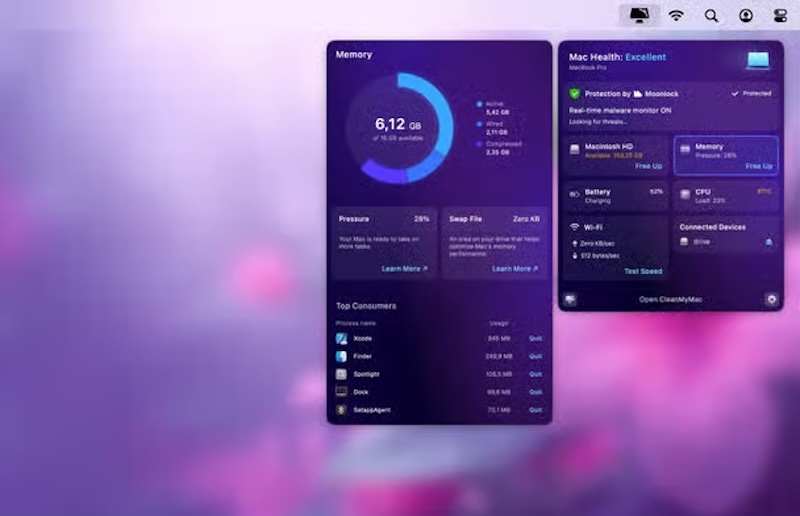
An overview of how to benchmark a development workstation before running robotics simulations, covering processor, graphics card, memory, and storage testing across platforms like macOS, Windows, and Linux. Identifying hardware limitations early through benchmarking establishes a reliable performance baseline, making it easier to spot whether slowdowns during robot development come from software changes or hardware constraints—avoiding wasted engineering time on systems that cannot handle the computational load.
Test with representative simulators (RoboDK, KUKA.Sim, Visual Components, DELMIA, ABB RobotStudio, Siemens Process Simulate) and monitor simulation speed, frame rate, CPU/GPU utilization, memory consumption, loading times, and temperatures across multiple runs with identical settings to get an accurate picture.
- 2
Tesla crash that killed grandmother was driver error, not self-driving failure
Federal safety investigators concluded that the driver of a Tesla Model 3 that crashed into a home in Katy, Texas, had pressed the accelerator to full speed, overriding the self-driving software. The vehicle traveled at more than 70 mph, jumped a curb, crossed a lawn, and struck a brick wall, killing 76-year-old Martha Avila who was standing in the front room. The finding clears Tesla's self-driving feature in this specific crash, but comes as the National Highway Traffic Safety Administration is conducting a separate investigation that could lead to a recall of 3.2 million Tesla vehicles. NHTSA elevated its probe to "engineering analysis" level after crashes where the self-driving feature failed to alert drivers to take control in fog and poor visibility. The scrutiny is sensitive timing as CEO Elon Musk is preparing to turn hundreds of thousands of Teslas into fully automatic vehicles and begin selling Cybercabs without steering wheels or pedals.
NHTSA has opened 46 "special crash" investigations of Tesla's self-driving or driver-assistance technology over the past decade, with at least one person killed in more than a dozen of those crashes. The agency is also investigating the Texas house crash separately from the National Transportation Safety Board's report.
- 3
Micron sees memory demand as 'early innings' as market heads toward $1 trillion(約160兆円)
Micron Technology's CEO Sanjay Mehrotra told investors that the memory chip market is only in the early stages of AI-driven growth, pointing to expanding demand beyond data centers—particularly from robotics, humanoids, and autonomous vehicles that will require substantial memory for their AI systems. The memory market is forecast to reach more than $1 trillion(約160兆円) by 2027, up from over $800 billion(約130兆円) this year, with AI semiconductor memory processors expected to account for nearly 30% of a $1.5 trillion(約240兆円)–$1.8 trillion(約290兆円) AI semiconductor market by 2030. Unlike past boom-and-bust cycles in memory chips, this expansion appears structural rather than cyclical, offering long-term revenue visibility for suppliers like Micron.
Micron's sales surged 45% in fiscal Q3 2026 to nearly $41.5 billion(約6.6兆円), and adjusted earnings jumped more than 1,300% year over year to $24.67 per share. The stock trades at a P/E ratio of 23, below the tech sector average of 37, and has risen 687% over the past year.
- 4
July 2026 Roundup: AI & Policy Developments, Market Trends
A monthly roundup covering July 2026 news across multiple topics including AI, regulatory developments, market predictions, and entertainment. The piece opens with commentary on trust dynamics in human morality, drawing a parallel to prisoner's dilemma logic. The roundup surveys a broad landscape of developments that signal shifts in how trust, policy, and incentive structures are shaping technology adoption and governance. Understanding these cross-domain trends provides context for business decisions in rapidly changing regulatory and commercial environments.
The full roundup covers sections on government action, prediction markets, policy developments (Jones Act), and effective altruism initiatives—indicating ongoing activity in regulatory and market-shaping domains that may influence corporate strategy and investment decisions.
- 5
Rental Cars vs. Waymo: How Vacation Accidents Change Your Legal Rights
A guide clarifies that travelers choosing between renting a car and using self-driving services like Waymo face fundamentally different liability structures if an accident occurs. Rental car crashes depend on the rental agreement, state insurance rules, and supplemental coverage, while self-driving accidents shift liability questions toward the vehicle's sensors, software, and operating company rather than a human driver. Rental car claims involve multiple insurance parties (the at-fault driver's policy, the rental company's coverage, your personal auto policy, credit card benefits) that can dispute responsibility and slow payment, while self-driving accidents require different evidence preservation—sensor logs, app ride records, and company incident reports—that may disappear quickly. Resort property liability adds another layer, since crashes on resort grounds can shift responsibility to the property itself if parking areas are poorly maintained or shuttle drivers were inadequately trained.
Photograph vehicles, road conditions, and injuries; collect names and contact information from all drivers, witnesses, and property staff; request incident reports before leaving the scene; and screenshot ride-app details immediately, since those records often disappear faster than expected. An injured traveler can work with an attorney in their home state even if the accident occurred elsewhere.
- 6
Uber expands beyond rides and food with hotels, travel, and autonomous-vehicle data play
Uber rolled out hotel bookings (via Expedia partnership), boat rentals in Europe, and "shop for me" concierge features this year, framing the push as a travel strategy. The company also launched AV Labs six months ago, a separate business unit deploying sensor-equipped vehicles to collect driving data independently from its regular driver network. Travel represents what Uber calls "the third leg of the stool" alongside rides and delivery—1.5 billion trips yearly happen outside users' home cities. Uber One membership now has 51 million members and accounts for roughly half of bookings; the company reports cross-selling is working, with delivery-only users adopting mobility and vice versa. Uber Eats has been independently profitable for several quarters. The AV Labs data operation appears designed to give Uber leverage with autonomous-vehicle partners (including Waymo, which it competes with in some cities) while hedging its own exposure to autonomous-vehicle development.
Uber emphasizes it is "not trying to be everything to everyone"—it partners on some services (boat rentals hand off to booking partners) and integrates deeply on others (Expedia hotels). The company wound down its Waymo pilot in Phoenix while scaling in Austin and Atlanta, and holds equity in several autonomous-vehicle partners it also competes against directly.
What to Watch
As autonomous vehicle deployments expand—from Uber's scaling operations in Austin and Atlanta to ongoing regulatory scrutiny of Tesla's driver-assistance systems—watch for how NHTSA's 46 open investigations and broader policy developments around the Jones Act shape safety standards and corporate partnerships in the coming months. Meanwhile, the booming semiconductor sector, evidenced by Micron's record growth, will likely fuel the computing power these systems demand, making chip supply and innovation critical competitive factors to monitor.
Sources
- How to Benchmark Your Development System Before Running Robotics Simulations
- Runaway Tesla that crashed into a grandmother’s living room was actually being steered by a human, investigators find
- Micron Technology: AI Memory Demand Is Still in the Early Innings (NASDAQ: MU)
- Monthly Roundup #44: July 2026
- Injured on Vacation? A Traveler’s Guide to Rental Car and Resort Accident Claims
- Uber’s product chief on hotels, robotaxis, and why the company doesn’t want to be “everything for everyone”
- Tesla AI5 chip reportedly completes tape-out for Samsung's Texas fab
- Apple’s failed self-driving car program left a legacy of powerful AI chips
- Mobilint touts NPU for physical AI, with CEO urging South Korea to accelerate development
- Free Waymo rides in California? You can thank a regulatory quirk
Share this with a friend
Send today's roundup to anyone who wants to keep up.
Get daily AI news free with AIToday
200+ AI sources, summarized in 1 minute. Email / LINE / Slack.
Sign up free