AI Coding Assistants
Jul 28, 2026
The Gist
AI coding assistants are becoming more integrated into everyday tools and workflows: Interactive Brokers now offers AI connectivity through the MCP standard, while new plugins like Claude's Learning Mode are teaching developers by refusing to write code and guiding them instead. Meanwhile, practical innovations are expanding—from on-device AI clipboard actions on macOS to Microsoft's HorizonDB for AI search in PostgreSQL and tools like Writekin that let users fine-tune local language models on their Mac, though researchers note that AI-discovered bugs are rarely weaponized despite industry concerns.
Today's Stories
- 1
Interactive Brokers Opens AI Connectivity via MCP Standard
Interactive Brokers has opened AI connectivity to any tool built on the Model Context Protocol (MCP) standard, allowing third-party applications and developers to integrate with the brokerage's platform. MCP is an open standard that lets AI applications communicate seamlessly with external tools and data sources. By supporting it, Interactive Brokers is making its market data and trading capabilities accessible to a broader ecosystem of AI-powered applications, rather than limiting access to its own proprietary tools.
This move signals Interactive Brokers' strategy to position itself as infrastructure for AI-driven financial workflows. Developers building on MCP (including those working with large language models) can now build financial applications that tap Interactive Brokers' connectivity without custom integrations.
- 2
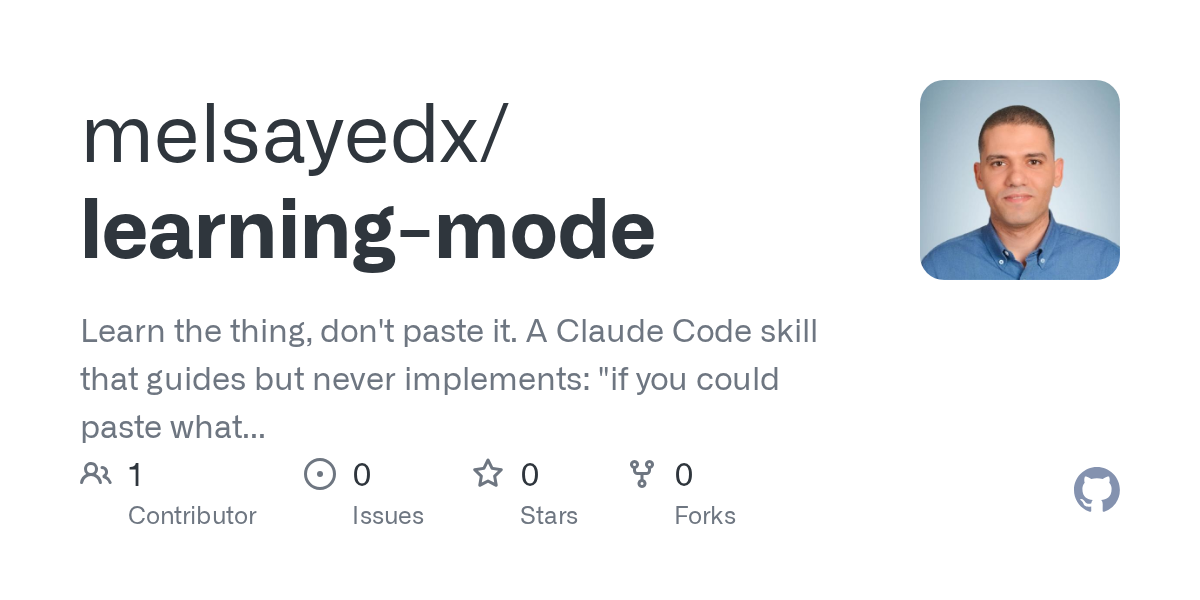
Learning Mode plugin makes Claude refuse to write code, guides learner instead
Muhammad El Sayed has released Learning Mode, a skill plugin for Claude Code and Codex that changes how the assistant responds to code-learning requests. Instead of writing code directly, the assistant now guides learners through a structured cycle—predict, attempt, get feedback, retry—while the learner owns the load-bearing implementation and reasoning. The plugin shifts the assistant's role from code writer to guide, forcing learners to do their own problem-solving rather than copy-paste answers. This addresses a common pitfall in AI-assisted learning: learners can get code without understanding it. By defining a clear learning outcome upfront, checking prerequisites, and validating understanding through explanation and transfer questions, the skill aims to build genuine comprehension rather than surface competence.
Learning Mode is installable now via plugin marketplace for both Claude Code (/plugin marketplace add melsayedx/learning-mode) and Codex. It includes opt-in journaling to preserve progress across sessions, stored at ~/learning-journals/<date>-<topic>/journal.md. The learner can pause, disable, or change the journal location at any time, and can request direct code delivery at any point—the assistant will confirm before switching modes.
- 3
macOS app brings on-device AI clipboard actions, no cloud needed
apfel-clip, a free macOS menu bar app, lets users copy text, code, or errors and transform them with AI by pressing ⌘⇧V — all processing happens on-device using Apple Intelligence, with no cloud uploads or API keys required. The app removes friction from common text tasks (grammar fixes, code explanations, JSON parsing, error diagnosis) by detecting content type automatically and showing only relevant actions; everything stays private on your Mac, making it safe for sensitive code or data.
Requires macOS 26 (Tahoe), Apple Silicon (M1 or later), and Apple Intelligence enabled; the app is free, MIT-licensed open source, and available via direct download, Homebrew, or GitHub source build.
- 4
AI-found bugs rarely weaponized: 1.3% exploited despite hype
VulnCheck analyzed 1,061 publicly attributed AI-assisted vulnerability discoveries from Anthropic's Project Glasswing and the Berkeley Vulnerability Research Initiative, cross-referencing them against its Known Exploited Vulnerability database. Just 14 vulnerabilities, or 1.3 percent, have been confirmed as exploited in the wild—almost identical to the rate across all vulnerabilities in VulnCheck's dataset. The findings contradict claims that frontier AI models are handing attackers a major advantage by producing instantly weaponizable bugs. Instead, the data suggests AI is currently better at increasing the volume of vulnerabilities researchers can uncover than at increasing the proportion that attackers actually exploit. Security researcher Patrick Garrity notes that AI-assisted vulnerability discovery has real value for defenders, giving them an opportunity to patch flaws before attackers can weaponize them.
Anthropic's Project Glasswing identified 23,019 vulnerability candidates when unveiled in April, yet only 126 have been published as CVEs and just one has been confirmed exploited in the wild. VulnCheck also identified 495 known exploited vulnerabilities during the first half of 2026, with content management systems accounting for roughly one-third of them and AI products themselves becoming an increasingly attractive target for attackers.
- 5
Microsoft launches HorizonDB for AI search in PostgreSQL
Microsoft introduced Azure HorizonDB, a PostgreSQL-based service that integrates AI-powered retrieval capabilities directly into the database, allowing businesses to perform semantic search and AI queries without moving data to separate systems. Organizations using PostgreSQL can now embed AI search functionality within their existing database infrastructure, reducing complexity and latency by eliminating the need to synchronize data between a database and a separate vector store or AI system.
The service is available as part of Azure's PostgreSQL offerings; readers should check Microsoft's documentation for pricing, regional availability, and compatibility details with their current PostgreSQL deployments.
- 6
Writekin: Fine-tune local LLM on your Mac with your own writing
Writekin, a macOS app, lets users ingest their own writing from Mail, Messages, and documents, then fine-tune a local language model (QLoRA on Apple Silicon via MLX) to generate and rewrite text in the user's voice—all on-device with no data leaving the machine. For writers and professionals who want personalized AI writing assistance without uploading personal data to cloud services, Writekin offers an alternative that keeps all ingestion, training, and generation local; the source code is publicly available so users can verify the privacy claims.
The app requires an Apple Silicon Mac with 16 GB unified memory minimum (32 GB+ recommended for training larger models) and macOS 14 or newer; it is source-available and free for personal noncommercial use, with commercial use requiring a separate license.
What to Watch
Watch for Interactive Brokers' integration with MCP to reshape how developers build financial applications—expect to see a wave of AI-powered trading and portfolio management tools that no longer require custom coding bridges. Meanwhile, keep an eye on whether AI products themselves become a more frequent target in vulnerability disclosures, as security researchers continue unveiling thousands of candidates and attackers increasingly probe AI systems for exploitable weaknesses.
Sources
- Interactive Brokers Opens AI Connectivity to Any Tool Built on the MCP Standard
- Show HN: Learning Mode – Claude refuses to write code
- Show HN: Local AI Clipboard Actions
- AI-found bugs aren't proving any easier to exploit despite the hype
- AI-Powered Retrieval in PostgreSQL with Azure HorizonDB
- Show HN: Writekin – fine-tune a local LLM on your own writing, on your Mac
- Front end CI/CD in the age of AI
- Aftermarket Harnesses
- Designing With AI on a budget as an engineer: Google+ChatGPT
- GM redesigned its engineering workflows around AI agents — and tripled its merged pull requests
Share this with a friend
Send today's roundup to anyone who wants to keep up.
Get daily AI news free with AIToday
200+ AI sources, summarized in 1 minute. Email / LINE / Slack.
Sign up free