Robotics
Aug 17, 2026
The Gist
Disney is replacing its costumed character Olaf with an AI robot, marking a shift toward automation in entertainment, while the robotics industry grapples with practical challenges like hardware speed and data collection rather than AI sophistication alone. The U.S. government is restricting foreign-made ground robots for security reasons, and companies like Orbbec are developing innovative approaches to advance physical AI without requiring expensive robotic hardware. Meanwhile, robots are demonstrating real-world medical value by personalizing stroke recovery therapy for patients.
Today's Stories
- 1
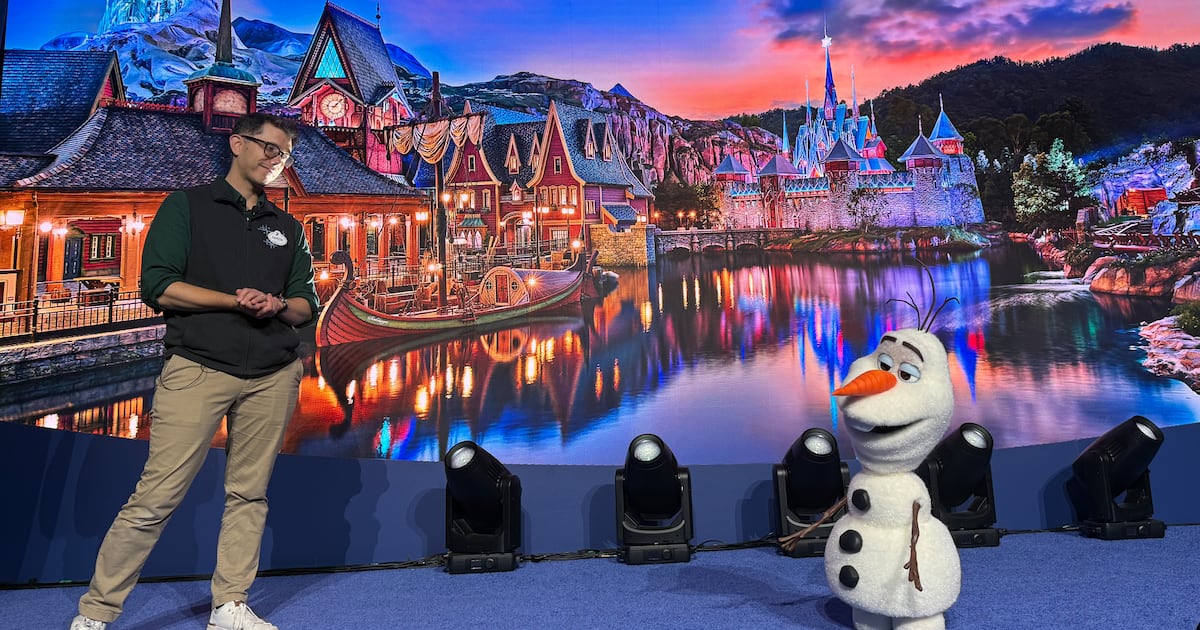
Disney deploys AI robot Olaf to replace costumed characters
Disney has introduced an AI-powered robot version of Olaf from Frozen to replace costumed character performers at its parks and events. The move signals Disney's use of robotics and AI to manage labor costs and operational complexity in managing live character experiences across its global parks and venues.
Whether the robot Olaf gains visitor acceptance and how broadly Disney rolls out similar AI character replacements to other beloved franchises.
- 2
BTech student in India seeks Physical AI career advice
A final-year BTech student from a tier 1 college in India, with experience in Physical AI internship at an MNC working with NVIDIA Isaac Sim and OpenFOAM, is asking the machine learning community for guidance on entry-level hiring trends, international job opportunities, and skill priorities for the coming year. The post reflects a real candidate's effort to understand the robotics and autonomous systems job market from a position of substantial technical depth—simulation, perception, control systems, and hands-on hardware experience—while navigating the challenge of launching a Physical AI career as an Indian fresh graduate seeking global roles.
The student's stated focus on bridging simulation and physical systems, combined with demonstrated proficiency in Isaac Sim, Gazebo, ROS/ROS 2, SLAM, reinforcement learning, and autonomous drone/rover hardware, suggests readiness for roles that blend software and embedded systems—areas where the conversation may surface concrete regional or company-specific hiring signals.
- 3
Defense tech's real bottleneck: making hardware fast, not smarter AI
Defense tech startups raised close to $50B in 2025, nearly double the year before, but the constraint for winning contracts is shifting from AI capabilities to manufacturing capacity — the ability to produce thousands of physical units per month. Recent conflicts have shown that cheap, expendable drones often outperform expensive precision systems on cost-efficiency grounds. This means companies that excel at scaling production may now have an edge over those with the most advanced models — a fundamental shift in what determines market leadership in defense technology.
The bottleneck to shipping AI keeps moving across sectors. Defense has moved from models to data to compute; now in categories that touch the physical world, manufacturing appears to be the critical constraint.
- 4
U.S. bars foreign-made ground robots from FCC approval
The FCC added foreign-manufactured ground robots to its Covered List, blocking new models from obtaining FCC equipment authorization. The rule applies to any device over 4.4 pounds that moves on the ground, connects wirelessly, and runs its own software—including robot vacuums, lawnmowers, quadrupeds, and warehouse robots. Devices already in use remain unaffected, and government purchases are exempt. While the rule targets foreign production broadly (not China by name), it is clearly aimed at limiting Chinese robot imports on national security grounds. The restriction joins three prior Covered List additions (drones, routers, and power inverters), suggesting a widening pattern of wireless-device restrictions tied to geopolitical concern.
The definition's width—catching everything from consumer vacuums to industrial robots—means the practical impact depends on how strictly manufacturers interpret and comply with the 4.4-pound threshold and wireless connectivity criteria.
- 5
Robots reshape stroke recovery with personalized AI therapy
Robotic rehabilitation systems using artificial intelligence and error-augmentation technology are increasingly being deployed in clinical settings and home environments to help stroke survivors rebuild motor control. These systems guide patients through controlled, repetitive movements while using AI to adapt therapy intensity and resistance in real time based on individual progress. Stroke survivors in the U.S. face long rehabilitation journeys hampered by inconsistent therapy access and resource constraints in hospitals and clinics. Robotic systems can accelerate neuroplasticity—the brain's ability to rewire itself—by providing high-repetition, precision feedback that traditional therapy alone cannot match. Home-based robotic devices extend therapy beyond clinical settings, addressing transportation barriers and geographic isolation, particularly in rural and underserved areas.
Cost remains a barrier for smaller healthcare organizations and uninsured patients, though financing, rental, and subscription models are emerging to improve access. Clinician training, regulatory oversight, and data privacy must be addressed as adoption grows. The field views robotics not as a replacement for human therapists but as a complement requiring collaboration between clinical expertise and technology.
- 6
Orbbec tackles physical AI bottleneck with robot-free data platform
Orbbec is launching a platform to address a critical shortage of real-world physical data needed to train and deploy physical AI applications, using an approach that does not rely on robots. Companies developing physical AI and robotics struggle to move applications from laboratory testing to real-world use because generating high-quality, real-world data at scale has been expensive and logistically complex. A robot-free alternative can lower costs and accelerate deployment timelines.
The platform's ability to balance affordability, stability, and data volume—the three competing constraints Orbbec identifies—will determine whether it becomes a standard tool for physical AI developers.
What to Watch
As Disney's AI character Olaf and similar replacements roll out across theme parks and franchises, watch whether visitors embrace this blend of nostalgia and automation—a bellwether for how far AI can venture into beloved consumer experiences. Meanwhile, across manufacturing, healthcare robotics, and physical AI development, the real constraints are shifting from technology to the practical challenges of data access, compute resources, clinician training, and cost models, so expect progress to accelerate wherever organizations solve these operational bottlenecks rather than the robotics themselves.
Sources
- Disney's AI robot Olaf replaces costumed characters
- [Career Advice] Final-year in Physical AI / Robotics. How is the market & global hiring for freshers? [D]
- The defense tech bottleneck isn't AI anymore — it's manufacturing
- U.S. bans foreign-made humanoid robots, targeting China over national security
- How robotics is revolutionizing stroke rehabilitation
- Interview: Orbbec bridges physical AI data gaps with robot-free platform
- IPAが「AIロボティクスに関するセーフティ評価観点ガイド」を公開!AIロボットの安全な社会実装を支援
- World Labs turns one real-world robot task into thousands of simulated variations for training
- Stock Market Today: Nasdaq Sinks On Retail Sales Gloom; Nvidia Eyes Robotics Wave (Live Coverage)
- 令和なコトバ「ダークファクトリー」 暗闇工場には誰が
- Neros Technologies raises $250M to deploy its defense drones by the end of 2026
- 40 Companies Joined The Unicorn Board In July, The Highest Count In 4 Years
- LG to unveil new Nvidia-powered humanoid robot in early 2027
- GSI Technology Eyes 2027 AI Production as Gemini-II Cuts Power 98% vs. NVIDIA
- How AI and self-driving labs could accelerate semiconductor materials discovery
- AutoStore signs global supply agreement with Amazon
Share this with a friend
Send today's roundup to anyone who wants to keep up.
Get daily AI news free with AIToday
Today's AI, for Today's work. Email / LINE / Slack.
Sign up free