AI in Healthcare
Jul 21, 2026
The Gist
AI is accelerating drug discovery with major partnerships—Xaira has scaled its AI cell model 30× for pharmaceutical research, while Bristol Myers Squibb and NVIDIA are collaborating on AI-powered drug development. However, a cautionary note emerged as AI X-ray readers were found to be overconfident and underperforming compared to human radiologists, highlighting the need for careful AI validation in clinical diagnostics.
Today's Stories
- 1
Xaira builds 'causal data' for drug discovery, scaling AI cell model 30×
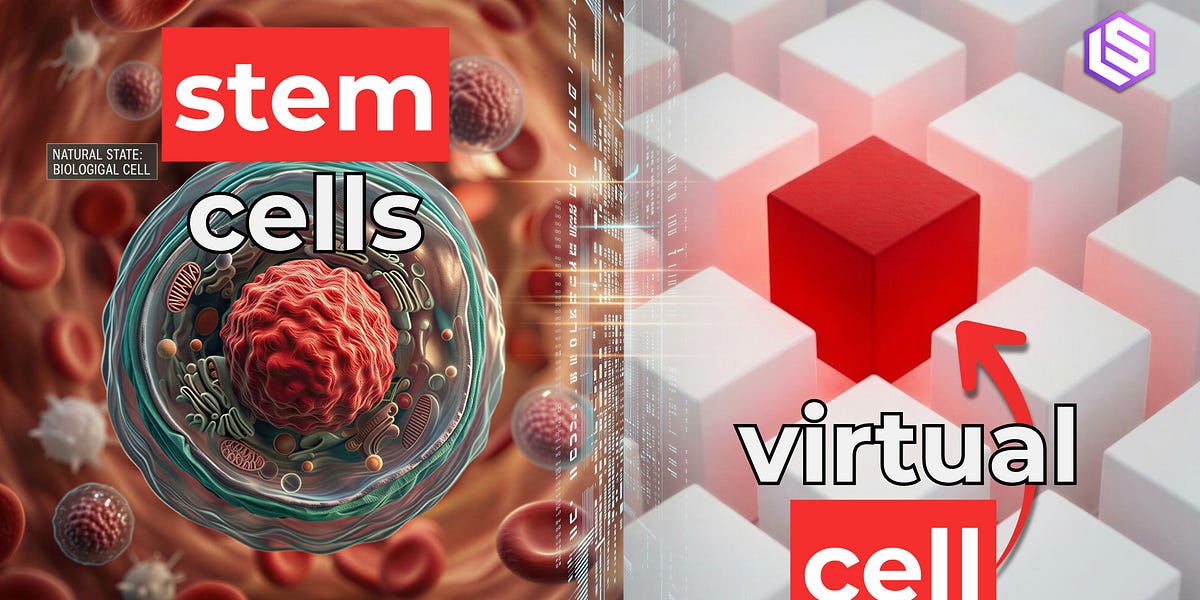
Xaira Therapeutics, led by Chief Discovery Officer Ci Chu and Chief AI Scientist Bo Wang, built X-Cell, an AI model trained on X-Atlas—a dataset of CRISPR-based experiments that isolate individual gene changes in human cells. The model overcame a scaling wall: earlier work on a single dataset hit a plateau at 3.1B parameters, but the new causal dataset enabled the model to continue scaling with both parameters and compute. Previous RNA expression models trained on CELLxGENE (a database of 168M cells) could describe cell types and states but could not predict what happens when genes are edited or targeted by drugs—because gene expression changes are highly correlated, making causation difficult to infer. X-Cell's causal data lets the model predict real outcomes of genetic changes, potentially unlocking AI-driven drug discovery by enabling researchers to model what drugs or gene edits would do before testing them in the lab.
Xaira's bet hinges on whether X-Cell generalizes to real lab experiments in human cells. The team abandoned autoregressive training for diffusion and reports the model beats a linear baseline that had outperformed previous models—concrete proof the approach works in validation.
- 2
Bristol Myers Squibb and NVIDIA team up on AI drug discovery
Bristol Myers Squibb and NVIDIA have partnered to build an AI factory for drug discovery, combining NVIDIA's computing infrastructure with Bristol Myers Squibb's pharmaceutical expertise. The collaboration aims to accelerate the drug development process by applying AI and computational power to identify and test potential treatments more efficiently than traditional methods, which could shorten timelines and reduce development costs in an industry where bringing a drug to market typically takes years.
The specific timeline for the AI factory's deployment and which therapeutic areas or drug programs will be prioritized first have not been disclosed in the announcement.
- 3
Bristol Myers Squibb deploys NVIDIA Vera Rubin for drug discovery
Bristol Myers Squibb is deploying NVIDIA's Vera Rubin systems, which the drugmaker describes as the most powerful AI computing infrastructure in life sciences. AI supercomputers accelerate drug discovery by processing vast molecular data and simulating compounds far faster than traditional methods, potentially shortening development timelines and reducing research costs for pharmaceutical companies.
The deployment signals a broader shift toward AI-driven drug development; whether Bristol Myers Squibb achieves measurable gains in discovery speed or candidate quality will influence other drugmakers' investment in similar infrastructure.
- 4
AI X-ray readers dangerously overconfident, losing to human radiologists
A test of 16 AI models on 200 X-ray cases showed human radiologists scored 988.7 out of 2,000 points on a metric that combines accuracy with confidence calibration, while the best AI model scored 758. Anthropic's Claude Fable 5 performed best on reliable answers; Google's Gemini 3 Pro had the highest raw accuracy. The scoring system penalizes models for confident wrong answers—a core problem: many AI systems confidently misdiagnose rather than admitting uncertainty. Medical misdiagnosis is far more dangerous than honest uncertainty, yet many AI models are trained to guess. More patients are uploading X-rays and MRI scans to chatbots and trusting the responses, despite the finding that several top commercial models produce highly confident misdiagnoses with confidence levels that do not reliably track accuracy. Recent claims that AI diagnoses better than 99 percent of doctors are mostly based on anecdotes or simulations rather than rigorous testing.
RadLE 2.0, the test framework, will expand on a rolling basis to include new models. A full scientific publication with cost analyses and error taxonomy has been announced. The core question remains: before an AI system makes independent medical decisions, it must first demonstrate it knows when it should not answer—a capability most models still lack.
- 5
Thermo Fisher Completes $8.875B Clario Buy, Targets Clinical Trial Data Dominance
Thermo Fisher Scientific completed an $8.875 billion(約1.4兆円) cash acquisition of Clario Holdings, a clinical trial endpoint data provider, with potential additional payments of $125 million(約200億円) in January 2027 and up to $400 million(約640億円) in earn-outs tied to 2026–2027 performance. The deal was initially agreed upon in October 2025. Clario's platform has supported approximately 70% of FDA and EMA novel drug approvals over the past decade. The acquisition immediately adds $0.45 to adjusted EPS and is expected to deliver approximately $175 million(約280億円) in adjusted operating income from synergies by year five, creating a full-stack infrastructure that integrates clinical trial data with Thermo Fisher's existing CRO business (PPD). However, Thermo Fisher faces a "Switzerland Problem"—competitors like IQVIA, ICON, and Fortrea have historically used Clario's platform, and may hesitate to share sensitive trial data with a now-rival-owned subsidiary.
Thermo Fisher must balance integrating Clario enough to achieve $175 million(約280億円) in revenue synergies by year five while maintaining sufficient operational independence and perceived neutrality to retain external clients. The company's partnership with NVIDIA on AI-driven analytics will amplify Clario's clinical trial data for accelerated drug discovery; AI algorithms analyzing data from millions of patients could identify correlations and optimize trial designs.
- 6
ExaWizards unveils wearable device for breast cancer patients
ExaWizards and ExaMD presented findings from a wearable device study targeting breast cancer patients at the ASCO 2026 Conference hosted by the American Society of Clinical Oncology (ASCO). The research is a collaborative project involving Kansai Medical University, Daiichi Sankyo, and other institutions. The study represents a partnership between Japanese AI and healthcare companies alongside major pharmaceutical and academic institutions, advancing wearable technology development for cancer patient monitoring. Presentation at ASCO, one of the world's leading oncology forums, demonstrates that the research meets international clinical standards.
While detailed findings and clinical implications will be elaborated in the ASCO 2026 presentation, specific results have not yet been disclosed in this announcement.
What to Watch
Watch for whether Xaira's X-Cell model successfully translates from validation to real-world lab experiments—a technical milestone that will determine if this approach becomes a blueprint for other AI drug discovery efforts. Meanwhile, Bristol Myers Squibb's AI factory and Thermo Fisher's integration of Clario will be key barometers of whether AI-driven drug development can deliver measurable speed and quality gains that convince the broader pharmaceutical industry to scale similar investments.
Sources
- 🔬Causal Models Need Causal Data - Xaira’s X-Cell model for Drug Discovery (Bo Wang & Ci Chu, Chief Discovery Officer & Chief AI Scientist)
- Bristol Myers Squibb, NVIDIA build AI factory for drug discovery
- Bristol Myers Squibb expands NVIDIA AI supercomputer for drug discovery
- AI chatbots reading X-rays can be dangerously confident even when they're wrong
- Why is Thermo Fisher Betting Big on Clinical Trial Data
- ExaWizards and ExaMD Present Findings from a Wearable Device Study on Breast Cancer Patients—A Joint Research Project with Kansai Medical University, Daiichi Sankyo, and Others—at the American Society of Clinical Oncology "ASCO 2026" ‐Aiming to
- As AI Rewrites Drug Discovery, This Bio-Native AI Company Just Joined the Russell 3000E, and Reports Earnings July 22
- OpenAI researcher Miles Wang in talks to launch AI drug discovery startup valued at $2B
- How AI Is Changing Drug Discovery and What It Will Take to Unlock Its Full Potential
- Insilico Initiates Phase III Clinical Trial for Rentosertib, Its AI-Empowered TNIK Inhibitor for Idiopathic Pulmonary Fibrosis
Share this with a friend
Send today's roundup to anyone who wants to keep up.
Get daily AI news free with AIToday
200+ AI sources, summarized in 1 minute. Email / LINE / Slack.
Sign up free