Top Companies' AI Moves
Sep 1, 2026
The Gist
Snickers launched a digital candy bar aimed at the AI crowd, while BHP used AI to cut downtime and boost iron ore output. GE Vernova’s new power equipment could triple revenue per gigawatt, Lam is building an Oregon lab for AI chip R&D, and a study found AI ads backfire when consumers feel deceived—prompting Visa, Mastercard, and Fiserv to join a group setting AI payments rules.
Today's Stories
- 1
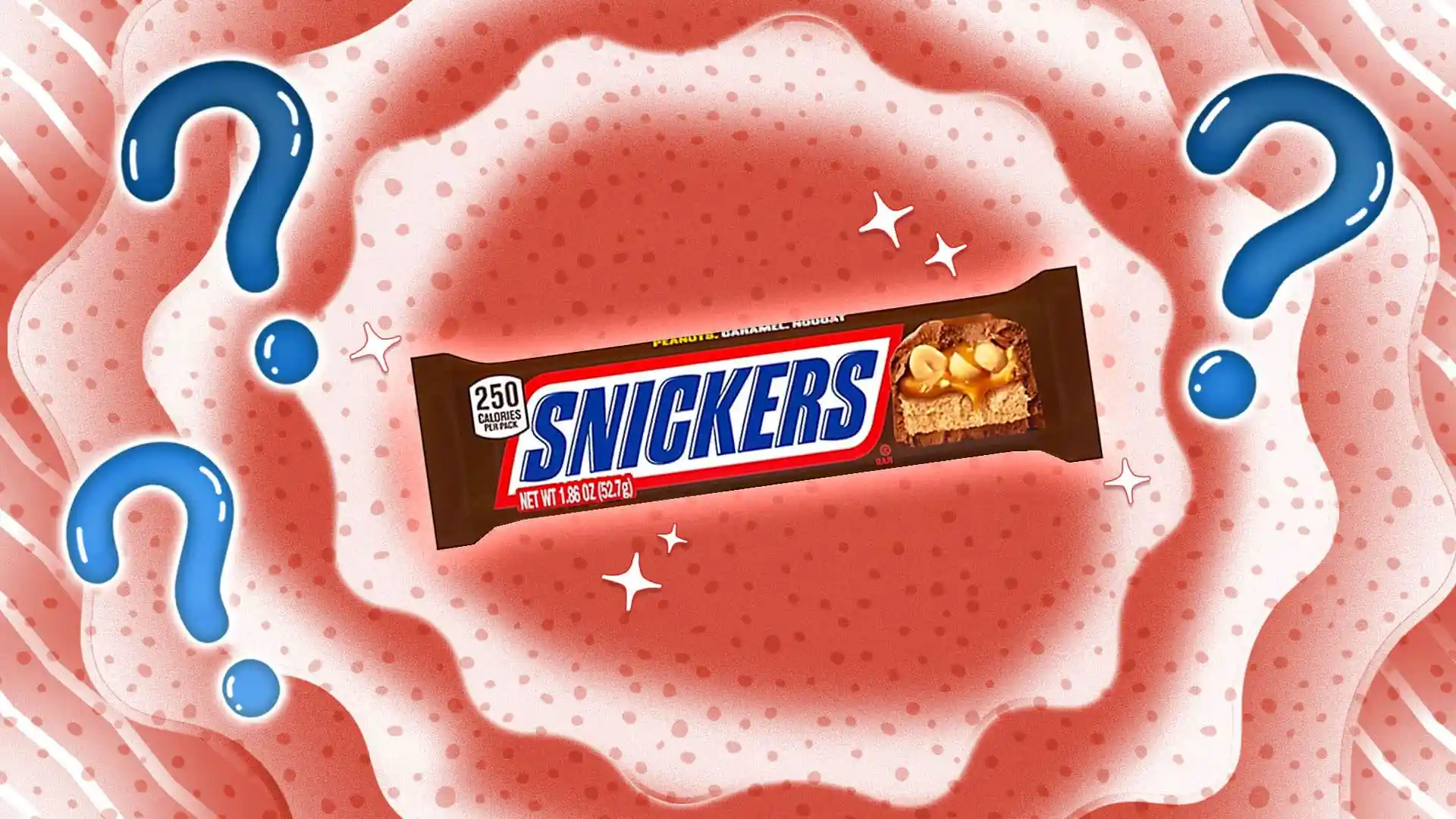
Snickers Unveils Digital Candy Bar for AI
Snickers announced the world's first digital candy bar made specifically for AI, as part of its new Hungr.AI campaign. The promotion lets users ask their AI assistant a question, then paste a digital Snickers into the chat to get a 'more satisfying answer.' Snickers is pitching the digital bar as a remedy for AI 'hallucinations'—the frequent, unavoidable errors in accuracy and judgment—by attributing them to 'hunger moments.' The campaign includes a demo of ChatGPT 'eating' a digital Snickers and producing a shorter, simpler answer.
Participants can claim a free Snickers bar by visiting Reddit or Snapchat through the Snickers website, while supplies last or through September 20. The demo's disclaimer reminds users that Snickers provided the snack and the LLM provided the answer, so they should fact-check.
- 2
BHP's AI cuts downtime, boosts iron ore output
BHP, the world's largest mining company by market capitalization, has deployed AI across its operations. At its Western Australia Iron Ore operations, a computer vision system has unlocked roughly 1 million tonnes of additional annual iron ore production, worth an estimated $50 million, after cutting crusher downtime by 20% and related disruptions by up to 60% since its 2025 deployment. BHP is using AI to extract more value from existing mines because it faces a hard physical constraint: the world will need to double copper production over the next 30 years to meet decarbonization goals, even as ore grades decline. The company's AI investments at Escondida, the world's largest copper mine, have helped save more than three gigalitres of water and 118 gigawatt hours of energy since fiscal year 2022.
BHP is expanding these systems beyond pilot phases. It opened its first Industry AI Hub in Singapore in May 2025 to centralize AI capability, and is extending the Escondida concentrator model to a second concentrator. The company also notes that the conveyor monitoring system can trigger automatic responses, such as stopping equipment, without waiting for human review.
- 3
GE Vernova's New MV-UPS Could Triple Revenue Per Gigawatt
GE Vernova unveiled its medium-voltage uninterruptible power supply (MV-UPS) on August 24. The company says it keeps data centers and AI factories running on stable, continuous power. MV-UPS is expected to ship in mid-2027. CEO Scott Strazik said the expanded power stack, including MV-UPS and solid-state transformers, could boost revenue per gigawatt by 2 to 3 times. Currently, GE Vernova earns about $200 million to $300 million per gigawatt of data center capacity. This would make its end-to-end power solution more valuable.
GE Vernova's stock trades at roughly 49 times forward earnings as of August 31. Investors will watch if the premium valuation already reflects expected growth. The backlog, at $176 billion, won't turn into revenue until closer to 2030.
- 4
Lam breaks ground on Oregon lab for AI chip R&D
Lam Research broke ground yesterday on a new lab in Tualatin, Oregon. The 120,000-square-foot facility is expected to open in 2028 and will expand clean room capacity by more than 50%. AI is driving demand for highly complex chip architectures, pressing chip makers to speed up materials screening, process validation, and prototype-to-production transitions. The new lab supports faster pathfinding and process development amid this complexity.
The project is Lam's biggest investment in Oregon to date, expected to create about 900 jobs and $500 million in economic output during construction. Lam also plans to invest more than $3 billion in its global lab network over the next five years.
- 5
Ole Miss Study: AI Ads Fail When Consumers Feel Tricked
A University of Mississippi study published in Journal of Interactive Advertising found that AI ads succeed when consumers understand why AI was used, and fail when it feels unnecessary. Coca-Cola's 2023 Create Real Magic platform was embraced, while its 2025 "Holidays Are Coming" commercial faced backlash, with one YouTube commenter calling it "The most profitable commercial in Pepsi's history." The researchers say ads using AI unnecessarily can upset consumers, partly due to the uncanny valley effect, where something almost human but not quite induces unease. Creating AI-generated depictions of emotion, like a hurt or hungry child, can leave consumers feeling tricked. Researcher Chang-Won Choi advises marketers to start with the campaign idea first and ask if AI is necessary, rather than using AI just because it is available.
Researcher Robert Magee said norms may change over time, just as CGI in movies became accepted. He suggests that as AI becomes more widespread, consumer negativity may lessen, but for now, it is better to err on the side of being careful.
- 6
Visa, Mastercard, Fiserv Join AI Payments Rules Group
Visa, Mastercard, and Fiserv joined the Agentic Payments Alliance (APA), a 26-company coalition led by stablecoin firm Rain, to set common standards for AI-agent payments. Without shared rules, each firm's separate protocols could fragment the market. The APA aims to prevent that by requiring cross-compatible platforms, and it wants to define governance before regulators do.
The agentic commerce market could grow at a 35.7% CAGR from 2026 to 2033, and McKinsey estimates agentic AI activity could reach $3 trillion to $5 trillion by 2030.
What to Watch
Watch how quickly AI shifts from answering questions to taking action—whether that’s stopping a conveyor belt, booking a purchase, or reshaping consumer trust—and keep an eye on whether early movers like GE Vernova and Lam can turn their big bets into real returns without tripping over valuation or public skepticism.
Sources
- Snickers Thinks AI Deserves A Candy Bar – We Don’t
- Artificial Intelligence at BHP – Two Use Cases
- GE Vernova’s AI-Power Breakthrough Could Triple Its Revenue Per Gigawatt. Is the Stock Set to Surge?
- Lam’s Oregon Lab Expansion Launches to Accelerate AI Chip Innovation
- Ole Miss Study Explores Why Some AI Ads Fail While Others Succeed
- Visa, Mastercard, and Fiserv Just Joined a Group Writing the Rules for AI Agent Payments
- How much productivity is needed to justify the AI trade?
- Here comes the AI capex shocker, Goldman Sachs says
- Broadcom Announces VMware AI Factory, Enabling Faster Time
- Does Adding Qualcomm’s Akash Palkhiwala to the Board Sharpen Applied Materials’ AI Strategy Narrative (AMAT)?
- Is Dell (DELL) Quietly Rewriting Its AI and Gaming Strategy With Alienware and Team Liquid?
- Broadcom Unveils VMware Private AI Cloud to Scale Secure, Cost-Effective Enterprise AI
- Video: Shield AI and GE Aerospace test thrust-vectoring F110 engine for X-Bat
- AI giants lean into health care to stall public backlash
- Citibank on front lines with those striking it rich in AI boom
- John Deere Invests $10 Million in AI Research for High-Value Crops
Share this with a friend
Send today's roundup to anyone who wants to keep up.
Get daily AI news free with AIToday
Today's AI, for Today's work. Email / LINE / Slack.
Sign up free