Image Generation
Jun 24, 2026
The Gist
Tech companies are increasingly investing in AI capabilities while simultaneously cutting workforce costs, as seen with Oracle, Google, and Meta's recent layoffs. Krea has released new open-weights AI image models aimed at reducing generic outputs, while Midjourney is exploring medical imaging applications despite skepticism from experts about its claims. Meanwhile, AWS is enabling enterprises to generate large volumes of creative content like images and videos at scale through ComfyUI integration on SageMaker.
Today's Stories
- 1
Show HN: Drudgereport but for AI
Show HN: Drudgereport but for AI
- 2
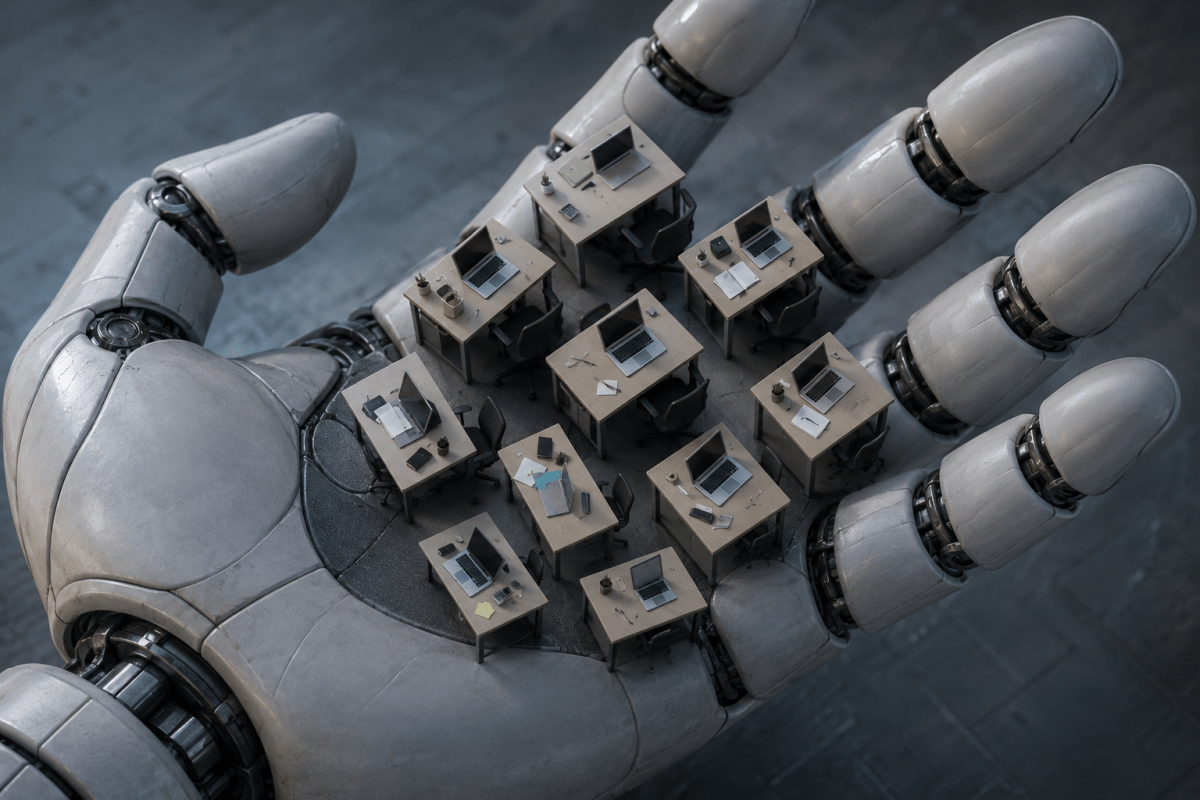
Major tech companies including Oracle, Google, and Meta are laying off thousands of workers while citing AI as both a driver of growth and a reason for the cuts, revealing a pattern where record revenues coexist with significant workforce reductions.
Oracle disclosed a 21,000-employee reduction (13% of workforce) over the past 12 months, citing AI adoption as a factor. Since May 2026, companies including Google, Meta, Intuit, Cisco, Cloudflare, Coinbase, PayPal, Snap, IBM, Atlassian, and Dell have announced layoffs ranging from roughly 500 to over 4,500 jobs each, all explicitly naming AI as part of their reasoning. These cuts are happening alongside strong financial results — Google's Cloud revenue grew 63% to over $20 billion(約3.2兆円), Cloudflare posted record quarterly revenue of $639.8 million(約1000億円) (up 34% year-over-year), and Meta's Cloud division backlog nearly doubled to over $460 billion(約74兆円) — suggesting companies are not cutting because they are struggling, but because they believe AI can do certain work with fewer people. This creates a tension: executives say AI is not replacing roles wholesale, yet they are simultaneously reducing headcount and pointing to AI efficiency as justification.
The scale is substantial — estimates of AI-related cuts across these companies total in the tens of thousands. Notably, some companies are hiring for AI-specific roles even as they cut overall headcount; IBM plans to triple U.S. entry-level hiring for AI and hybrid-cloud roles, and GM still had roughly 80 open IT positions including AI roles despite cutting 500–600 jobs. This suggests the shifts are structural, not temporary, and may reshape skill demand in tech.
- 3
Krea releases open-weights AI image models designed to reduce generic-looking outputs, requiring enterprise users and all downloaders to implement safeguards against misuse.
AI creative tools startup Krea released two versions of its new image model, Krea 2 Raw and Krea 2 Turbo, as open-weights models under a custom license on Hugging Face. Firms with more than 50 seats must pay for Enterprise usage, and all users must implement technical safeguards against illegal materials, non-consensual intimate imagery, child sexual abuse material, and defamatory assets. Many enterprises already use AI-generated images in production workflows, but growing commentary indicates AI imagery often looks monotonous and unoriginal—what is called "AI slop." Krea aims to address this by offering models the company says provide more visual variety, potentially helping businesses produce more distinctive branded content.
Both Krea 2 Raw and Krea 2 Turbo are available for public download on Hugging Face now. The custom license structure means smaller teams can access the models freely as long as they implement the required safeguards, while larger enterprises face a paid licensing requirement.
- 4
Midjourney, an AI image-generation startup, is pivoting into medical imaging with an ultrasound scanner that would scan users in water, but medical experts say the company has provided little evidence to support its claims that the device could match MRI quality.
Midjourney announced a whole-body ultrasound scanner that would lower users into a vat of water, use a ring of underwater sensors to send sound waves into the body, and generate internal images in about 60 seconds. The company is not initially positioning it as a medical diagnostic device—citing the high cost of FDA clearance and clinical trials—but rather as a wellness tool for spas. Midjourney is moving from its core business of generating synthetic images online into the heavily regulated world of medicine, but radiologists and medical imaging experts told The Verge the company's claims about image resolution and comparisons to MRI are unsupported by evidence. One professor of radiology called the claims "the most grandiose" he has seen, and another noted that ultrasound faces fundamental limits—sound waves cannot pass easily through air or bone—that make it unsuitable for imaging certain body parts.
The company plans to eventually expand into medical applications, but medical experts emphasized there is "a long road ahead to generating high-quality images and then to understand the clinical value and demonstrate net benefit to patients." Midjourney has shown only low-resolution prototype images so far, and no current evidence exists that detailed ultrasound scans could be comparable to MRI.
- 5
AWS is showing how to run ComfyUI—a visual tool for building AI creative workflows—on its SageMaker service to let enterprises generate hundreds of images, videos, or audio at scale in minutes to hours instead of waiting for manual creative work.
AWS published a technical guide demonstrating how to deploy ComfyUI workflows on SageMaker AI processing jobs, using GPU-accelerated instances and a queue-based architecture that processes multiple requests in parallel. The example uses Z-Image Turbo, a text-to-image model with 6B parameters, to generate batches of high-quality images without manual intervention. For businesses, the speed matters—content delays can mean lost sales and missed marketing deadlines. Automating image, video, and audio generation frees creative teams from repetitive tasks so they can focus on strategy, while the ability to test AI-generated content in controlled environments before global rollout helps protect brand consistency and compliance.
The solution uses pay-per-second billing with automatic job termination, so enterprises only pay for the compute they actually use. ComfyUI workflows can be exported as JSON and swapped into the deployment, and the architecture scales naturally across thousands of outputs without manual scaling.
- 6
Researchers at Shanghai AI Lab introduce Self-Harness, a system that lets AI agents automatically improve their own operating rules, potentially boosting performance up to 60%.
Researchers at the Shanghai Artificial Intelligence Laboratory have created Self-Harness, a new approach in which an LLM-based agent systematically improves its own operating rules by examining its own execution traces and applying edits, replacing manual, ad hoc debugging. Most enterprises cannot build their own frontier AI language models, but they can customize the harness (the set of rules controlling how a model behaves) for their specific needs. Current harnesses rely on manual tuning and intuition rather than systematic feedback, making them hard to keep pace with evolving models. Self-improving harnesses could let development teams deploy robust custom agents that continually adapt to overcome model-specific weaknesses.
The system trades manual guesswork for empirical evidence, enabling teams to move beyond intuition-driven debugging to data-driven rule refinement.
What to Watch
Watch for a structural reshaping of tech employment as companies simultaneously cut overall headcount while aggressively hiring for AI-specific roles—suggesting that skill demands in the industry are fundamentally shifting rather than temporarily contracting. Additionally, keep an eye on how open-source model licensing (like Krea's tiered approach) and cost-efficient deployment tools reshape who can afford to build with AI, potentially democratizing access for smaller teams while creating new economic models for larger enterprises.
Sources
- Show HN: Drudgereport but for AI
- The running list: major tech layoffs in 2026 where employers cited AI
- Enterprise-grade AI image generation in 2 seconds is here: Krea 2 Raw and Turbo available as open weights under custom license
- Something’s off with Midjourney’s pivot to body scanners
- Running ComfyUI workflows on Amazon SageMaker AI processing jobs
- ers introduce Self-Harness, a framework that lets AI agents rewrite their own rules, boosting performance up to 60%
- An Inconvenient Truth About AI
- Apertus – Open Foundation Model for Sovereign AI
- Vexyn – browser-only privacy tools with local AI
- Show HN: Zither – paste JSON/CSV/a spreadsheet table, stats instantly, no AI
Share this with a friend
Send today's roundup to anyone who wants to keep up.
Get daily AI news free with AIToday
200+ AI sources, summarized in 1 minute. Email / LINE / Slack.
Sign up free