AI Business & Industry
Sep 21, 2026
The Gist
KLA's AI-driven order backlog makes its stock look 24% undervalued, while Broadcom's $230 billion AI chip forecast is outpacing even Nvidia's growth. Nvidia CEO Jensen Huang says the industry should build AI "as fast as we can," and Visa is joining Mastercard and Ant International on standards to verify AI agents in payments.
Today's Stories
- 1
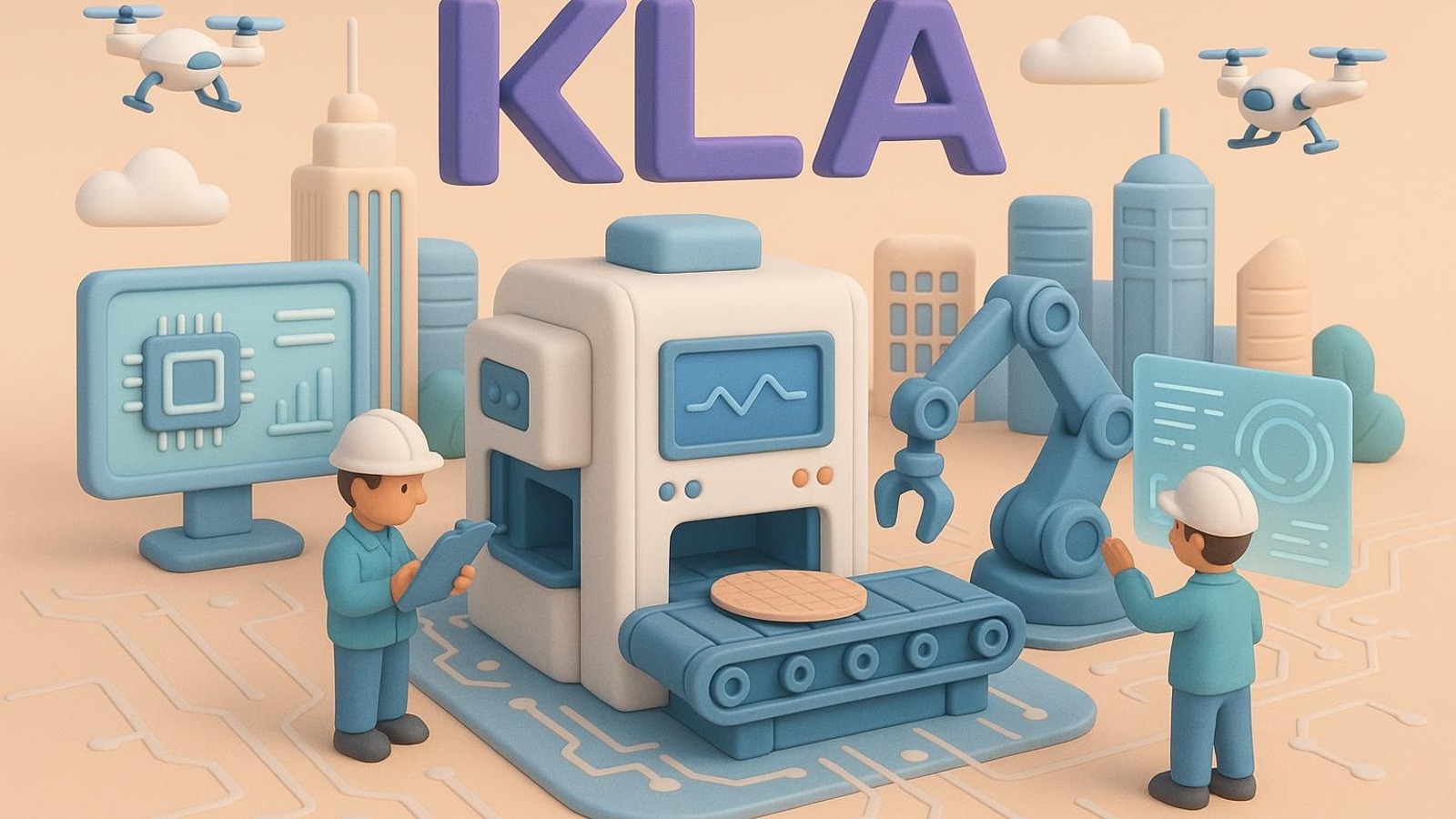
KLA fair value $232.43 sees 24% undervalued on AI backlog
Simply Wall St's most-followed KLA narrative sets fair value at $232.43 versus a $176.99 close, with the stock up 4.74% last session but down 34.24% over 90 days. That gap frames the AI equipment debate in pricing terms, and bulls lean on KLA's AI-driven backlog and profit base to argue the retreat is overdone.
The bull case hinges on whether tariffs and any further China revenue slowdown undercut the backlog story. Note KLA's 47.9x P/E is above peers at 45.3x and the 39.9x fair ratio.
- 2
Nvidia's Jensen Huang: develop AI "as fast as we can"
Nvidia founder and CEO Jensen Huang told CBS News that AI development should move 'as fast as we can irrespective of anybody else,' despite recent calls for caution from Anthropic researcher Jacob Coxon and CEO Dario Amodei. The world's largest chipmaker is publicly rejecting a slowdown, setting up a visible split with those warning about AI risks.
Huang also said Nvidia would never ship unsafe products, so the test is whether that pledge holds as development accelerates. Watch his full interview on Sept. 20 on 'Sunday Morning.'
- 3
Visa joins Mastercard, Ant International on Know Your Agent
Visa joined Mastercard and Ant International to design a shared Know Your Agent framework, aimed at standardising how AI purchasing agents are identified and monitored across global payment networks. The stock last closed at US$369.93. Agreeing on a common identification framework across these payment networks would reduce the risk that each company sets its own rules for the agents. That shared approach is what the three partners are aiming to build.
Whether the framework actually curbs fraud or adds compliance costs for the networks is undecided. Watch the DOJ antitrust case, which the leading narrative expects to end in a monetary settlement with limited routing adjustments.
- 4
Broadcom's $230 billion AI chip outlook outpaces Nvidia's 70% growth
Broadcom projected roughly $58 billion in AI semiconductor revenue for fiscal 2026, about $115 billion in fiscal 2027 and $230 billion in fiscal 2028, while Nvidia guided fiscal 2028 total revenue growth of about 70%. Broadcom's forecast implies two consecutive doublings and is the more aggressive of the two outlooks, though its AI business relies on a smaller number of massive custom-chip customers, which carries greater risk if a major buyer pulls back.
The headline growth rate may not tell the whole story — Nvidia's slower-but-broader expansion, spanning cloud giants, governments, start-ups and enterprises, could prove more durable over the long run. Watch whether Broadcom's concentrated customer base holds up.
- 5
Berkshire's 48 million Alphabet buy makes it third-largest holding
Berkshire Hathaway's latest 13F filing, covering holdings as of June 30, shows it bought more than 48 million Alphabet shares across both share classes in Q2, making Alphabet its third-largest stock position at about 12.6% of its equity portfolio. A roughly 12.6% portfolio weight is a strong signal of confidence in Alphabet from a conglomerate known for long holding periods.
The filing data is as of June 30 and may be outdated; the test is whether Berkshire keeps or adds to the Alphabet stake in future disclosures.
- 6
Aehr Test Systems slips 15.2% as KLA grows 11.7%
Aehr Test Systems reported FY2026 revenue of $50.0 million, down 15.2% from the prior year, and a net loss of $7.1 million. KLA posted FY2026 revenue of $13.6 billion, up 11.7%, with $4.8 billion in net income. The two AI-linked chip-equipment suppliers moved in opposite directions: Aehr's smaller, specialized business shrank and lost money, while KLA's larger, diversified operation grew profitably.
Whether Aehr's bet on silicon carbide and high-bandwidth memory can turn its negative $5.4 million free cash flow around, while KLA's Taiwan Semiconductor Manufacturing Company relationship, more than 10% of its revenue, remains a concentration risk.
What to Watch
Going forward, watch whether tariffs, China revenue trends, and high valuations like KLA’s can still support the AI-driven backlog story, and whether Berkshire keeps or builds on its Alphabet stake. Also keep an eye on whether Nvidia’s safety pledge holds, how the DOJ case against Google ends, and whether broader Nvidia growth proves more durable than Broadcom’s concentrated customer base.
Sources
- KLA (KLAC) Could Be 24% Undervalued On AI Demand And Backlog Growth
- Nvidia CEO Jensen Huang calls for AI to be developed "as fast as we can"
- Visa (V) Sets AI Payment Standards, Is The Stock Fairly Valued?
- Nvidia vs. Broadcom: Whose AI Revenue Actually Grows Faster From Here?
- Berkshire Hathaway's Favorite Artificial Intelligence (AI) Stock Looks Like a Genius Buy Now
- Better Artificial Intelligence Stock: Aehr Test Systems vs. KLA Corporation
- Gartner Forecasts Worldwide AI Spending to Grow 49.5% in 2026
- Citi expects hawkish Fed to slow non-AI economy
- Cisco (CSCO) Leans on Splunk to Broaden Its Share of Enterprise AI Spending. It Faces a Big Test
- Palantir Technologies (PLTR) AI Deal Rush Meets A Fair Value Debate
- Qualcomm’s AI Pivot Has A Problem (NASDAQ:QCOM)
- Watch QEF 2026: Citi CEO Sees ‘Tsunami’ of Patching to Secure AI Defense
- AppLovin's Revenue Momentum Reflects AI-Driven Advertising Demand
- Loblaw Bolsters Supply Chains With AI-Powered Gate Automation
- Vertiv (VRT) Stock Stays Fairly Priced Following Its $2.6B AI Power Deal
- Burger King and McDonald’s are reversing its course on AI as customers crave human connection
Share this with a friend
Send today's roundup to anyone who wants to keep up.
Get daily AI news free with AIToday
Today's AI, for Today's work. Email / LINE / Slack.
Sign up free