Video Generation
Oct 2, 2026
The Gist
Tavus' Griffin AI avatar now passes as human on 48 percent of calls, while Higgsfield AI produced a 95-minute film called Hell Grind for $500,000. New tools like Manus 2.0 and AWS-hosted models such as FLUX.2-klein-4B and Wan2.1-VACE-1.3B keep pushing video generation toward cheaper, more automated production.
Today's Stories
- 1
Tavus' Griffin AI avatar fools 48 percent on calls
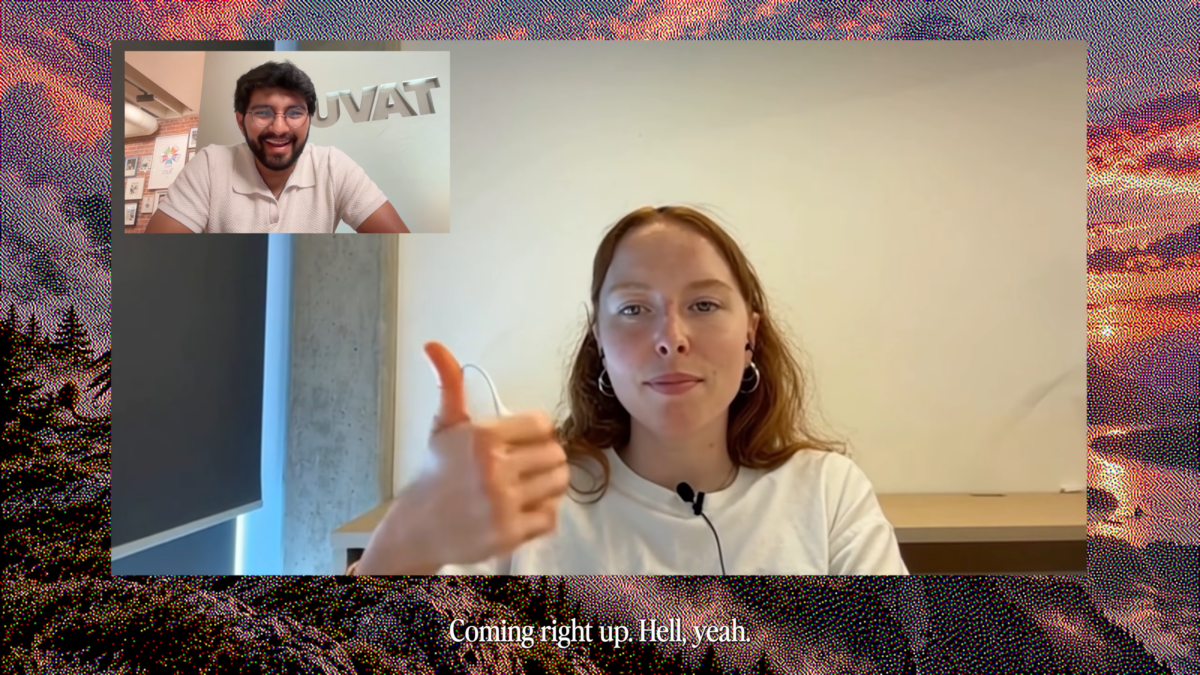
Tavus introduced Griffin, which it calls the first "Human Interaction Model," processing speech, facial expressions, tone of voice, gestures, and pauses while receiving and generating video. In a Tavus study, 48 percent of participants believed Griffin was a real person after a one-minute video call; previous systems maxed out at two percent. If a one-minute call can pass for human at that rate, people on the other end of a video call may not reliably tell an AI avatar from a real person. Tavus itself is holding back the more capable version until safety concerns are addressed, which signals the company sees the same risk.
The headline number comes from Tavus' own study, so the test is whether outside evaluations match it. Watch the timing of the fuller Griffin release, which Tavus ties to safety concerns being addressed.
- 2
Agents making toddler videos must ask before spending credits
A developer whose AI agents plan, make stills, check them and turn them into toddler videos now requires any step that spends real credits — video rendering and final stitching — to post an approval card first. The cheap steps stay automatic, so most rejects now land on a still before anything expensive runs, at a cost of a few seconds per tap.
The setup hinges on the developer tapping yes or no each time, and the open question they pose is whether others gate on the plan, on QA, or only right before publish.
- 3
Higgsfield AI made Hell Grind, a 95-minute film, for $500,000
AI video startup Higgsfield AI made Hell Grind, a 95-minute action film with all synthetic actors and visuals entirely AI generated, with a team of 15 in under three weeks for a budget of just $500,000, four out of every five dollars spent on compute. The startup contends future films will still require directors, screenwriters, set and costume designers, and actors, even as it pitches that AI will result in job losses for production crew and visual-effects workers.
Whether audiences embrace this, since some of 2026's biggest box office hits like The Odyssey and Obsession were made using practical effects, and moviegoers showed less willingness to pay for films heavily reliant on computer-generated effects.
- 4
kling-4.org writer: continuity log for AI video
A writer for the independent kling-4.org site proposed a continuity log for AI video work — three shared anchors plus a text table of settings, references and review notes. The log is meant to make comparisons less confusing when a frame changes, since it helps show whether a different reference, instruction or setting caused it, though the record does not establish causation.
The author states the log cannot guarantee matching footage and is a proposed workflow, not a report of generation tests; the same method is said to work for text- and image-based experiments.
- 5
Manus 2.0 launches as a platform for video, games, personal agents
Manus launched version 2.0, adding a Video Editor and Game Dev environment to its new Manus Studio desktop app, event-triggered automations, Computer Use on approved files and apps, and a separate app called Cue with free early access. Turning the agent into a platform means the same tool now covers video editing, hosted games, and personal agents—and users can direct their own computer remotely from a phone.
Manus 2.0 is available now, but Cue needs an invite code for free early access, so wider use likely hinges on how quickly those invites go out. The competition is unresolved: Meta acquired Manus in late 2025, had to unwind after Beijing blocked it, and Tencent has been negotiating for the largest stake.
- 6
AWS shows FLUX.2-klein-4B and Wan2.1-VACE-1.3B on SageMaker AI
AWS published a code sample deploying a real-time endpoint for FLUX.2-klein-4B image generation and an asynchronous endpoint for Wan2.1-VACE-1.3B video generation from one AWS vLLM-Omni DLC on SageMaker AI. Sharing one container across both models could simplify updates and consistency for teams running generative media, while separate endpoints let each model use the instance type and inference option that fits.
The numbers AWS reports are single-run checkpoints, not benchmarks, so real throughput and latency will depend on prompts and instance availability. Watch the default 17 frames and 30 diffusion steps, and the note that four steps did not preserve source composition.
What to Watch
Going forward, watch whether independent tests confirm Tavus's headline number, how quickly Griffin and Manus 2.0 (plus Cue invites) reach wider use, and whether audiences reward AI-driven effects as much as the practical effects behind 2026 hits like The Odyssey and Obsession, while early AWS figures and the default 17-frame, 30-step settings remain unverified as real-world benchmarks.
Sources
- Nearly half of test subjects mistook Tavus' AI video avatar for a real person on a one-minute call
- my agents kept burning video credits on scenes we'd throw away, so now they have to ask me first
- How AI is becoming Hollywood’s newest star, changing work on and off camera
- A Tiny Continuity Log Makes AI Video Experiments Easier to Compare
- Manus 2.0 lets users edit videos, host multiplayer games, and run agents remotely from their phone
- Generate images and video with vLLM-Omni on SageMaker AI – Part 2
- I created an interactive digital avatar of myself — and you can talk to it
- Hollywood scouts film schools for AI-native talent
- Harimoto hails new era as Japan dethrone table tennis kings China
- China fuels rush to turn AI video into an industry
- Runway’s WorldPrompt and the Engineering of Real-Time Worlds
- Fans slam ‘repulsive’ AI recreation of dead actor in new Netflix show
- Agentic conversational video intelligence built on AWS
- YouTube is building AI creator tools that do almost everything for them
- YouTube releases new AI features for creators within its Studio app
- Why Is AppLovin (APP) Facing A Class Action Over Its AI Disclosures?
Share this with a friend
Send today's roundup to anyone who wants to keep up.
Get daily AI news free with AIToday
Today's AI, for Today's work. Email / LINE / Slack.
Sign up free