Autonomous Driving
Jul 25, 2026
The Gist
Chinese automakers Xpeng and Hisense are doubling down on autonomous and AI-powered vehicles, with Xpeng launching robotaxis and flying cars while Hisense expands into automotive chips, even as traditional German automakers are shifting their strategies toward AI partnerships amid slowing EV demand. Meanwhile, the autonomous driving sector faces mounting challenges: a major battery defect affecting 210,000 Chinese EVs has disrupted supply chains, rising DRAM costs are pressuring EV makers, and safety experts continue to scrutinize whether Waymo's autonomous systems truly outperform human drivers.
Today's Stories
- 1
Hisense expands AI strategy beyond appliances to chips, energy, autos
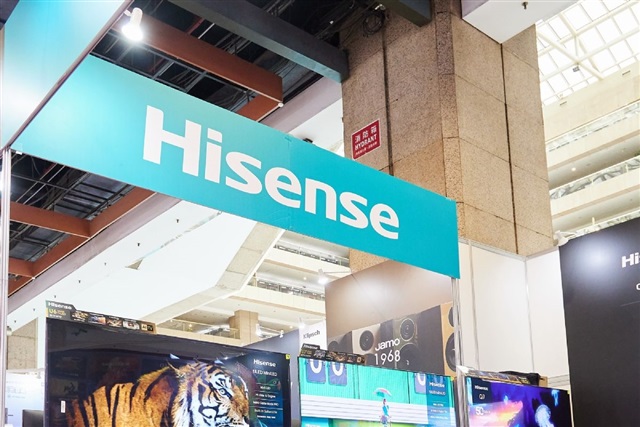
Hisense, a Chinese consumer electronics maker, announced at its global partner conference in New York that it will expand its AI strategy beyond home appliances into semiconductors, smart energy, laser displays, and automotive electronics. The move signals that Hisense is repositioning itself as a broader technology company rather than remaining focused on traditional consumer appliances, competing across multiple hardware categories where AI integration is becoming central.
The company's ability to execute across these new segments — particularly semiconductors and automotive electronics — where it faces entrenched competitors and will need new capabilities and partnerships.
- 2
Waymo safety vs. human drivers: experts weigh in
Major tech companies—Alphabet (which owns Waymo), Amazon (which owns Zoox), and Tesla—are investing billions of dollars to determine whether autonomous vehicles are safer than human drivers. The outcome of this question will shape whether self-driving cars become a mainstream transportation option and how regulators oversee them. Each company has a separate autonomous vehicle division betting on a positive answer.
The body does not specify a timeline, funding amount, or concrete safety metric being used to measure the comparison.
- 3
AI server surge drives DRAM costs up, pressuring EV makers
Soaring demand for AI servers has driven DRAM prices sharply higher over the past year. That cost increase is now beginning to affect the automotive sector, forcing Chinese EV makers to rethink their pricing strategies. DRAM is a critical memory chip used in everything from servers to vehicles. When AI data centers compete for scarce supply, automotive manufacturers face higher component costs. For cost-sensitive EV makers in China, this shifts their pricing calculus at a time when EV competition is already intense.
How Chinese automakers respond to sustained elevated DRAM costs—whether they absorb the expense, pass it to consumers through higher prices, or seek alternative suppliers or designs to mitigate the impact.
- 4
German automakers shift strategy to AI and alliances as EV demand slows
Volkswagen, BMW, and Mercedes-Benz are reshaping their growth strategies as the global auto market enters a low-growth era, with profitability under pressure and EV demand slowing. Instead of chasing volume, the three German automakers are focusing on new approaches—signaling a fundamental pivot away from the high-volume expansion that has defined the industry for decades. This shift reflects real market headwinds that automakers across the sector will likely need to address.
The specific details of their new strategic focus on AI and powertrain technology, and how their alliance moves play out in the competitive landscape.
- 5
LFP battery failures hit 210,000 Chinese EVs, disrupt automakers' CATL shift
Lithium iron phosphate (LFP) batteries made by China Aviation Lithium Battery (CALB) have developed cell swelling, electrolyte leakage, and insulation failures in ride-hailing and taxi versions of GAC Aion's Aion S across 210,000 vehicles. The quality issue is spreading among automakers who have been moving away from CATL (Contemporary Amperex Technology Co.) batteries. Chinese automakers have been working to reduce their reliance on CATL, the dominant battery supplier, by diversifying to competitors like CALB. This widespread failure in CALB batteries undermines that strategy and may force automakers back toward CATL or delay their independence plans, potentially giving CATL continued control over battery supply and pricing.
The scope and timeline of recalls or replacements for the 210,000 affected vehicles, and whether other automakers using CALB batteries experience similar issues—either outcome could reset the competitive balance in China's EV battery supply chain.
- 6
Xpeng pivots to Physical AI: robotaxi, humanoid robots, flying cars
Xpeng announced a 10-year transformation into a physical AI supplier with three core product lines—robotaxi, humanoid robots, and flying cars—according to chairman Xiaopeng He in an interview with Automotive News. The shift signals Xpeng's intent to move beyond traditional automaking into a broader robotics and autonomous-vehicle ecosystem, potentially positioning the company as a hardware-AI platform rather than a conventional carmaker.
The company's ability to deliver on all three product categories simultaneously over the next decade, and whether it can sustain profitability while investing heavily in physical AI infrastructure.
What to Watch
Watch whether the company can successfully break into semiconductors and automotive electronics against established rivals while building the partnerships and expertise those sectors demand, and monitor how Chinese automakers navigate rising DRAM costs and battery supply chain disruptions—moves that could reshape competitive positions across China's EV industry over the coming years.
Sources
- Hisense expands AI strategy into energy, chips, and automotive electronics
- Waymo vs. human drivers: Experts reveal which is safer
- AI-driven DRAM surge hits EV costs, forcing Chinese automakers to rethink pricing
- German automakers reset strategy with AI, powertrain, and alliances
- LFP battery failures in 210,000 Chinese EVs throw wrench into automakers' plans to reduce reliance on CATL
- Xpeng shifts toward Physical AI with robotaxi, robot, flying car
- Ukrainian drones deliver robots directly into battle by sea and air
- Foxconn's Jun Seki says L4 adoption will be in 80% of new cars by 2040
- Rideshare companies use AI to tap Colorado riders and drivers
- How New Tech and Smart Tools Are Changing the Automotive Industry
Share this with a friend
Send today's roundup to anyone who wants to keep up.
Get daily AI news free with AIToday
200+ AI sources, summarized in 1 minute. Email / LINE / Slack.
Sign up free