Autonomous Driving
Jun 24, 2026
The Gist
Robotaxis are launching in London this summer as Wayve, Waymo, and Baidu compete to dominate Europe's autonomous vehicle market, with Britain moving ahead of the EU through speedier regulatory approval. Meanwhile, AWS is demonstrating how AI-driven automation is transforming industries beyond transportation, showcasing self-driving lab technology that's accelerating pharmaceutical discovery and development.
Today's Stories
- 1
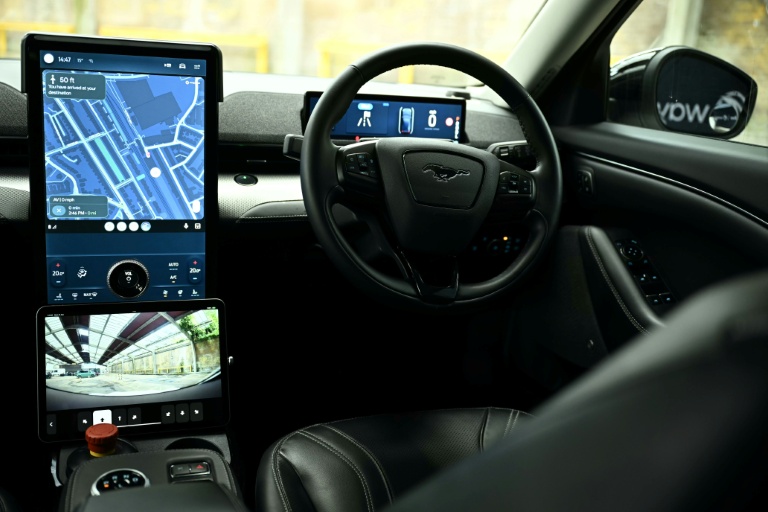
Robotaxis are launching in London this summer as Wayve, Waymo, and Baidu race to lead Europe's autonomous vehicle market, with Britain positioning itself ahead of the EU through faster regulation.
British start-up Wayve, in partnership with Uber, will begin commercial robotaxi rides in London this summer with a human operator on board initially. US rival Waymo, which already operates in 11 US cities, is expected to follow shortly after. China's Baidu, partnering with Lyft, will test in the coming weeks before launching in London later this year. London's complex streets—with 20 times more road construction than San Francisco and 10 times more vulnerable road users—present a real test of autonomous vehicle technology. Britain's government has sped up regulation to move ahead of the EU, and expects the autonomous vehicle sector to generate 38,000 jobs and £42 billion ($55 billion(約8.8兆円)) by 2035. However, companies face public trust challenges after high-profile mishaps, including Baidu vehicles stalling in central China and Waymo recalling nearly 4,000 cars after robotaxis entered closed-off highway construction areas.
Londoners can take their first commercial rides with Wayve this summer, with fares likely to be "pretty similar" to traditional taxis at launch. The sector's complexity means companies may collaborate in some cities while competing in others.
- 2
Tech stocks rallied on AI infrastructure demand and U.S. chip strategy, as Apple-Intel partnership and major M&A deals signaled growing focus on domestic semiconductor capabilities.
Intel gained nearly 5% after President Trump announced Apple would collaborate with the company on U.S.-based chip development and manufacturing. Separately, Nebius completed its acquisition of AI optimization specialist Eigen AI and posted a 10% weekly gain, while RUM Group finished its purchase of Germany-based Northern Data and launched its Quake AI platform. Ondas announced its sixth acquisition of 2026, agreeing to buy Cyberhawk for about $125 million(約200億円) to expand its drone inspections and critical infrastructure monitoring capabilities. Investors are watching companies that control hardware for AI computing and domestic chip production as governments and corporations prioritize securing their own semiconductor capabilities. The flurry of deals and partnerships reflects a strategic shift toward building AI infrastructure at scale and reducing reliance on overseas manufacturing, which appears to be reshaping where investors see long-term demand.
While most semiconductor and AI infrastructure stocks declined during the week—UBER, TSLA, and ASTS fell between 1% and 7%—retail investor interest surged on some names (RUM message volume jumped 86%, MRVL message volume up 12%). Geopolitical tensions between the U.S. and Iran also lingered, though negotiators reported meaningful progress during talks in Switzerland on Monday, with hopes to finalize a broader agreement within the next two months.
- 3
Stratechery is a subscription-based news and analysis service offering daily business technology coverage, podcasts, and interviews — not a news story requiring summary.
The article body provided is a subscription landing page describing Stratechery's offerings (daily updates, interviews, and podcasts) and FAQ, not a news article about a business event or announcement. There is no news event to analyze. The body contains only service descriptions, pricing ($15/month or $150/year), and subscription management instructions — it does not report a change, announcement, or development in business or technology.
No forward-looking claim or date is present in the body. To produce a meaningful summary, a news article body (not a service landing page) is required.
- 4
🔬 The Self-Driving Lab — Joseph Krause, Radical AI
🔬 The Self-Driving Lab — Joseph Krause, Radical AI
- 5
AWS showcases Self-Driving Lab technology at Summit 2026, demonstrating how AI-driven automation is transforming pharmaceutical discovery and development.
AWS is presenting Self-Driving Lab—a system that uses physical AI to automate drug discovery workflows—at the AWS Summit 2026 Healthcare & Life Sciences booth. Automating laboratory processes through AI has the potential to accelerate pharmaceutical research timelines and reduce manual experimental overhead, making it relevant to life sciences organizations evaluating new research infrastructure.
This demonstration at AWS Summit 2026 represents AWS's expansion into physical AI applications within healthcare, signaling industry momentum toward autonomous laboratory systems.
- 6
Claude Code's human-approval workflow frustrates users because it forces repetitive yes/no decisions without context, preview, or the ability to delegate to domain experts.
Users report that Claude Code (Anthropic's AI coding assistant) requires manual approval for code changes, but the system repeats the same questions across sessions, shows no preview of consequences before execution, and offers no way to route decisions to specialists like database administrators. The approval workflow creates a bottleneck where busy developers either approve changes they don't fully understand or must stop work to research consequences. The lack of memory across sessions means teams re-answer the same architectural questions repeatedly, wasting time instead of saving it.
The core friction points—no context window for approvals, no preview before execution, and no delegation mechanism—suggest that human-in-the-loop code generation at scale may require deeper integration with team workflows and expertise routing, not just yes/no gates.
What to Watch
Watch for Wayve's London launch this summer as the first major test of whether autonomous ride-hailing can achieve mainstream adoption at competitive prices, while the sector's potential for both collaboration and competition across different cities will signal how quickly this technology scales globally. Meanwhile, keep an eye on whether AI infrastructure companies can translate retail investor enthusiasm into sustainable growth amid geopolitical uncertainties, and monitor how enterprise AI tools evolve to better integrate human oversight into workflows—moving beyond simple approval gates to smarter delegation and context-aware decision-making.
Sources
- Race for robotaxi market arrives in London
- Why Retail Traders Couldn’t Take Their Eyes Off These Stocks Last Week: INTC, RUM, NBIS, ASTS, ONDS
- An Interview with Michael Morton About E-Commerce in the Age of AI
- 🔬 The Self-Driving Lab — Joseph Krause, Radical AI
- フィジカルAIで創薬が変わる Self-Driving Labのご紹介 | AWS Summit 2026 Healthcare & Life Sciences ブース
- HITL in Claude Code is too noisy and repetitive
- The ‘AI superstar’ CEO behind a self-driving truck unicorn on why Gen Z is a better hiring bet than industry veterans
- Qualcomm’s AI Ecosystem Extends To Humanoid Robots And Autonomous Vehicles
- フィジカルAIで創薬が変わる Self-Driving Labのご紹介 | AWS Summit 2026 Healthcare & Life Sciences ブース
- Decart’s Oasis 3 world model streams realism into robotic training environments
Share this with a friend
Send today's roundup to anyone who wants to keep up.
Get daily AI news free with AIToday
200+ AI sources, summarized in 1 minute. Email / LINE / Slack.
Sign up free