Robotics
Jul 21, 2026
The Gist
Robotics is moving into the mainstream with AI-powered construction robots now working on real job sites, while Samsung is consolidating its robot efforts and eyeing a separate humanoid business division. Meanwhile, innovations are accelerating across sectors—from software tools transforming auto repair and logistics, to brain-controlled robots and integrated drone technologies—as companies like Beyondsoft and BrainCo expand enterprise AI and robotics applications globally.
Today's Stories
- 1
Gritt deploys AI robots on real construction sites with top-10 US contractors
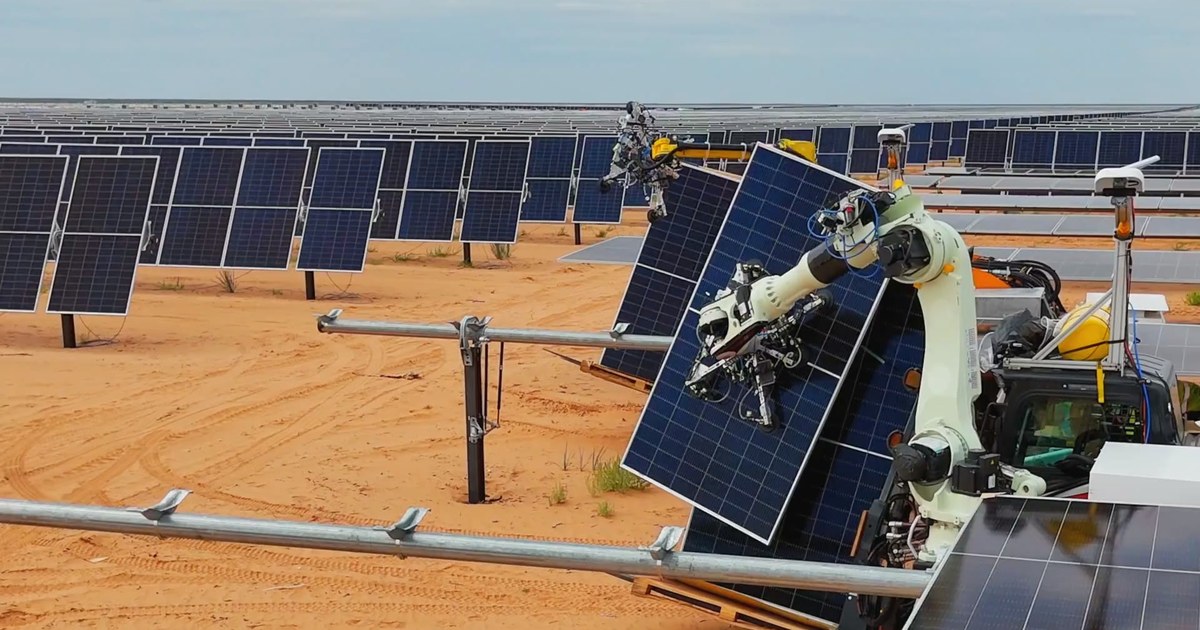
Gritt, an AI-robotics system, is now operating on-site at multiple jobsites with some of the largest engineering and construction firms in the US. The company handles pick-and-place, transport, and assembly work on solar, concrete, and rebar projects, and is expanding into verification and planning tasks. Construction is a sector where labor-intensive, repetitive physical work dominates, and Gritt's deployment signals that AI-driven automation is moving from labs into real-world infrastructure projects. The system achieves a 4× efficiency gain without added labor, which could reshape how major construction projects are executed and staffed.
Gritt has deployed to 7+ jobsites already and is expanding beyond solar into data center and large infrastructure work. The company is backed by investors including Obvious Ventures, Union Square Ventures, and First Round Capital, and is actively hiring to scale the team.
- 2
Software and diagnostic tools reshape auto repair, logistics, paperwork
The automotive industry is adopting everyday digital tools—diagnostic equipment for repairs, contract management software for paperwork, and online tracking systems for vehicle transport—to streamline operations across shops, dealerships, and logistics. Modern vehicles require precise calibration of safety systems after damage; digital document management reduces human error and frees staff from manual filing; real-time transport tracking eliminates confusion and delays. These tools make operations faster and safer without replacing workers.
The article suggests adoption will accelerate as technology becomes more accessible and affordable, though it does not name specific timelines, pricing, or adoption metrics.
- 3
Samsung unites robot teams, eyes standalone humanoid division
Samsung Electronics is consolidating its scattered robotics teams under a single organizational structure, according to industry sources cited by JoongAng Daily. The company is centralizing talent and technology across its robotics operations as competition in humanoid robots shifts toward AI-based autonomous control. The move reflects a strategic pivot in the robotics sector—companies are increasingly focusing on autonomous decision-making rather than pre-programmed behavior. Samsung's centralization suggests the company sees humanoid robots as a core business area and is positioning itself to compete in an evolving market where AI capabilities are becoming the key differentiator.
Samsung's potential creation of a standalone humanoid robot division. The timing of this reorganization and the scale of resources committed to the new structure will indicate how seriously Samsung views the robotics market relative to its existing hardware and semiconductor businesses.
- 4
Beyondsoft targets Singapore as hub for enterprise AI and robotics
Beyondsoft, an IT services provider based in Singapore, is positioning the region—particularly Singapore itself—as a key testing ground for agentic AI (AI systems that act autonomously) and physical AI (robots), while deepening its push into robotics and enterprise automation. The company believes agentic AI will reach commercial deployment before physical AI does, opening a near-term revenue opportunity in enterprise automation. Singapore's ecosystem of cloud providers, governments, and enterprises makes it a natural proving ground for these technologies.
Beyondsoft's next steps in rolling out agentic AI solutions to enterprise clients and their timeline for physical AI offerings in the region.
- 5
ePropelled Launches Integrated Drone Motor-Controller to Speed Production
ePropelled unveiled the SKYLARK™ Series at the Farnborough International Airshow 2026—an integrated propulsion system combining motor and controller into a single unit for light and medium duty unmanned aircraft, designed to reduce wiring, shorten assembly time, and allow manufacturers to build more compact aircraft or increase payload capacity. Drone makers are increasingly focused on faster production and simpler supply chains; by consolidating separate propulsion components into one integrated unit, SKYLARK reduces manufacturing complexity and assembly time while maintaining performance and reliability—helping OEMs scale production without compromising mission effectiveness.
ePropelled is positioning SKYLARK as NDAA-compliant and built on secure, sovereign supply chains for European and NATO-aligned UAV manufacturers. The company will conduct technical briefings at Farnborough focused on high-power UAV applications and hybrid propulsion systems.
- 6
BrainCo showcases brain-controlled robot at AI conference
At the 2026 World Artificial Intelligence Conference in Shanghai, BrainCo demonstrated a brain-computer interface (BCI) platform that lets users direct a robot through neural signals. A person wearing an EEG headset thought about grasping a cap, and a robotic arm performed the action in under 200 milliseconds. The company also debuted its Embodied AI Data Collection Solution, which combines EEG data from human operators with robot execution and simulation data to address the shortage of high-quality training data for robots learning complex physical tasks. Teaching robots to perform dexterous tasks like folding laundry or assembling components requires enormous amounts of high-quality training data—a persistent technical challenge in robotics. BrainCo's system captures not just what hands do, but what the brain intends, combining real-world execution quality with the scalability of human demonstration. The BCI platform works with commercially available robots (humanoids, arms, legged robots) without requiring proprietary hardware, potentially making it easier for robotics R&D teams to integrate into existing pipelines.
BrainCo, founded in 2015 and based in Somerville, Massachusetts, already sells three robotic products: the Revo 3 Dexterous Hand (21-degree-of-freedom end effector), the Intelligent Bionic Hand (prosthetic), and the Intelligent Bionic Leg (smart prosthetic knee joint). The company has spent over a decade developing its BCI and medical rehabilitation technology.
What to Watch
As robotics companies like Gritt expand into new sectors and larger infrastructure projects while backed by major venture firms, watch whether affordable and accessible automation will truly accelerate adoption across industries in the near term. Samsung's potential commitment to a standalone humanoid robot division, combined with advances in enterprise AI agents from companies like Beyondsoft and specialized hardware solutions from players like BrainCo and ePropelled, will reveal whether robotics is finally reaching an inflection point where it becomes as essential to modern business as semiconductors and traditional hardware already are.
Sources
- Gritt: AI to Build Infrastructure with Robotics
- How New Tech and Smart Tools Are Changing the Automotive Industry
- Samsung consolidates robot teams and weighs standalone HX division
- From Beijing to Singapore—how Beyondsoft is betting on agentic and physical AI in Southeast Asia
- ePropelled Targets Faster Drone Manufacturing with Integrated SKYLARK Propulsion
- BrainCo demonstrates brain-controlled robot AI platform
- AGIBOT unveils four embodied AI products for real-world operations at WAIC
- AGIBOT unveils four new robots at WAIC 2026 as it expands industrial embodied AI portfolio
- Humanoid Robots: The US-China Divide and Who Controls the Supply Chain — Latest Analysis on TrendForce's Substack
- Tai-Saw leverages frequency-component portfolio to expand into optical communications, LEO satellites and drones
Share this with a friend
Send today's roundup to anyone who wants to keep up.
Get daily AI news free with AIToday
200+ AI sources, summarized in 1 minute. Email / LINE / Slack.
Sign up free