AI in Healthcare
Aug 24, 2026
The Gist
Google Cloud tool classifies child pneumonia from X-rays without coding. Mark Cuban: "No Chance" Radiologists Get Replaced by AI. He Says the Real Target Is Elsewhere. Hospital seeks on-prem MLOps platform for production model monitoring
Today's Stories
- 1
Google Cloud tool classifies child pneumonia from X-rays without coding
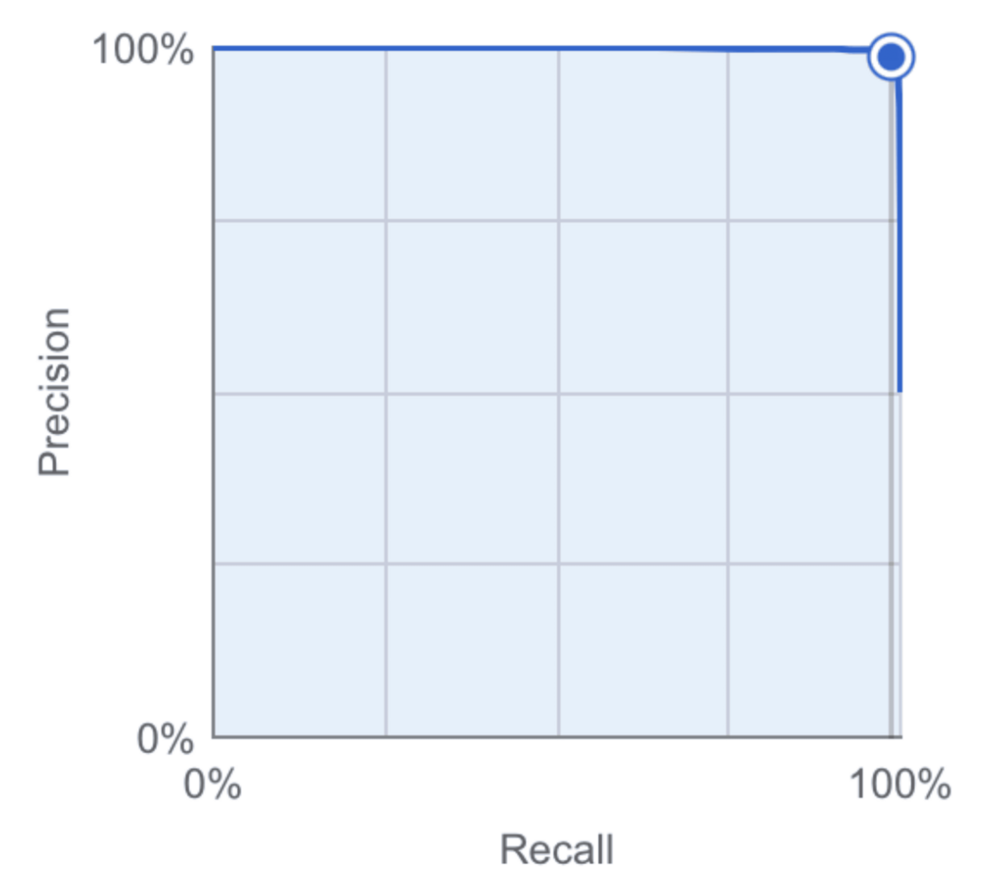
Researchers used Google Cloud Vertex AI AutoML, a no-code machine learning platform, to build and validate a system that automatically classifies pneumonia in pediatric chest radiographs (X-ray images of children's chests). The study was a proof-of-concept internal validation, published in the journal Cureus. Pneumonia diagnosis typically requires radiologist expertise and time. An automated classification system could reduce diagnostic delays and potentially expand access to reliable pneumonia detection in settings with limited specialist availability, particularly for pediatric cases where misdiagnosis carries clinical risk.
The study represents a proof-of-concept validation; the body does not specify availability, deployment timeline, accuracy metrics, or rollout plans. Further external validation and clinical integration steps would be needed before real-world hospital use.
- 2
Hospital seeks on-prem MLOps platform for production model monitoring
A hospital operating a fully on-premises OpenShift cluster is evaluating ClearML and OpenShift AI for managing machine learning models built by multiple internal teams, as well as models running at external vendors. The organization is building a self-service platform with centralized boundary policies to let teams work independently while enforcing guardrails around access control and resource limits. Healthcare organizations must keep patient data on-premises for compliance and security reasons, ruling out cloud-based MLOps tools. The hospital's challenge—monitoring both internal models and external vendor models for production issues like data drift and bias—reflects a real constraint in regulated industries where real-time visibility across the full model lifecycle is critical for patient safety.
The hospital has identified a gap in existing platforms: neither ClearML nor OpenShift AI provides the production monitoring depth needed (drift detection, bias tracking, live per-model dashboards). The ability to monitor vendor models where only input/output data feeds are available—a common scenario in healthcare partnerships—appears to be an unmet need in the current tooling landscape.
- 3
Genomics expert Schadt leaves Pathos AI, joins Pfizer as first AI Scholar
Eric Schadt, a computational biology expert and former chief scientist at Pathos AI, is departing that role to advise Pfizer as its first AI Scholar while also launching a new stealth-mode startup. Schadt will remain Dean for Precision Medicine at the Icahn School of Medicine at Mount Sinai. Schadt is a veteran biotech entrepreneur with a track record spanning roles at Roche, Merck, Pacific Biosciences, and Sema4; he has published over 500 scientific papers with an H-Index of 165 and has appeared on lists of the world's most influential scientists. His advisory role at Pfizer signals the pharmaceutical giant is betting on AI to reshape its R&D strategy and drug discovery process.
Schadt's stealth startup is focused on precision medicine, built on the principle of starting with individual patient data and using AI to guide treatment decisions. At Pfizer, he will work with teams to shape AI strategy and build proprietary models.
- 4
Eli Lilly partners with Insilico Medicine for $2.8B AI drug discovery
Eli Lilly has signed an agreement with Hong Kong-based Insilico Medicine valued at $2.8B to expand its AI-driven drug development efforts. The deal signals that major pharmaceutical companies are increasingly betting on AI to accelerate and reduce costs in drug discovery—a traditionally slow, expensive process that historically takes years and billions to bring a single drug to market.
The partnership will test whether AI can meaningfully shorten timelines and improve success rates in identifying drug candidates, a critical benchmark for the pharmaceutical industry's broader embrace of machine learning in research.
- 5
WIO 2026 conference to feature AI, AMD, physician talks
The World Ophthalmology Congress (WIO) 2026 has announced its agenda, which will include sessions on artificial intelligence, age-related macular degeneration (AMD), and physician leadership topics. Ophthalmology conferences shape clinical practice and research priorities. A congress agenda that covers AI reflects the specialty's interest in how machine learning may influence eye care, while AMD and leadership education address pressing clinical and professional needs in the field.
WIO 2026 will bring together ophthalmologists globally to discuss emerging tools and practice challenges, though the body does not specify dates, location, or registration details.
What to Watch
The study represents a proof-of-concept validation; the body does not specify availability, deployment timeline, accuracy metrics, or rollout plans. Further external validation and clinical integration steps would be needed before real-world hospital use. The hospital has identified a gap in existing platforms: neither ClearML nor OpenShift AI provides the production monitoring depth needed (drift detection, bias tracking, live per-model dashboards). The ability to monitor vendor models where only input/output data feeds are available—a common scenario in healthcare partnerships—appears to be an unmet need in the current tooling landscape.
Sources
- Code-Free Classification of Pediatric Pneumonia on Chest Radiographs Using Google Cloud Vertex AI AutoML: A Proof-of-Concept Internal Validation Study
- Mark Cuban: "No Chance" Radiologists Get Replaced by AI. He Says the Real Target Is Elsewhere
- On-prem MLOps in a hospital: advice needed for production monitoring of self-built and vendor models? [D]
- AI, genomics expert leaves Pathos AI, will advise Pfizer
- Video Eli Lilly inks $2.8B AI drug discovery deal - ABC News
- WIO 2026 agenda spans AI, AMD, and physician leadership
- When AI designs a drug, who gets the credit?
- HP Korea localizes AI strategy with Upstage in healthcare, finance
- Astromech raises $20M to build a biological operating system that can forecast evolutionary change
- Bristol Myers Squibb, Chai Partner on AI Antibody Discovery
- Bristol Myers Squibb Partners with Chai Discovery for AI Antibody Design
- Tempus AI Soars as Merck-Moderna Cancer Trial Validates Personalis Acquisition
- Mayo Clinic taps new CIO as academic medical center doubles down on AI
- Protein Design & Engineering Market Global Report 2026: Evaluating AI Platforms, Rational Design, Directed Evolution, and Strategies of Lonza, Thermo Fisher, GenScript, and Charles River
- Aily Labs Partners with Google Cloud to Scale AI Decision Intelligence for Pharma and Biotech
- Anthropic says any lab can now let a language model agent run the whole protein design stack
Share this with a friend
Send today's roundup to anyone who wants to keep up.
Get daily AI news free with AIToday
Today's AI, for Today's work. Email / LINE / Slack.
Sign up free