Autonomous Driving
Sep 17, 2026
The Gist
Tokyu and Panasonic Connect are putting door-close AI into service on the Toyoko Line, while Leotek finished testing its Interlux AI traffic signals in Georgia. Hyundai has launched its Data Flywheel and set a 2028–2029 self-driving roadmap, the US Army awarded TERN an $11.26 million AI navigation deal, and Minneapolis councilors want humans behind the wheel of Waymos by a September 22 hearing.
Today's Stories
- 1
Tokyu, Panasonic Connect roll out door-close AI on Toyoko Line
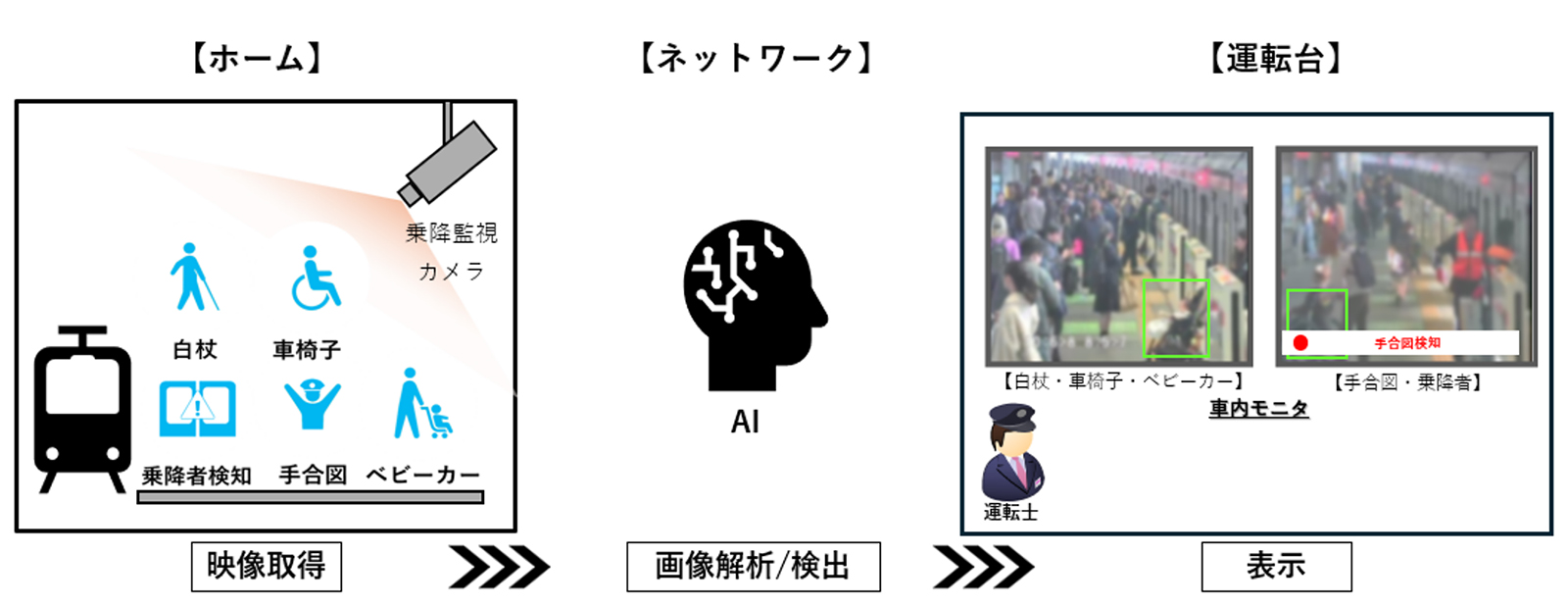
Tokyu Railways and Panasonic Connect will sequentially introduce the Crew Support Platform Monitoring AI System from September 17, 2026, at 20 Toyoko Line stations from Daikanyama to Yokohama, excluding Shibuya. The system is meant to support drivers' door-closing checks on one-person trains by detecting passengers and station staff barrier-free signals and showing them on the cab monitor, after a trial at Toritsu-daigaku and Tamagawa stations found certain effects.
The rollout starts at Tsunashima Station and then spreads to other stations, so the test is whether the system performs as intended beyond the two trial stations. Watch the September 17, 2026 start date.
- 2
Minneapolis councilors propose drivers in Waymos by Sept. 22 hearing
Four Minneapolis city councilors proposed an ordinance requiring licensed drivers paid at least minimum wage to sit inside self-driving cars as safety monitors; a public hearing is set for Sept. 22. The proposal would keep humans behind the wheel of autonomous vehicles, reflecting worker and safety concerns that no other U.S. city has moved to address with a similar measure, despite 65-plus bills across 25 states.
Whether the ordinance advances hinges on the City Council hearing and Mayor Jacob Frey, who has not endorsed it and says he would follow the state's lead; if passed, it would take effect next October.
- 3
Leotek wraps Georgia test of Interlux AI Traffic Signal System
Leotek Electronics completed a real-world deployment of its Interlux AI Traffic Signal System in Georgia. The completed test points to how cities could adopt smarter traffic management and connected-vehicle tools, according to Leotek.
The test could inform future urban transport upgrades in the US and beyond, but whether cities actually adopt the system remains to be seen.
- 4
Teleoperated Humans: why AI hits desk work first
In 'Teleoperated Humans,' the author argues AI changes computer work fast — comparing Claude Code's effect on programming and models like Astra on spreadsheets — while non-computer work lags. The author attributes slower-than-expected AI disruption to a split over how much AI can touch non-computer work, not to limits in computer-based tasks.
The author points to driving as the hard case — an unconstrained real-time control problem where software cannot always stop safely, so AI guiding a human driver is impractical.
- 5
Hyundai puts Data Flywheel into full operation, sets 2028-2029 self-driving roadmap
At its HMG Autonomous Driving Media Day, Hyundai Motor Group said its Data Flywheel is in full operation and set targets for NVIDIA-based Level 2+ production in H1 2028. The group is pursuing a dual-track strategy, advancing NVIDIA-based Level 2+ and Level 2++ vehicles while also developing proprietary Atria AI for Level 2++ vehicles in H2 2029.
A real-world Level 4 pilot is set to launch in Gwangju by year-end with Korea's Ministry of Land, Infrastructure and Transport; 42dot's VLA model validation and on-road testing run through early next year.
- 6
US Army taps TERN for $11.26 million AI navigation deal
Defense tech company TERN announced an $11.26 million contract with the US Army to deploy its AI-based Independently Derived Positioning System and Vehicle Health & Maintenance System on Army vehicles. The systems operate completely offline without GPS or external connections, addressing vulnerabilities exposed by GPS jamming in recent conflicts such as Russia's war in Ukraine and the US war against Iran.
TERN says the contract represents 'the Army's most significant investment in this type of technology to date,' and the company is also working on deploying its systems on drones, specifically uncrewed ground vehicles.
What to Watch
Watch whether the driverless service at Tsunashima Station expands smoothly to other stations after its September 17, 2026 launch, and whether the planned Level 4 pilot in Gwangju with 42dot and Korea's Ministry of Land, Infrastructure and Transport keeps to its year-end schedule. Further out, the key question is whether tests like these lead cities in the US and beyond to actually adopt the technology, and whether Minneapolis's robotaxi ordinance wins Mayor Jacob Frey's support and takes effect next October.
Sources
- AI画像解析技術を活用し、ワンマン運転を行う運転士のドア閉扉判断を支援する「乗務員支援ホーム監視AIシステム」を東横線全駅(渋谷駅除く)に導入 | 企業・法人向けソリューション | 製品・サービス | プレスリリース
- Americans are so concerned about autonomous vehicles that Minneapolis is considering requiring drivers to sit inside Waymos
- LEOTEK completes real-world test of AI traffic system at US smart city lab
- Teleoperated Humans
- Hyundai Motor Group Accelerates Autonomous Driving Innovation with AI-Powered Data Flywheel
- The US Army is betting on new AI navigation for its vehicles when GPS is jammed
- Learn how AVs and robotics are laying the groundwork for field deployments at RoboBusiness
- CoreWeave launches new engineering service to help enterprises implement physical AI
- ルネサスエレクトロニクス(TSE:6723)は自動運転AI提携で割安に見えるのか
- When will average people feel AI’s impact?
- Pony.ai’s CEO thinks robotaxis will be widespread within five years: ‘The technology problem is pretty much already solved’
- Lightsage gets $4M in funding to help software makers sell directly to autonomous AI agents
- 「Gemini 3.8 Flash」の狙いは“賢さ”ではない? 発表から見えた3つのポイント
- Tesla Wants to Be Seen as an AI Company
- ルネサスエレクトロニクス(TSE:6723)は自動運転AI提携で割安に見えるのか
- Qwen-Drive 1.0 tells you why it brakes, just don't expect the explanation to match the maneuver
Share this with a friend
Send today's roundup to anyone who wants to keep up.
Get daily AI news free with AIToday
Today's AI, for Today's work. Email / LINE / Slack.
Sign up free