Audio & Speech
Aug 17, 2026
The Gist
AI is transforming audio technology across multiple domains: a nonspeaking opera singer now has an expressive synthetic voice, Suno's upgraded Studio 2.0 platform adds MIDI and AI chat capabilities for music creators, and Dictata offers privacy-focused voice dictation that keeps data local on Windows machines. Meanwhile, Twitch is giving streamers control over their voice data for AI training, and voice hardware maker Sandbar has raised $36M to develop its Stream device as a push-to-talk alternative in an increasingly AI-saturated market.
Today's Stories
- 1
AI gives nonspeaking opera singer expressive voice
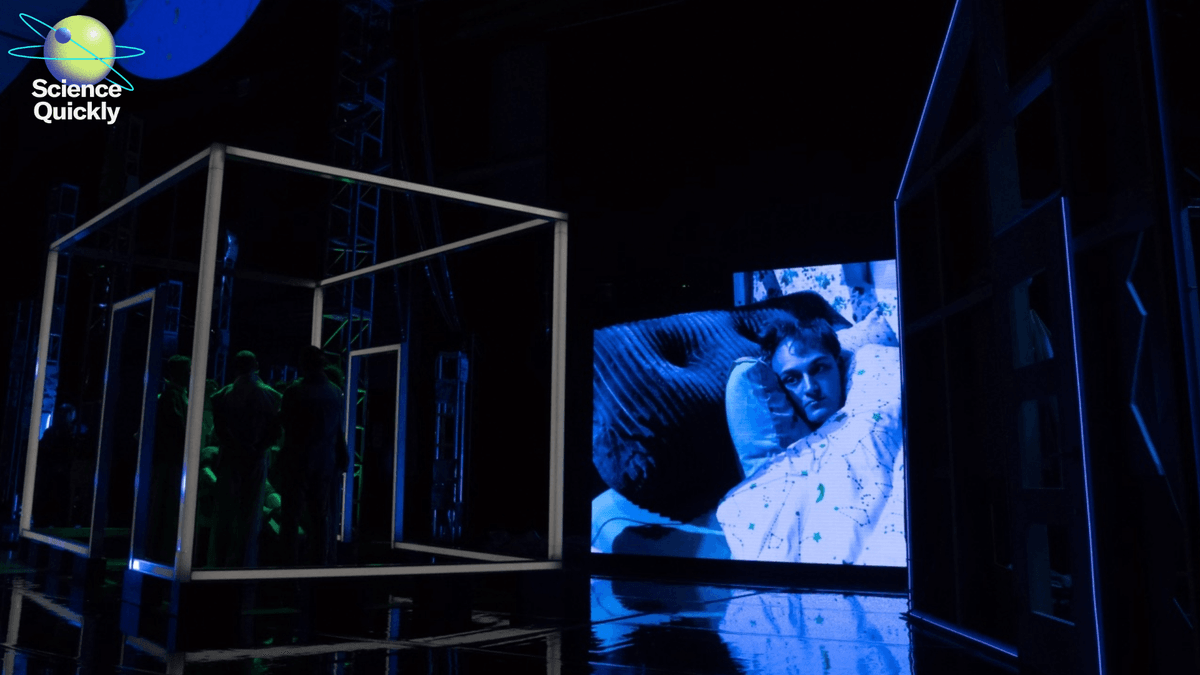
Jakob Jordan, a young man with autism and apraxia who cannot reliably speak aloud, starred in an opera called Sensorium Ex using a custom AI speech synthesis device designed by New York University professor Luke DuBois. The device samples Jakob's own disordered speech, infers 401 parameters that represent the acoustic architecture of his voice, and synthesizes new text through those parameters—allowing him to hear his thoughts spoken in a voice that sounds like him, with full expressive control via lidar sensors that let him speed up, slow down, and change pitch in real time. Traditional text-to-speech devices for people with communication disabilities (AAC devices) treat the synthesized voice as generic—monotone and emotionless. Jakob's system shifts the frame: instead of just outputting text, it gives him what users identified as a civil rights need—the right to inject emotional affect, to sound sarcastic or joyful or upset. Composer Paola Prestini built the opera around this insight, working with poet Brenda Shaughnessy (who has lived experience as a mother to a nonverbal child) to honor the disabilities written into the characters and create a framework where disabled performers could thrive.
The device runs entirely on a local computer using lidar sensors (the same $6 technology that deploys car airbags) rather than cloud services, preserving privacy by eliminating third-party data exposure. Jakob continues to use a traditional text-to-speech device for everyday life; the AI voice is his choice for artistic expression and performance. DuBois notes that entering what you want to say remains slow and cumbersome—the team's next challenge.
- 2
Dictata: Local Whisper voice dictation for Windows, no data leaves machine
A developer released Dictata v0.1.0, a Windows application that transcribes speech locally using Whisper (an AI speech-to-text model) and whisper.cpp, then pastes the text into any active application—all without sending audio or text off the device. Businesses and individuals handling sensitive information can now dictate without exposing audio to cloud services; the tool also offers local LLM post-processing (cleanup, email formatting, lists) and supports GPU acceleration (Vulkan for AMD/Intel/NVIDIA), making it practical for real-world use on personal machines.
The tool requires Windows 10/11, ffmpeg for file transcription, and optional Vulkan SDK for GPU support; it is open-source under MIT with Commons Clause (free for personal use, not for commercial resale), with a built-in model library and HuggingFace integration for easy model downloads.
- 3
Suno Studio 2.0 adds chat interface, unrestricted export for paid users
Suno rolled out Studio 2.0 with a beta chat feature that lets Premier subscribers talk to the platform like a bandmate to create instruments, vocals, or custom plugins. The update also includes MIDI import, recording, editing, stem separation, automation curves, and unrestricted multitrack export at 32-bit/48 kHz. Plugin creation currently does not consume credits, though Suno says a credit system may come later. The chat-driven interface transforms Suno from a pure music generator into a full digital audio workstation (DAW) — a desktop tool traditionally used by professional producers — bringing AI composition into professional workflows. However, the unrestricted export directly contradicts Suno's recent download limits designed to curb spam distribution on streaming platforms, signaling a trade-off between enabling paying professionals and controlling misuse.
The credit system for plugin creation remains undecided; Suno may introduce charges later. The company also faces ongoing copyright disputes, including a recent German court ruling that the service violates German copyright law and does not qualify under U.S. fair use doctrine.
- 4
Suno adds MIDI, automation, AI chat to Studio 2.0
Suno released Studio 2.0, a major upgrade to its generative AI music tool that adds MIDI support (its most requested feature), track automation for panning and volume, a context-aware chatbot for prompting lyrics and instruments, built-in effects (distortion, delay, reverb, compression, EQ), and the ability to create and save custom effects plugins. These additions position Suno closer to a full digital audio workstation (DAW) rather than a bare-bones generative editor, expanding what musicians and producers can do within the tool—though the platform still lacks third-party plugin or VST support, limiting integration with industry-standard instruments and effects.
The chatbot's depth as a creative partner; Suno's demo shows it handling tasks like note cleanup and quantization that users previously did manually, suggesting the chat may increasingly take over production choices rather than just assist them.
- 5
Twitch streamers can now opt out of Amazon AI training
Twitch has added a toggle in its Security and Privacy settings that lets streamers opt out of having their content — streams, VODs, clips, chat, and channel text and images — used to train Amazon's generative AI models. The toggle was set to "on" by default when discovered. Streamers who are uncomfortable with their content feeding Amazon's text, audio, image, or video generation models can now prevent that use. Other AI-supported Twitch features like captions and safety tools remain unaffected by opting out. The move gives creators control over a specific use of their content, though opting out does not prevent Amazon and Twitch from using content for other purposes listed in Twitch's Privacy Notice.
The toggle is now available in Twitch settings under the Security and Privacy tab. Notably, if a streamer participates in chat on another person's stream, that other person's opt-out preference determines whether that chat can be used for training — individual streamers cannot unilaterally protect chat they participate in on others' channels.
- 6
Sandbar raises $36M for voice ring Stream, bets on push-to-talk to survive AI hardware graveyard
Sandbar, maker of the voice-enabled ring Stream, raised $36 million to date, including a $23 million Series A led by Adjacent and Kindred Ventures. The company's CEO Mina Fahmi discussed the product's design philosophy in a TechCrunch Equity podcast episode. Many voice hardware devices have struggled to gain traction. Fahmi argues that keeping humans firmly in control—through a push-to-talk design rather than always-on listening—is key to social acceptability and avoiding the graveyard of failed AI wearables. This design choice signals a different bet on what mainstream users will actually adopt.
Fahmi's experience at CTRL-labs (the neural interface startup Meta acquired in 2019) shaped his thinking on human-driven input. Sandbar chose the "gruelingly painful" path of building fully custom hardware instead of reskinning an off-the-shelf device—a bet on whether that differentiation can help Stream break out of tech-enthusiast circles into the mainstream.
What to Watch
As privacy-focused tools like the lidar-based device gain traction and open-source speech models become more accessible, the key challenge ahead is making input methods faster and more intuitive—whether through hardware innovation like Sandbar's custom design or AI-assisted workflows like Suno's creative chatbot. Meanwhile, regulatory pressures from copyright disputes and evolving platform policies around data use will likely shape how these tools can be commercialized and adopted at scale.
Sources
- The unlikely opera star: How AI helped a nonspeaking performer find his voice
- Show HN: Dictata – Local Whisper dictation with LLM cleanup
- Suno Studio 2.0's new chat feature lets you talk to your DAW like it's a bandmate
- Suno is trying to look more like a real music production tool
- Twitch streamers can now opt out from training Amazon’s AI
- Why Sandbar thinks it’s voice-enabled ring can avoid the AI hardware graveyard
- Guitar company D’Addario admits that AI music was used in a promotional video
- Saber denies replacing Rideshare Stimulator’s writers with ChatGPT
- Meetily Lets You Transcribe and Summarize Meetings Without a Subscription—Here’s How
- Real-Time Conversational Agents (RTCA) Workshop @ NeurIPS 2026 — submissions now open, deadline Aug 29 AoE [N]
- Fenix Flexin isn’t even denying using AI to make ‘Rubberz’ anymore
- AI music generator Suno tightens rules to fight spam and address growing copyright concerns
- Music to confuse AI might be the next new genre
- Everyone please spread the word!
- Which AI agent platform is best for enterprise voice support?
- Suno hopes to go legit with watermarks for AI-generated music
Share this with a friend
Send today's roundup to anyone who wants to keep up.
Get daily AI news free with AIToday
Today's AI, for Today's work. Email / LINE / Slack.
Sign up free