Robotics
Jul 2, 2026
The Gist
Robotics is moving beyond hype into practical, revenue-generating applications across agriculture, manufacturing, and renewable energy, with companies like AGIBOT, Built Robotics, and Luxonis securing major funding and deployment deals. Tokyo University and Kubota are using drones to optimize crop yields, while Blattner is investing $75 million in automated solar construction with Built Robotics, demonstrating how robots are solving real business problems. The shift toward accessible robotics—including Robot-as-a-Service models and specialized vision platforms—is making the technology viable for companies of all sizes seeking efficiency gains.
Today's Stories
- 1
Tokyo University and Kubota develop drone method to predict potato yield before harvest
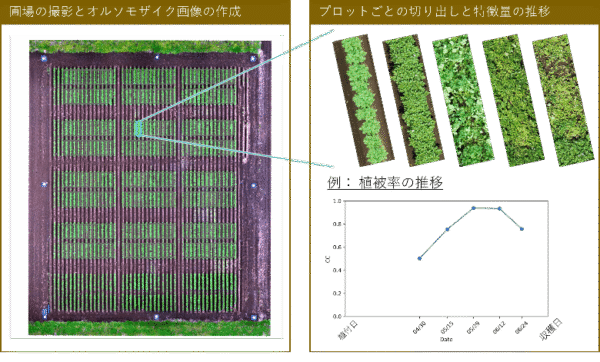
Researchers at the University of Tokyo and Kubota Corporation developed a drone-based system that estimates underground potato yield before harvest. The method combines drone photography (using RGB and multispectral cameras), machine learning trained on the relationship between plant features and actual biomass, and a Gompertz growth curve model. Two-year field trials in 2023 and 2024 achieved a correlation coefficient of 0.8 or higher for tuber biomass estimation and 0.7 or higher for yield prediction. Traditionally, assessing potato yield during growing season has relied on destructive sampling (physically digging to measure). This non-destructive approach can capture spatial variation across a field and support pre-harvest yield forecasting and optimization of harvest timing—practical improvements for growers. The development reflects precision agriculture use cases that Tokyo-based Market Research Center forecasts will drive Japan's agriculture drone market to reach $357.8 million(約570億円) by 2034.
The research team says the growth-curve approach is expected to support optimization of cultivation management, including suggesting optimal harvest timing. The work was carried out under the joint Kubota Todai Lab project.
- 2
Robotics shifts from hype to real-world deployment at Automate 2026
The Automate 2026 trade show featured discussions centered on practical applications of physical AI, edge computing, software orchestration, and digital twins in manufacturing and logistics. Industry leaders from Boston Dynamics, ABB Robotics, FANUC, Rockwell Automation, and others presented real-world solutions for labor shortages and manufacturing automation rather than early-stage humanoid concepts. The robotics industry is moving past theoretical advances toward deployment of systems that solve actual production challenges. Companies are emphasizing how advanced kinematics, cloud-edge hybrid approaches, and AI-powered tools like natural language programming and zero-shot picking preserve manufacturing knowledge and enable workforce reallocation to higher-value roles.
Rockwell Automation introduced FactoryTalk Orchestration following its OTTO Motors acquisition, while ABB highlighted collaborations with NVIDIA on AI-powered palletizing. Kassow Robots emphasized the strategic advantages of 7-axis cobots over traditional 6-axis configurations for confined spaces and mobile manipulators.
- 3
AGIBOT launches A3 humanoid robot in UK with Robot-as-a-Service rental model
AGIBOT held its UK Partner Conference in London and unveiled the European debut of its A3 humanoid robot, a 173 cm tall machine weighing 55 kg with up to 10 hours of battery life and 10-second battery swapping. The company also introduced a Robot-as-a-Service (RaaS) rental model in the UK, where humanoid robots rent from £1,999 per day and quadruped robots from £899 per day. AGIBOT is lowering the cost barrier for businesses and institutions to test embodied AI robots (robots that perform physical tasks in the real world) without large upfront capital investment. The RaaS model is designed to help schools, universities, service providers, and enterprises explore practical applications in education, retail, logistics, and commercial services across the UK and Europe.
The company is already conducting retail deployment at Smart City in Milton Keynes, showcasing the A3 alongside earlier models (X2, A2) and the D1 quadruped robot in a consumer-facing environment. AGIBOT is expanding beyond the UK into Italy, Germany, and Spain as part of its long-term European deployment strategy.
- 4
Blattner taps Built Robotics for $75M solar construction automation deal
Blattner expanded its partnership with Built Robotics, awarding the company a $75M contract to scale autonomous systems for solar construction projects. The deal signals that construction firms are moving beyond pilots to deploy physical AI systems at scale. For energy infrastructure projects, automation can address labor constraints and accelerate build timelines as demand for renewable energy capacity grows.
This represents a major commercial validation of autonomous construction technology, though the body does not specify a deployment timeline or geographic scope for the rollout.
- 5
Luxonis raises $14M Series A to scale robot vision platform
Luxonis, a Denver-based company that makes OAK cameras and DepthAI software for robotic vision, raised $14 million(約22億円) in Series A funding led by Denali Growth Partners, with participation from Taiwania Capital. The company plans to accelerate commercial expansion, advance its product roadmap, and scale production to meet growing demand. Luxonis serves thousands of customers across industries, including more than 60 Fortune 500 companies and 17 of the Dow Jones 30. The funding enables the company to expand R&D and go-to-market teams to work directly with more customers on production deployments, and to launch new devices at accessible price points for sectors including agriculture, robotics, defense, and warehousing.
Luxonis will use the capital to advance its OAK4 cloud perception ecosystem, which it launched in December 2025, and to support next-generation AI architectures. The company's open-source DepthAI SDK has reached 6 million downloads.
- 6
EOI plans Mexico expansion for automotive LEDs, AI robots
Excellence Optoelectronics Inc. (EOI) expects double-digit growth in 2026 from a strong 2025 base, supported by robust automotive lighting module shipments to North American automakers, new Mexico capacity, and a planned expansion into AI humanoid robot supply chains. EOI's growth is being driven by demand from North American automakers for automotive lighting modules, and the company is positioning itself for emerging markets like AI humanoid robots—indicating a diversification beyond traditional automotive suppliers.
The company is building new manufacturing capacity in Mexico and moving into AI humanoid robot supply chains, though specific production timelines and scale are not yet detailed in available information.
What to Watch
As robotics technology rapidly scales from research labs into real-world applications—from autonomous construction and retail deployment to AI-powered factory automation and advanced perception systems—watch for major announcements around manufacturing capacity expansions, geographic rollouts, and the commercialization timelines that will determine which innovations move from proof-of-concept to widespread industry adoption. The convergence of cloud perception ecosystems, humanoid robotics in supply chains, and AI-enhanced collaborative automation suggests 2026 will be a critical year for validating which robotic solutions can deliver genuine ROI in practical business environments.
Sources
- University of Tokyo and Kubota Develop Drone Potato Yield Prediction Method
- Automate 2026 show recap
- AGIBOT debuts A3 humanoid robot in Europe and launches UK Robot-as-a-Service model
- Blattner awards Built Robotics $75M contract for physical AI to help meet energy demand
- Luxonis closes Series A round to scale physical AI perception layer
- Taiwan automotive LED maker EOI readies Mexico ramp for humanoid robots and silicon photonics
- Techman Robot upgrades automotive production lines at Quanta Computer Germany plant with AI cobots
- South Korea plans CIA-style fund to build its own Palantir
- Russia strikes Ukraine capital with missiles and drones, wounds five
- How foodservice giant Sodexo is embracing AI and robotics to reshape the kitchen
Share this with a friend
Send today's roundup to anyone who wants to keep up.
Get daily AI news free with AIToday
200+ AI sources, summarized in 1 minute. Email / LINE / Slack.
Sign up free