Robotics
Sep 4, 2026
The Gist
Lockheed Martin is pouring more money into AI and quantum startups, while NVIDIA just launched a low-cost AI robotics computer aimed at broader adoption. Renesas opened a Beijing lab focused on robotics AI, Lawson started using an AI-powered bin to recycle lithium batteries, and Fei-Fei Li’s World Labs introduced its Atlas 3D world model for smarter robot perception. Together, these moves signal that the robotics industry is shifting from research experiments to practical, everyday deployments across retail, manufacturing, and beyond.
Today's Stories
- 1
Lockheed Martin expands venture investments in AI and quantum tech
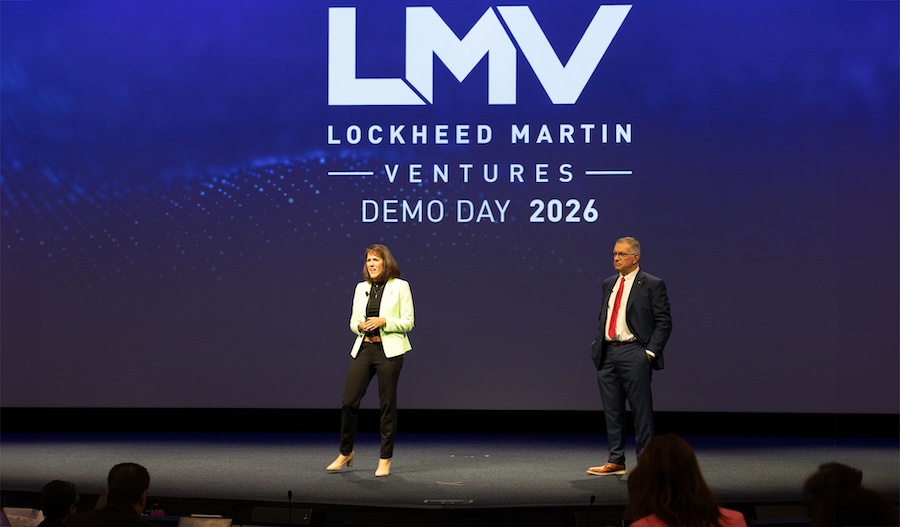
Lockheed Martin is increasing venture investments in AI, autonomous systems, quantum technology, advanced manufacturing, and next-generation propulsion. It added a new group of portfolio companies during 2026 and hosted its ninth annual Ventures Demo Day. The company says the effort is designed to speed the integration of new defense capabilities and strengthen the industrial base. By supplementing internal research with startup technologies, Lockheed Martin aims to bring advances into operational systems more quickly and improve resilience.
Demo Day connected 18 portfolio businesses and startups with Lockheed Martin executives, technical specialists, and customers. The two-day event showcased technologies from software-defined foundry systems to detonation-engine propulsion, with sessions aimed at identifying routes into defense applications.
- 2
Renesas Opens Robotics AI Lab in Beijing
Renesas announced on August 27, 2026, that it has opened a "Physical AI Robotics Laboratory" in Beijing, China, to develop and evaluate physical AI systems. Physical AI, which enables machines to perceive and act in the real world, differs from digital AI. The lab aims to advance Renesas' physical AI strategy and support the development of humanoid robots and other complex physical tasks.
Renesas currently supplies products covering about 30% of a humanoid robot's bill of materials (BOM). With the new lab, it aims to expand coverage to 70% by integrating sensors, edge AI, and software.
- 3
NVIDIA announces entry-level AI robotics computer
NVIDIA announced the NVIDIA Jetson Orin Nano 2 on August 25, an entry-level robotics computer designed for AI processing. The new product delivers twice the inference performance (the step where an AI produces an answer) of the previous Jetson Orin Nano Super, while remaining small, cost-effective, and power-efficient.
The device is positioned as an entry-level option, suggesting NVIDIA is targeting broader adoption of AI robotics among developers and smaller companies.
- 4
Lawson store starts AI bin recycling for lithium batteries
AI-powered sorting recycling bin 'Bin-e' has begun collecting products containing lithium-ion batteries near the Lawson Takanawa Gateway City store. This marks a practical use of AI-driven recycling for potentially hazardous items, addressing safe disposal concerns for businesses and communities.
Whether Bin-e's sorting accuracy and safety features gain adoption in more retail locations, possibly influencing future recycling convenience.
- 5
Fei-Fei Li's World Labs unveils Atlas 3D world model
World Labs, founded by Stanford professor Fei-Fei Li, unveiled Atlas, a multimodal world model that can generate, reconstruct, and simulate 3D environments from text, images, and video. This moves AI beyond 2D content into full 3D simulation, which could be important for robotics and immersive applications. The model is designed to help machines understand and interact with physical spaces, not just generate media.
Fei-Fei Li presented Atlas at the HumanX Conference 2026 in San Francisco, highlighting its role in advancing spatial intelligence for AI and robotics.
- 6
Solomon showcases AI inspection at Semicon Taiwan 2026
Solomon Technology, a Taiwanese AI 3D vision company, is showcasing two key inspection applications at Semicon Taiwan 2026, integrating its core AI vision and optical technologies. This marks Solomon's push into the semiconductor inspection market, leveraging its expertise in AI and optics to address high-precision needs of chip manufacturing.
The company's ability to convert these showcased applications into commercial adoption within the semiconductor industry remains a key indicator of its success in this new sector.
What to Watch
The coming months will reveal whether defense and semiconductor giants can move from showcasing robotics innovations to real-world deployment, and whether lower-cost AI systems make humanoid and sorting robots a practical choice beyond flagship demos.
Sources
- Lockheed Martin expands venture investments in AI, autonomy and quantum technology to strengthen U.S. defense industrial base
- ルネサスが北京に次世代ロボティクスの開発を支援するラボを開設:ロボット開発ニュース
- エントリーレベルのAIロボティクス向けコンピューターを発表/NVIDIA
- AI自動分別リサイクルボックス「Bin-e」、ローソン高輪ゲートウェイシティ店付近でリチウムイオン電池内蔵製品の回収を開始
- Fei-Fei Li's World Labs unveils Atlas world model for 3D AI and robotics
- Solomon leverages AI vision and optical tech to tap semiconductor inspection market
- Does Caterpillar’s AI Robotics Push with FieldAI and NVIDIA Reshape the Bull Case for CAT?
- Venezuela Earthquakes Show the Power of Drones, and the Challenge of a Crowded Sky
- Scaling Drone Operations Will Require More Than Part 108
- Caterpillar and FieldAI Advance AI-Powered Industrial Innovation
- ルネサス、フィジカルAI&ロボティクスラボを北京に開設…ヒューマノイド開発を加速
- 「フィジカル AI 開発支援プログラム by AWS ジャパン」最終成果発表会を開催しました | Amazon Web Services
- 日立、富士通から三菱商事、三井物産までNVIDIAのフィジカルAIに大集結。東証プライム社長はNVIDIA Cosmos Coalitionを理解していないとなぜマズいのか?:経営者が読むNVIDIAのフィジカルAI / ADAS業界日報 by 今泉大輔
- SEMICON Taiwan 2026: Physical AI drives new demand for multimodal robot sensing
- NexCOBOT discusses physical AI market hurdles and acceleration
- Former Apple Engineers’ Physical AI Startup Lyte Raises $165M At $1.6B Valuation
Share this with a friend
Send today's roundup to anyone who wants to keep up.
Get daily AI news free with AIToday
Today's AI, for Today's work. Email / LINE / Slack.
Sign up free