Robotics
Sep 3, 2026
The Gist
Caterpillar and FieldAI are bringing physical AI to construction sites, while Hitachi, Fujitsu, and Mitsubishi are joining NVIDIA’s broader push into the field. Renesas opened a robotics lab in Beijing, and AWS Japan concluded its support program, even as sensor demand for these systems surges at SEMICON Taiwan. Big Tech is now actively acquiring physical AI startups.
Today's Stories
- 1
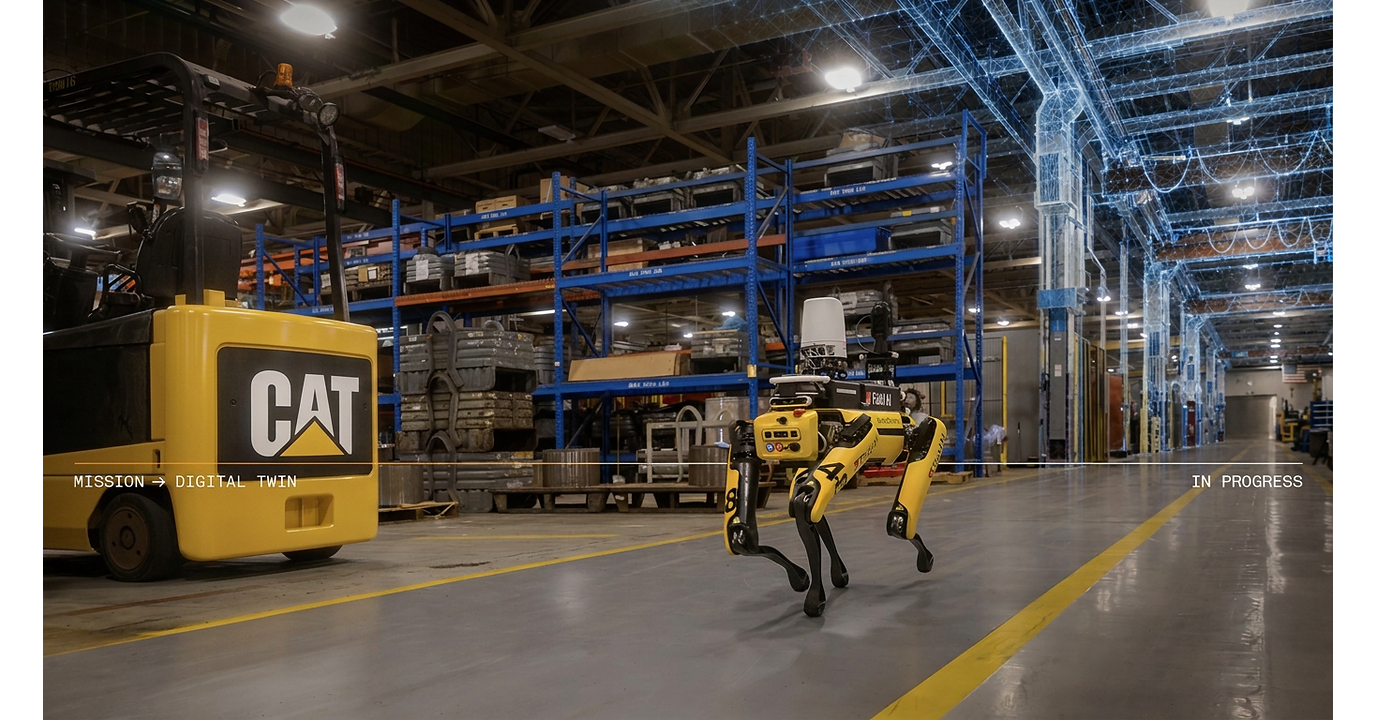
Caterpillar, FieldAI Partner on Physical AI for Jobsites
Caterpillar is collaborating with FieldAI to advance physical AI, autonomy, and robotics for jobsites and factories. The partnership will use FieldAI's robot foundation models and NVIDIA technologies to create digital twins and enable autonomous inspections. The collaboration aims to address labor shortages and productivity demands by improving decision-making, safety, and operational efficiency. It combines Caterpillar's industry expertise with FieldAI's AI to help customers get more value from every operation.
Early applications include autonomous inspections, digital twins for real-time insights, enhanced situational awareness, and operational optimization. FieldAI says its deployments span hundreds of sites worldwide.
- 2
Renesas opens Beijing robotics lab
Renesas Electronics announced it has opened a Physical AI & Robotics Lab in Beijing, China. The lab will support customer demonstration, verification, and joint development of next-generation robotics systems. The lab acts as a hub for Renesas' physical AI strategy, covering roles from proof of concept to large-scale deployment. Physical AI represents AI's expansion from digital spaces into the physical world, where systems must perceive surroundings, make real-time decisions, and operate safely and predictably.
The lab's focus on humanoid development is not explicitly stated in the article, but the title suggests it. Details on specific projects, partnerships, or timelines are not provided in the body.
- 3
AWS Japan wraps up physical AI support program
AWS Japan held the final presentation event for its “Physical AI Development Support Program by AWS Japan,” an initiative focused on physical AI development. The program signals AWS's push into physical AI, an area that combines AI with physical systems such as robots. For business readers, this points to AWS's strategic interest in supporting organizations building such technologies.
The program's outcomes, as revealed in the final presentations, may offer insights into where physical AI applications are heading. Details on future expansions or commercial impacts were not provided in the article.
- 4
Hitachi, Fujitsu, Mitsubishi join NVIDIA's physical AI push
Hitachi, Fujitsu, Mitsubishi Corporation, and Mitsui & Co. are among the companies joining NVIDIA's physical AI initiative, the Cosmos Coalition. This signals that major Japanese corporations are aligning with NVIDIA's platform for physical AI, which could shape the future of robotics and autonomous systems.
The article suggests that executives at Tokyo Stock Exchange Prime-listed companies may not fully grasp the Cosmos Coalition, potentially putting them at a strategic disadvantage.
- 5
Physical AI drives new sensor demand at SEMICON Taiwan
At SEMICON Taiwan 2026, industry experts said the rise of physical AI is creating new demand for advanced sensors as robots move from controlled demonstrations toward practical deployment. Robots will need increasingly diverse sensing capabilities to perceive, interpret, and respond to complex real-world environments in real time, according to experts at the event.
The shift toward practical deployment of robots suggests a growing need for multimodal sensing, which could drive innovation and investment in sensor technology.
- 6
Physical AI startups get acquired by Big Tech, says NexCOBOT
Jenny Shern, general manager of NexCOBOT, said acquisitions of robotics startups by Big Tech will continue. Recent examples include Mobileye buying Mentee Robotics for $900 million in January, Amazon acquiring Fauna Robotics in March, and Meta picking up Assured Robot Intelligence in May. Smaller robotics firms bring expertise in areas like robot learning and perception, while large companies offer computing infrastructure and capital. Shern noted that a more selective funding environment may pressure early-stage startups to validate their business models sooner, potentially slowing new entrants but encouraging focused innovation.
NexCOBOT says it is focusing on scaling its open, functional safety robotic controllers and fulfilling its backlog of global orders as it heads into mass production. The company also highlighted a client case where its certified functional safety controller shortened a development cycle from an estimated three to five years to just two years.
What to Watch
Watch for robotics to move from pilot projects to scaled, real-world deployment, with a growing emphasis on sensor innovation and the speed of bringing safe systems to market. Also keep an eye on how clearly leadership at major firms understands emerging collaborations, as that grasp—or lack of it—could define who leads the next phase of physical AI.
Sources
- Caterpillar and FieldAI Advance AI-Powered Industrial Innovation
- ルネサス、フィジカルAI&ロボティクスラボを北京に開設…ヒューマノイド開発を加速
- 「フィジカル AI 開発支援プログラム by AWS ジャパン」最終成果発表会を開催しました | Amazon Web Services
- 日立、富士通から三菱商事、三井物産までNVIDIAのフィジカルAIに大集結。東証プライム社長はNVIDIA Cosmos Coalitionを理解していないとなぜマズいのか?:経営者が読むNVIDIAのフィジカルAI / ADAS業界日報 by 今泉大輔
- SEMICON Taiwan 2026: Physical AI drives new demand for multimodal robot sensing
- NexCOBOT discusses physical AI market hurdles and acceleration
- TIME AI 100 spotlights China's new AI guard, from Moonshot, Z.ai to AgiBot, Manus
- Former Apple Engineers’ Physical AI Startup Lyte Raises $165M At $1.6B Valuation
- Learn why food is physical AI’s hardest problem at RoboBusiness
- Amprius Targets Longer Drone Flights With New 500 Wh/kg Battery Cell
- Heven AeroTech Stands Up Hydrogen Drone Factory in 90 Days
- AIR to use Elmo Motion Control technology in uncrewed cargo aircraft
- NTT系、フィジカルAI向けクラウド提供 製造・物流ロボ開発支援
- Lam Research exec says automated preventive maintenance key to fabs of the future
- Surviving the paper deluge: Notes from an ICRA panel on publishing, LLMs, and the future of peer review
- Subscription-Based Services Boom! Geek+ Reports 2026 Interim Results: Orders Up 35.5%, Breakthroughs Across the Business Spectrum
Share this with a friend
Send today's roundup to anyone who wants to keep up.
Get daily AI news free with AIToday
Today's AI, for Today's work. Email / LINE / Slack.
Sign up free