Audio & Speech
Oct 1, 2026
The Gist
MeetTwins now lets an AI bot sit in your Google Meet calls for you, while ElevenLabs employees cashed out at a $22 billion valuation. A Tokyo court dismissed Kenjiro Tsuda's AI voice case, and Hugging Face's new Open TTS Leaderboard cuts speech evaluation from weeks to hours.
Today's Stories
- 1
MeetTwins: AI bot attends Google Meet calls for you
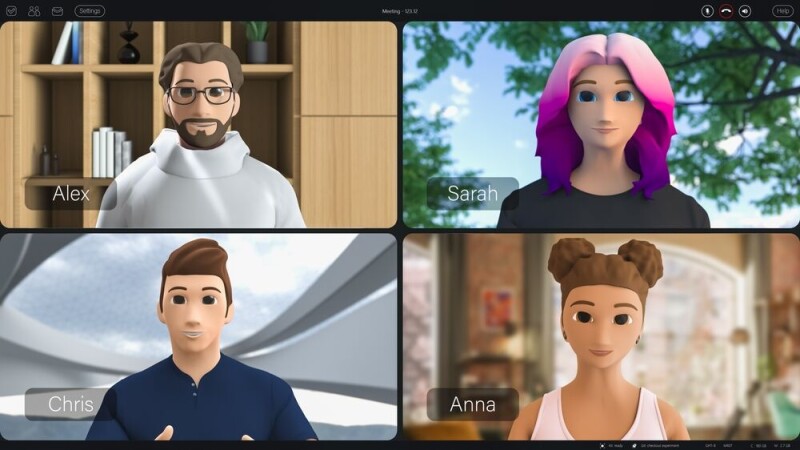
Aditya Shinde is recruiting beta users for MeetTwins, an AI assistant built with Sarvam's AI models and a Simli avatar that attends Google Meet calls and answers only pre-approved questions. The tool lets workers skip routine check-ins, but colleagues who dislike it can type "/stop" to eject the bot immediately, and the operator gets an email summary afterward.
Whether labeling the bot as AI actually "builds trust" is Shinde's claim, not a proven result; the product is still in development with no launch date given.
- 2
ElevenLabs employees cash out at $22 billion valuation
ElevenLabs ran a $300 million tender offer letting employees sell vested shares to investors, co-led by Wellington and T. Rowe Price, at a $22 billion valuation. ElevenLabs is using employee liquidity as a retention tool, part of a growing trend among fast-growing AI startups aiming to keep staff from leaving for competitors.
The transaction's backers are institutional investors who plan to hold the stock after an eventual IPO, so the test is whether that backing holds through a public listing.
- 3
Hugging Face Open TTS Leaderboard cuts eval from weeks to hours
Hugging Face launched the Open TTS Leaderboard, ranking models by word error rate (WER/CER), H200 GPU speed measures, and voice-cloning speaker similarity, cutting evaluation from a couple weeks to a couple hours. This gives open-source TTS models a standard, scalable way to be compared, which may help address their underrepresentation on human-vote arena leaderboards.
The leaderboard relies on objective metrics like WER and speaker similarity, which may not fully capture naturalness or listener preference. Watch for community votes and feedback to shape future evaluations.
- 4
Claude Code AWS cost probe tops GENIEE Tech Blog reads
GENIEE's tech blog team named its three most-read posts from September 2025 to September 2026, led by an SRE team that used Claude Code with AWS CLI and Cost Explorer to find tens of millions of yen in annual savings. The top post shows AI being used for investigation and analysis, not just coding, and the blog's three most-read pieces were all AI-related, suggesting that practical usage reports are what readers want.
The scale of that saving figure hinges on how much of the identified potential is actually implemented, and the other two picks—a Whisper/pyannote transcription project and an engineer leader's AI tool stack—show where readers' attention is heading.
- 5
Local Speech-to-Speech: OpenAI Realtime API experience verified
A developer verified how far a Speech-to-Speech experience like OpenAI Realtime API could be reproduced locally, using Hugging Face's speech-to-speech models. Running STT, LLM and TTS together on one GPU server, driven only by a Windows PC's mic and speakers, keeps the voice loop off cloud APIs.
The stated goal is a system-level check of the local setup, not a benchmark of individual models, so the value hinges on how the full cascade performs.
- 6
Tokyo court dismisses Kenjiro Tsuda AI voice case
The Tokyo District Court dismissed Kenjiro Tsuda's demand that TikTok remove AI voice-clone videos, citing prior deletion. Judge Aya Takahashi recognized voice as a protected publicity right. The ruling sets a precedent that voice can be protected under publicity rights even when the specific removal demand fails.
Whether future cases proceed when videos remain online, and how the Justice Ministry's August guidelines on voice rights are applied.
What to Watch
Whether AI labels genuinely build trust and whether a bot maker’s promised institutional backing survives an eventual IPO are the two open questions to track. Also watch how community votes shape the leaderboard beyond WER and speaker similarity, how much of the projected savings is actually put into practice, how well the full transcription cascade performs as a whole rather than model by model, and how Japan’s voice-rights guidelines are applied when videos stay online.
Sources
- Show colleagues how much you care by sending an AI avatar to your Google Meet call
- AI voice startup ElevenLabs doubles valuation to $22B
- Open TTS Leaderboard: Scalable Evaluation for Multilingual Text-to-Speech and Voice Cloning
- 直近1年でよく読まれた!GENIEE Tech Blog 人気記事3選
- ローカル版Realtime API実現検証
- While calling voice a protected right, court dismisses voice actor’s AI case
- DeepL、音声から音声翻訳がついに正式版に ChatGPT・Claude連携も
- ElevenLabs' new v4 speech model makes AI voices more expressive and consistent
- AI歌声合成「Synthesizer V 2」専用DB「Nanami」「Kohki」発売
- 【NTT西日本】生成AI時代の「声」の未来を、実演家・事業者・専門家とともに創る「声の相談窓口」を9月28日に開設 未整理の疑問や不安を相談できる一次窓口を通じ、声の「守り方と使い方」を考える場へ|ニュースリリース - 通信・ICTサービス・ソリューション
- Build real-time voice applications with vLLM-Omni on SageMaker AI – Part 1
- Voice AI startup Modulate raises $25M to bring audio-native models to more developers
- Introducing Eleven v4, our most emotive model
- After a deepfake voice fooled her grandfather, this founder sprang into action
- Gemini Enterpriseで「Gemini 3.8 Live with Live Avatar」が提供開始
- OpenAI、モバイル/Web版「ChatGPT Voice」をアップデート プラグイン連携やGPT-6に対応
Share this with a friend
Send today's roundup to anyone who wants to keep up.
Get daily AI news free with AIToday
Today's AI, for Today's work. Email / LINE / Slack.
Sign up free