Top Companies' AI Moves
Jul 21, 2026
The Gist
Nokia's CTO highlights how AI-RAN technology is accelerating telecom operations, while McDonald's is investing $300M in AI to customize drive-thru recommendations for customers. Meanwhile, Disney's Ozzy Fox character sparked debate over AI's role in content creation, John Deere warns of challenges in AI-powered farming, and Essilor introduced AI-designed progressive lenses—showing how major corporations are rapidly embedding artificial intelligence across industries from telecommunications to fast food to healthcare.
Today's Stories
- 1
Nokia CTO: AI-RAN enables telecom operators to move at software speed
Nokia's Chief Technology Officer stated that AI-RAN (artificial intelligence applied to radio access networks) allows telecom operators to operate at the speed of software deployment rather than traditional hardware cycles. Telecom operators have historically been constrained by the pace of hardware refresh cycles; AI-RAN potentially enables faster innovation and service delivery by decoupling network performance improvements from physical infrastructure upgrades. This could reshape how quickly carriers can respond to market demands and deploy new capabilities.
The statement underscores Nokia's positioning in the AI-driven network infrastructure market, though the article does not specify deployment timelines, customer commitments, or competitive offerings.
- 2
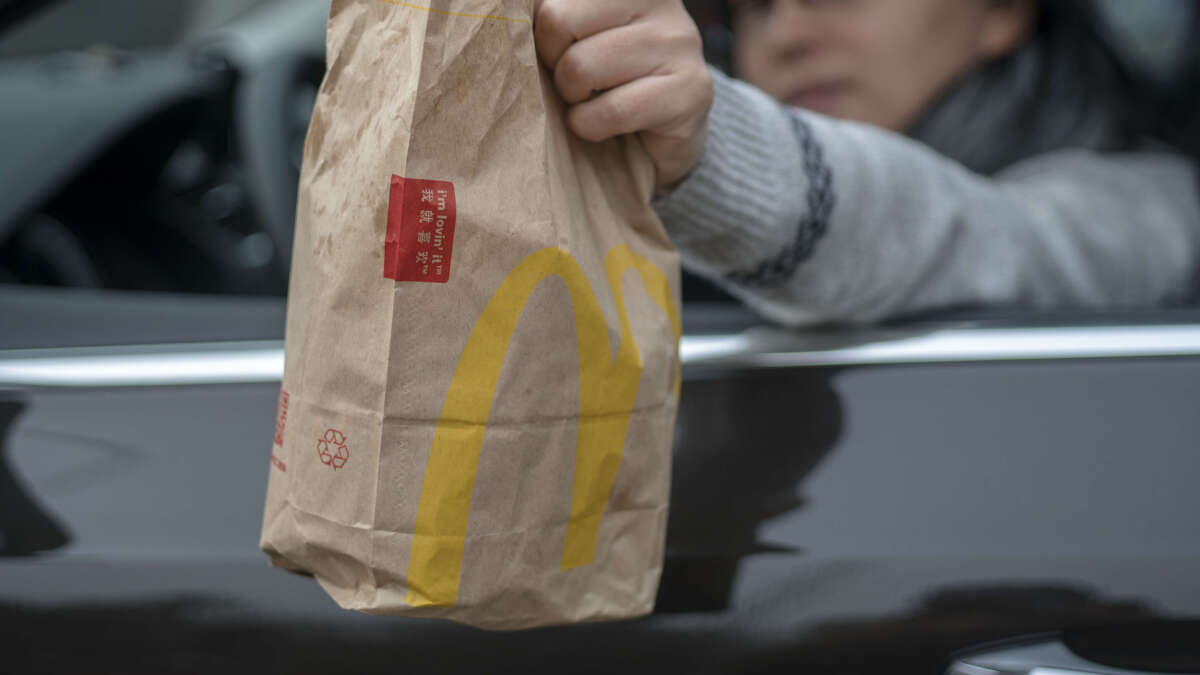
McDonald's spends $300M on AI to personalize drive-thru menu suggestions
McDonald's announced it acquired Dynamic Yield, a machine-learning company specializing in personalized recommendations, for around $300 million(約480億円). The technology will enable drive-thru displays to adjust offerings based on weather, time of day, and trending menu items, similar to Amazon's recommendation engine. McDonald's aims to use customer data to suggest items tailored to each order—for example, recommending frozen treats on hot days. The company piloted these techniques in 2018 and found results promising enough to roll out system-wide, a signal that data-driven menu personalization can drive incremental sales at scale.
McDonald's is integrating this technology into a broader modernization push that includes mobile ordering and self-ordering kiosks being added to thousands of restaurants over the coming years, positioning personalized upselling as a core part of its future store experience.
- 3
Boeing clears path to deliver two 737 MAX models to airlines
Boeing received approval from U.S. regulators to deliver two variants of the 737 MAX aircraft to airlines, moving past production constraints that had halted deliveries of the troubled plane. The 737 MAX was grounded worldwide for 20 months following two fatal crashes, severely damaging Boeing's reputation and finances. Resuming deliveries signals the aircraft is cleared for commercial operation again, though airlines and the public remain cautious about its safety record.
The body does not specify delivery timelines, customer names, or which two models are cleared. Regulatory or production delays could still affect the pace of actual aircraft reaching airlines.
- 4
Disney's Ozzy Fox goes viral amid 'AI slop' claims—but it's AI-assisted, not AI-generated
Disney's new preschool cartoon series Ozzy Fox, launched on YouTube with minimal promotion, has drawn widespread criticism over suspected AI generation due to visual glitches like incomplete props and bad lip-synching. The backlash has paradoxically boosted viewership; each of the two episodes released so far has over 500,000 views. The series is a co-production between Disney and French animation company Animaj, created through Disney's 2024 Accelerator program. Ozzy Fox uses AI as an assistant tool—specifically for sketch-to-pose prediction and motion in-betweening—but the 3D models, storyboards, and key poses are created by human artists who then manually review and correct the work in Maya animation software. The distinction matters: if every imperfect animation gets labeled 'AI slop' when it is not actually AI-generated, the label may lose its power to signal genuine concern when Disney or others deploy actual generative AI cartoons like text-to-video tools.
Disney has explored generative AI for animation, including a major deal with OpenAI that collapsed when the company deprioritized its Sora AI video platform. How the public and critics respond to Ozzy Fox's actual workflow—and whether they distinguish AI-assisted tools from AI-generated content—will shape perceptions of animation AI going forward.
- 5
John Deere CTO: AI farming faces 'inventor's dilemma'
John Deere's chief technology officer has characterized AI adoption in agriculture as farming's 'inventor's dilemma' moment—a critical juncture where the technology is powerful but its deployment raises unresolved challenges. The characterization signals that one of agriculture's largest equipment makers sees AI as transformative for farming, yet the industry faces fundamental tensions about how to implement it responsibly. This reflects broader uncertainty across sectors about balancing AI capability with practical and ethical constraints.
How John Deere and peers navigate the tension between AI's potential productivity gains and the operational, regulatory, or competitive barriers that currently prevent straightforward adoption in farming.
- 6
Essilor Launches AI-Designed Varilux Shift Progressive Lenses
Essilor introduced Varilux Shift, a new progressive lens designed using AI and millions of wearer data points. The lens features iComfort technology and delivers a 34 percent improvement in design softness and an 18 percent larger far-vision area compared with a standard progressive lens. Progressive lenses help presbyopes (people with age-related vision changes) see clearly at multiple distances. Essilor designed Varilux Shift to address how modern vision use has changed—more digital device time means eyes move more dynamically between near, intermediate, and distance vision. In a wearer study, 91 percent adapted to the lenses and 89 percent reported easy access to near vision, suggesting the AI-informed design works as intended.
Varilux Shift is positioned as an entry-level Varilux design, making AI-powered lens innovation available at multiple price points. The lens is available through eyecare professionals.
What to Watch
Watch for whether Nokia can translate its AI network infrastructure vision into concrete customer wins and timelines, and how McDonald's execution of AI-driven upselling across thousands of locations will influence other restaurant chains' adoption of similar personalization tools. Meanwhile, Disney's approach to disclosing AI involvement in animation—and public reception to AI-assisted creative workflows—will likely set industry standards for transparency, as John Deere and other agriculture companies simultaneously test whether AI productivity gains can overcome regulatory and operational hurdles in farming. Finally, monitor whether Varilux's multi-tier AI lens strategy succeeds in democratizing AI-powered eyewear beyond premium segments, signaling broader consumer acceptance of AI in personal care devices.
Sources
- Nokia CTO: AI-RAN lets operators move at software speed
- McDonald's wants to use machine learning to serve fast food
- Boeing may soon be able to deliver two models of its troubled 737-MAX to airlines
- Disney's Ozzy Fox is going viral thanks to 'AI slop' accusations
- John Deere CTO: AI is farming's 'inventor's dilemma' moment
- Essilor Debuts AI-Powered Varilux Shift Progressive Lenses
- Watch These 3 Copper Stocks Amid Massive Global AI Data Center Boom
- Vertiv Expands Global Manufacturing Capacity for AI-Ready Data Center Cooling Solutions
- S&P Global lets AI agents query multiple datasets at once
- Rideshare companies use AI to tap Colorado riders and drivers
Share this with a friend
Send today's roundup to anyone who wants to keep up.
Get daily AI news free with AIToday
200+ AI sources, summarized in 1 minute. Email / LINE / Slack.
Sign up free