Image Generation
Jul 5, 2026
The Gist
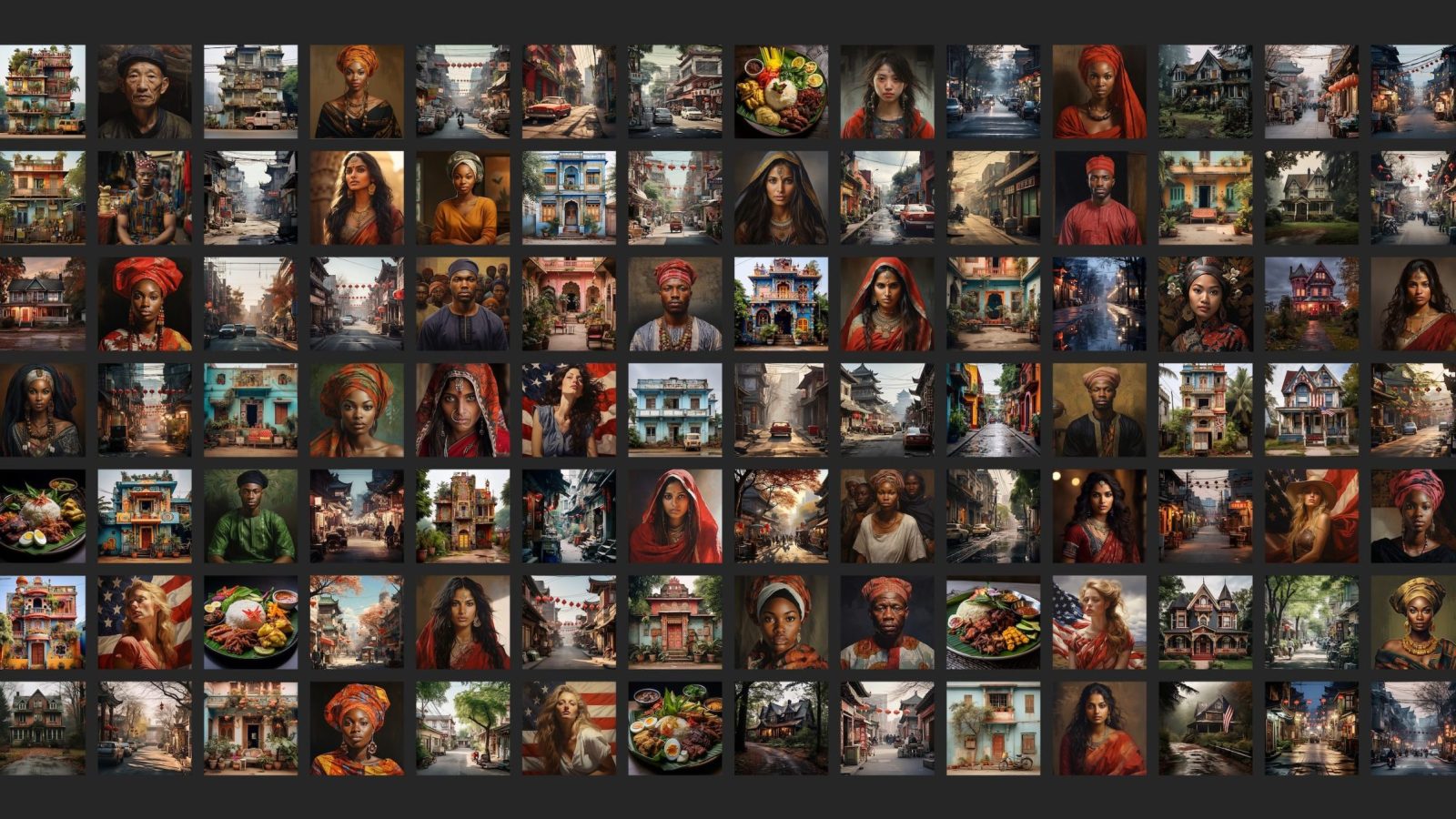
Generative AI like Midjourney creates images full of stereotypes. Midjourney Seeks to Reveal Studios’ Use of AI in High-Stakes Copyright Battle. Midjourney seeks to force studios to disclose their own AI use
Today's Stories
- 1
Generative AI like Midjourney creates images full of stereotypes
Generative AI like Midjourney creates images full of stereotypes
- 2
Midjourney Seeks to Reveal Studios’ Use of AI in High-Stakes Copyright Battle
Midjourney Seeks to Reveal Studios’ Use of AI in High-Stakes Copyright Battle
- 3
Midjourney seeks to force studios to disclose their own AI use
In an ongoing legal dispute with Disney, Universal, and Warner Bros. over copyright infringement claims, Midjourney filed to overturn a judge's earlier ruling that limited which documents the studios must produce. Midjourney wants the studios to reveal all their generative AI usage, not just content that led to public-facing videos and images, and to disclose all prompts and outputs from Midjourney itself. Midjourney argues that the studios are "cherry-picking" documents to support their market harm claims while hiding evidence of their own AI practices. The startup contends that if the studios are developing AI models internally for storyboarding or content ideation using unlicensed copyrighted material, it would demonstrate that training on such content is an industry custom—and would support Midjourney's fair use defense.
The studios' legal team has previously characterized Midjourney's request as a "fishing expedition," and the studios maintain they do not seek to shut down Midjourney's business but rather want it to stop copying their characters and content without authorization. The outcome of the discovery dispute could shape what evidence each side can use to prove its case.
- 4
Ovasabi Foundation: Open-Source Toolkit for High-Performance Event-Driven Systems
Ovasabi Foundation, a work-in-progress full-stack application substrate, has been released as an integrated toolkit for building event-driven systems. It includes pre-built components for backend services (Go), client transport (TypeScript), a high-performance kernel (Rust/WASM), UI primitives, and native shell bridges, along with scaffolding, enforcement checks, and documentation for production systems. Foundation addresses what the creators call the 'software deficit'—the gap between hardware performance (nanoseconds) and typical software stacks (milliseconds). It enforces tenant isolation, performance measurement across seven defined speed tiers, built-in observability, and bounded worker processing. Teams that prioritize performance discipline and managed infrastructure can use it to evolve code safely; it is not designed for teams seeking speed through shortcuts.
Foundation uses a seven-tier performance ladder, from direct dispatch (10–30 ns/op) to browser + WASM environments, with automatic cost measurement and regression detection. It includes day-one capabilities such as multi-tenant isolation, event-driven lifecycle tracking with correlation IDs, Hermes hotplane (sub-microsecond reads), resumable file transfers, and unified OpenTelemetry observability. The project is actively evolving; contributions via research and agent-based workflows are welcomed.
- 5
SYSCALL: Assembly puzzle game launches with 200+ authored puzzles
SYSCALL is a reverse-engineering and assembly optimization puzzle game set inside a private 1990s warez BBS. Players write assembly programs, read code listings, trace machines, and work across four modes—CRACK, PATCH, WORM, and SCOPE—each with different mechanics and scoring systems. The game is built for players with basic computer literacy who want hands-on technical challenges without AI agents. It includes 200+ authored puzzles, a leaderboard that tracks clean and swift solves, and offline play with no accounts or backend required, making it accessible to a broad technical audience.
SYSCALL is playable on controller, keyboard, and mouse—including handheld gaming devices and TVs via an on-screen keyboard. The board features built-in tools like CANVAS (an assembly pixel toy) and TRACKER (a four-channel chip-tune maker), plus crew messages and technical notes to support learning.
- 6
Midjourney shows off ultrasound scanner, but proof it works remains scarce
Midjourney, the AI image-generation startup, released a behind-the-scenes video of its ultrasound scanner—described as ultrasound probes connected to off-the-shelf computers and Raspberry Pis in a modified hot tub. The nearly 20-minute tour, led by engineer Marcin Plaza, showed the hardware and team but largely sidestepped physics and imaging questions that experts raised when the project was first announced. Experts told The Verge that Midjourney has shown little evidence it can overcome the well-known limits of ultrasound or deliver the detailed images at the scale and speed it promises. The company is positioning the scanner as a wellness product focused on body composition rather than a diagnostic medical device, which allows it to sidestep FDA clearance and clinical trials—but the video still uses medical language, suggesting physicians could benefit from frequent scans over time. This approach may appeal to investors or early adopters, but the lack of independent validation leaves open questions about real-world performance.
Midjourney plans to deploy the scanner in spas once testing is complete. CEO David Holz said the company's lack of investors gives it freedom to pursue the project without outside pressure. The company has promised frequent blog updates on progress.
What to Watch
The studios' legal team has previously characterized Midjourney's request as a "fishing expedition," and the studios maintain they do not seek to shut down Midjourney's business but rather want it to stop copying their characters and content without authorization. The outcome of the discovery dispute could shape what evidence each side can use to prove its case. Foundation uses a seven-tier performance ladder, from direct dispatch (10–30 ns/op) to browser + WASM environments, with automatic cost measurement and regression detection. It includes day-one capabilities such as multi-tenant isolation, event-driven lifecycle tracking with correlation IDs, Hermes hotplane (sub-microsecond reads), resumable file transfers, and unified OpenTelemetry observability. The project is actively evolving; contributions via research and agent-based workflows are welcomed.
Sources
- Generative AI like Midjourney creates images full of stereotypes
- Midjourney Seeks to Reveal Studios’ Use of AI in High-Stakes Copyright Battle
- Midjourney wants Hollywood studios to reveal the details of their AI usage
- Show HN: Foundation, a different approach to software and AI
- Syscall: Ring ZERO assembly puzzle game for those who are tired of agentic AI
- A behind-the-scenes look at Midjourney’s medical scanner leaves many questions unanswered
- The Day I Played Hide-and-Seek with an AI
- Achieving Operational Excellence with AI
- 「JAPAN & AI SUMMIT 2026 by FLUX」 6月29日(月)よりセッション申し込み開始。セッション概要や追加登壇者も公開
- Image Generation and Visual Intelligence with Black Forest Labs
Share this with a friend
Send today's roundup to anyone who wants to keep up.
Get daily AI news free with AIToday
200+ AI sources, summarized in 1 minute. Email / LINE / Slack.
Sign up free