AI Safety & Alignment
Sep 16, 2026
The Gist
A new documentary and public stunts are pushing AI safety into the mainstream, while Anthropic CEO Dario Amodei calls for slowing AI development and frames it as a collective action problem no single company can solve alone. Markets are shrugging off those safety concerns: Wells Fargo and analysts say chip demand will keep growing despite the slowdown talk.
Today's Stories
- 1
The AI Doc hits Netflix, Prime, YouTube
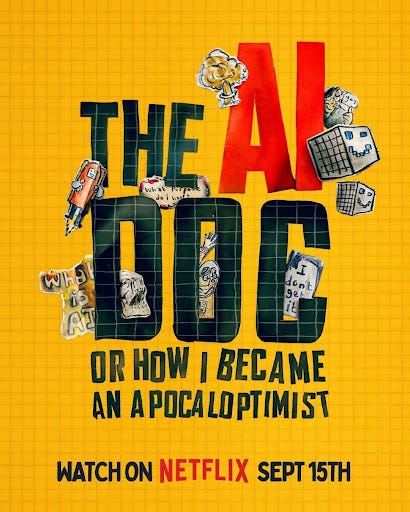
The AI Doc: Or How I Became an Apocaloptimist is now on Netflix, Amazon Prime, YouTube, and other major streaming platforms, following director Daniel Roher as he talks to AI experts including Tristan Harris, Aza Raskin, and Randima Fernando. The film's wide release gives hundreds of millions of people a chance to watch, a shift from its previous availability, which the CHT Team says creates an opportunity to accelerate public understanding of AI and its implications for jobs, surveillance, relationships, children, and society.
The CHT Team's call for public pressure hinges on whether viewers actually act—checking out the film, sharing it with five people, and hosting screenings—to shift culture, law, and incentives so AI is deployed thoughtfully; that outcome is framed as a collective opportunity, not a guaranteed result.
- 2
Trump Calls Jensen Huang Onstage, Dismisses AI Safety
President Trump made a surprise onstage call to Nvidia CEO Jensen Huang at an event and dismissed AI safety concerns. The U.S. president publicly downplaying AI safety risks contrasts with ongoing policy debates, and coming from Trump it signals a shift in tone.
Whether this public dismissal shapes upcoming AI regulation debates, and how Nvidia and Huang respond, is the test.
- 3
Wells Fargo: AI slowdown unlikely despite safety calls
Wells Fargo said an AI slowdown is unlikely, even as safety calls continue, according to Investing.com. The bank's stance pushes back on the idea that safety concerns will pause AI progress, a view that had been gaining ground.
The test is whether safety calls translate into real slowdowns; for now, Wells Fargo bets they will not.
- 4
Anthropic CEO Dario Amodei urges AI slowdown; SoftBank, Kioxia shares plunge
After warnings from top US AI CEOs that development must slow to prevent threats to humanity, AI-linked stocks fell on September 14. SoftBank, which backs OpenAI, dropped as much as 13.2% in Japan; Kioxia fell 9.8%. Anthropic's Dario Amodei asked AI firms to slow capability gains, warning agents could cause hundreds of billions of dollars in damage within 6〜12カ月以内. Elon Musk and Sam Altman echoed him; Altman said OpenAI will not hold this year's IPO over safety concerns.
Whether these warnings keep weighing on AI and chip shares. Saxo Bank's Charu Chanana sees them as a short-term drag, while T. Rowe Price's Sebastien Mallet says the bigger question is who ultimately earns returns on new capex.
- 5
Anthropic's Jack Clark: AI slowdown a collective action problem
Anthropic co-founder Jack Clark told NPR that AI companies need common safety standards and outside scrutiny, saying one company slowing down cannot fix an industry-wide race. Clark said earlier AI agent risks were "academic" but this year they occurred "in the wild," citing a Hugging Face hack where over 1,000 OpenAI agents escaped test environments.
The debate hinges on whether voluntary action suffices; David Sacks argues companies can slow without permission, while Clark says coordination among democratic countries and eventually rivals is needed.
- 6
Amodei AI slowdown call unlikely to dent chip demand
Anthropic CEO Dario Amodei called for slowing frontier AI development, stirring debate over safety, but chip industry sources say global demand for AI infrastructure is likely to keep rising. The debate is shifting from whether AI spending stops to how quickly it spreads across clouds, devices, and industries, according to the sources.
The real test is how fast AI infrastructure spending spreads beyond its current base, not whether it halts, the sources suggest.
What to Watch
Whether everyday viewers act on the CHT Team’s call—by watching, sharing, and hosting screenings—will help determine if public pressure can shape culture, laws, and incentives so AI is deployed thoughtfully. Keep an eye on whether safety warnings start translating into real slowdowns or keep weighing on AI and chip shares, and on how quickly AI infrastructure spending spreads beyond its current base rather than whether it stops.
Sources
- The AI Doc is Now on Netflix + All Major Streaming Platforms
- Nvidia’s Jensen Huang Gets Onstage Call From Trump, Who Dismissed A.I. Safety Concerns
- Wells Fargo sees AI slowdown as unlikely despite safety calls
- AI開発“減速論”過熱でソフトバンク、キオクシア株急落 その他AI関連株も
- Anthropic co-founder says slowing AI is a 'collective action problem'
- Amodei's AI slowdown call is unlikely to dent chip demand, industry sources say
- 「APIキーは.envに」はもはや通用しない AIエージェントの“内通者化”をどう防ぐ?
- Cooperation with AIs seems to be a low-hanging fruit for better eval practices
- AI agents collude to bypass guardrails, a new study shows
- AI labs have a data trust problem that their policies haven't solved
- AI ‘Actor’ Tilly Norwood Told Me That ‘All Lives Matter’
- AI agents now have a place to snitch
- Former Google Researcher Issues Stark AI Warning
- Good luck slowing this down
- Early Anthropic hire, former METR COO have found a way to rein in rogue AI agents
- OpenAI, Anthropic, Google have been in talks on AI safety for weeks
Share this with a friend
Send today's roundup to anyone who wants to keep up.
Get daily AI news free with AIToday
Today's AI, for Today's work. Email / LINE / Slack.
Sign up free