AI Coding Assistants
Sep 30, 2026
The Gist
Google Cloud introduced a developer plugin for AI coding agents, while Claude Code users report that permission bypasses are still blocked and that unattended runs stall in five quiet ways, including subagents passing work through files instead of direct tools. One developer also found that AI-generated code can look clean while making 101 database calls and burning week-long tokens, a reminder that cheap AI failures are reshaping prototyping.
Today's Stories
- 1
Google Cloud Developer Plugin for AI Coding Agents announced
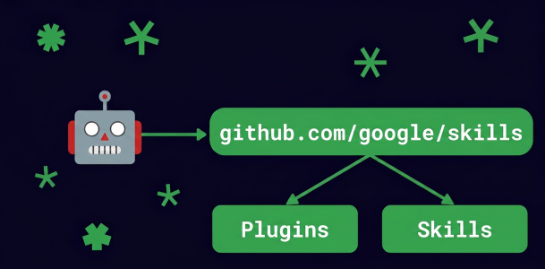
Google Cloud announced the Google Cloud Developer Plugin for AI Coding Agents, which gives coding agents such as Claude Code and Google Antigravity Google Cloud expertise and tools. Coding agents are strong programmers but lack Google Cloud service and architecture knowledge by default, so the plugin is meant to enable proper system building on Google Cloud.
The plugin is built on an AI agent plugin specification combining skills and related MCP server settings, and is available from its GitHub repository, so the test is whether one-step installation works across different agents.
- 2
Claude Code bypassPermissions still blocked by classifier
With bypassPermissions and 100 allow rules set, a user's Claude Code still rejected some operations. One denied action targeted another creator's account; stopping another session was also once blocked, though it later passed. Permission settings only control which tools may be used; the auto mode classifier separately judges what an operation intends, so “allow everything” is not truly everything, and config files won't reveal why a block occurred.
The workflow hinges on logging refusals rather than routing around them. Watch the ok=0 record format: before logging began, the user hit the same blocked point three days in a row.
- 3
Claude Code: the five layers that silently stall unattended runs
A months-long field note on running Claude Code unattended overnight logs the failure modes where the tool keeps going but no longer does useful work, and lists the fixes. The write-up argues the real risk in hands-off AI coding is not a crash but a run that looks alive while producing nothing useful, so trust in automated sessions needs its own checks.
The author offers a handover-document template and a 15-item pre-run list for the five layers that quietly stall; how well those hold up across different projects is the open question.
- 4
AI code runs clean but breaks: 101 DB calls, 7-day tokens
A Zenn write-up lays out five AI-written code patterns that never throw errors: I/O inside a loop (101 DB calls for 100 products), JWT logout where clearCookie leaves the token valid for seven days, toISOString() that misdates 9 hours daily in JST, soft deletes that leave deactivated users reachable, and Promise.all with no concurrency cap. Each pattern passes tests and runs fine locally, so the cost only appears under real production scale — and the author argues the missing ingredient is not the model's knowledge but the business context only the humans who built the feature hold.
Whether reviewers actually ask the five questions the author proposes — how many rows in production, whether a user can be locked out immediately, whose timezone the date belongs to, whether the same value can re-register after deletion, and where the concurrency limit is set — since the answers have to come from people, not from reading the code.
- 5
Claude Code subagents hand off via files, not disallowedTools: Agent nesting
Per Claude Code's official docs, subagents can launch their own subagents via the Agent tool by default, nested up to three levels; the environment variable CLAUDE_CODE_MAX_SUBAGENT_SPAWN_DEPTH changes that depth and setting it to 1 turns nesting off. The author's repo keeps six of seven agent definitions free of Agent in their tools allowlist and adds disallowedTools: Agent only to the all-tools-inheriting builder. Subagents that omit tools inherit every main-conversation tool, so Agent stays usable unless disallowedTools: Agent is set — meaning the repo's no-mutual-calling setup is a chosen design, not a Claude Code constraint, and it appears to be what keeps a human-confirmable checkpoint at each stage.
The file-based handoff adds instructions from the PM for every step and rules out parallel runs for speed, so it hinges on deciding the output directory layout up front. If that is skipped, the author warns you land back at scattered artifacts.
- 6
Zenn author: cheap AI failures reshape prototyping
In a Zenn essay, a developer describes AI-assisted prototyping shifting toward many cheap attempts, combining probabilistic candidate generation with deterministic checks, citing Hugging Face and Anthropic write-ups. If each attempt costs less, teams can run and compare several versions instead of over-studying one plan, though the essay ties this to prototype and test work only, not production.
The approach hinges on defining when to stop iterating, since repeated identical requests can repeat the same failure. The author verified search-tool behavior as of September 28, 2026.
What to Watch
Going forward, watch whether these AI coding setups are easy enough to install in one step across different agents, and whether teams actually build in clear stopping points and clear places to save their work before they start. The bigger test is human: whether reviewers really ask the tough questions — about production data, lockouts, time zones, deleted records, and concurrency limits — since those answers have to come from people, not just from reading the code.
Sources
- コーディングエージェントにGoogle Cloudの専門知識とツールを組み込む「Google Cloud Developer Plugin for AI Coding Agents」発表
- Claude Codeに全権限を渡しても止まる操作がある — 権限モードと安全チェックは別物だった
- Claude Codeを無人で回す実測ノート ── 止まらないまま効かなくなる場所
- AI が書いたコードは動く。エラーも出ない。それでも壊れている5つの形
- Claude Codeのサブエージェント間はファイル経由で受け渡す
- 失敗を安く、試行を多く――AI開発の確率論と決定論
- Claude Codeのモデルとeffortの選び方:作業別の目安とカスタムエージェントでの固定
- AIを使ったCOBOLのJava変換、「百害あって一利なし」 AI活用の“落とし穴”を考察
- 【技術解説】Python数理ロジックと機械学習を用いた資産運用・資金管理アルゴリズムの実装ガイド
- AIコーディングツールとモデルの使い分けガイド
- Claude Codeのセッションが180件になったので、題名をAIに付け直させて、新しいセッションにも自動で効かせた
- AIに数学の証明を任せていいのか? Lean 4で実際に検証してみる
- Claude Codeのサブエージェントを作業の種類ごとに分けてトークン消費を抑えた
- 人間1人とAIで、小さな商品店を回す(本の紹介)
- 確認してから commit したのに、3ファイルが5ファイルになった — Claude Code を同じ作業ツリーで並走させた3か月の記録
- Claude Codeの定時実行が使用上限で2.5日止まっていたのに、GitHub Actionsはずっと緑だった
Share this with a friend
Send today's roundup to anyone who wants to keep up.
Get daily AI news free with AIToday
Today's AI, for Today's work. Email / LINE / Slack.
Sign up free