AI in Healthcare
Aug 26, 2026
The Gist
AI is reshaping healthcare by augmenting—not replacing—clinicians, with radiologists adapting to new roles and insurers using AI to streamline care reviews. Drugmakers like BMS and Gilead are betting on AI for antibody and oncology research, while no-code tools speed up fracture detection. These shifts are real, and the industry’s path forward is to evolve with them, not resist.
Today's Stories
- 1
AI won't replace radiologists, but will change their jobs
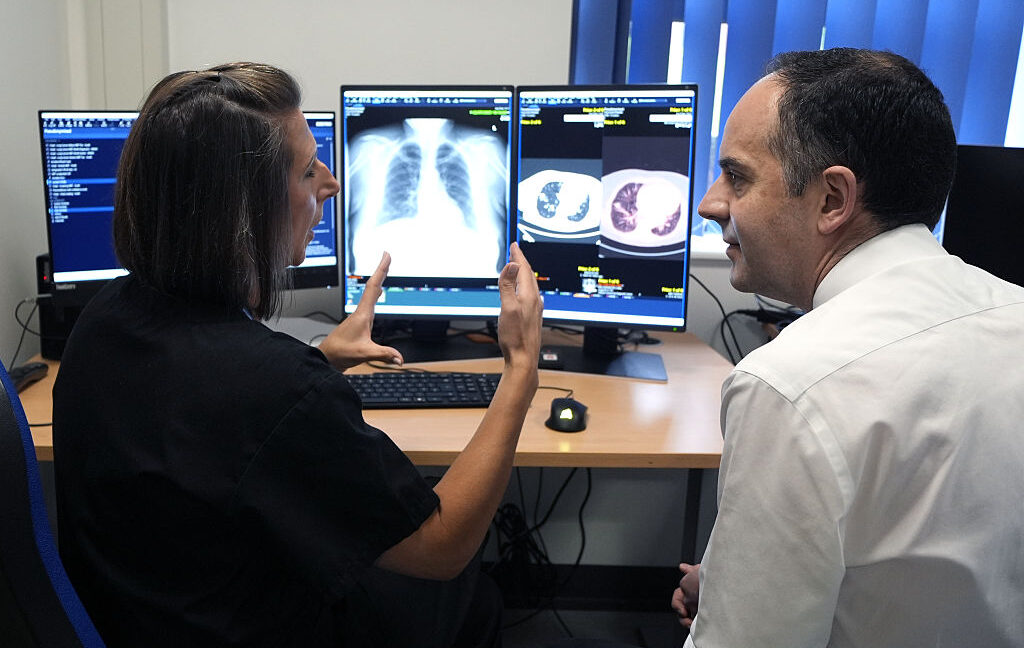
In 2016, AI pioneer Geoffrey Hinton predicted computers would replace radiologists within five years. The prediction hasn't come true; the field's ranks are growing, with practitioners expected to increase by 26% or more over the next three decades. As of early 2026, about three-quarters of the 1,400 AI-enabled medical devices cleared by the FDA were for radiology. AI can match or exceed human performance on some tasks, but the big question is how to combine technical precision with human experience to improve accuracy for patients.
Radiologists are learning to collaborate with AI, balancing automation bias and complacency. One study found even experienced radiologists saw drops in mammography accuracy under incorrect AI predictions, and over a quarter of physicians in a 2026 AMA survey reported no AI training.
- 2
BMS taps Chai Discovery's AI for antibody design
Bristol Myers Squibb (BMS) is partnering with Chai Discovery to use its generative AI for antibody design across BMS's portfolio. The collaboration is announced, though specific financial terms are not disclosed. This marks a significant adoption of generative AI in drug discovery, potentially accelerating the design of antibodies, which are key components in many modern therapies. It underscores the growing role of AI in pharmaceutical R&D.
How this partnership may influence BMS's pipeline and whether it signals broader industry adoption of AI-driven drug design. The specific antibodies or therapeutic areas targeted are not yet specified.
- 3
No-Code AI Shows Promise for Bone Fracture Detection
Researchers used Google Cloud Vertex AI to build a no-code AutoML model that classifies bone X-rays as fractured or non-fractured, achieving initial results on a mixed public dataset. This proof-of-concept demonstrates that non-experts can potentially create AI diagnostic tools, which could help expand access to medical imaging analysis. However, it is a preliminary step, not a ready-to-use clinical tool.
Further validation on larger, more diverse datasets is needed before such models can be considered for real-world clinical use.
- 4
Gilead's Nucleai AI Deal: Oncology Bet Under Scrutiny
Gilead Sciences (GILD) has announced an oncology AI deal with Nucleai, a move aimed at strengthening its cancer drug pipeline. The deal raises questions about whether Gilead's current valuation is justified, as the company seeks to leverage AI to improve its oncology portfolio and compete more effectively.
Investors will be watching whether the Nucleai partnership delivers tangible results in drug development, and how this affects Gilead's financial performance and stock valuation.
- 5
AI doesn't deny care, but shapes review, says expert
UnitedHealth Group CFO Wayne DeVeydt said at the company's Q2 earnings call in July that AI does not determine whether care is approved or denied. Cigna and Aetna have echoed that AI is never used to deny claims, but insurers still invest billions in AI for administrative tasks like prior authorizations and claims processing. Stacie Sutter from Ensemble Health Partners says payers' claims are technically true—AI doesn't click deny—but it routes which cases go to a clinician and in what condition. This creates an information asymmetry: providers don't know what the AI looks for, since payers often treat that as proprietary, forcing them to invest more time and resources upfront to avoid denials or delays.
Sutter calls for transparency, urging payers to share approval rates, denial rates, and outcomes by AI-routed vs. non-routed requests, broken down by service type and specialty. Ensemble has achieved a 92% success rate with touchless prior authorizations for radiology cases with a national payer, but scaling beyond that may require payer engagement and robust systems.
- 6
MR leader urges evolution over pessimism in AI era
At the MR Forum 2026 on August 21, MR Certification Center committee chair Shinichi Morioka gave a lecture titled "MR Evolution in the AI Era." He described both pessimism and optimism (status quo) as "stagnant perspectives" and called for an "evolutionary perspective." Morioka warned that MRs' traditional strength of "information asymmetry" is being undermined, citing that 63% of U.S. doctors now use generative AI in clinical practice. He highlighted three areas AI will replace: visit record automation (expecting 40–60% efficiency gains), visit timing and content optimization, and simple information delivery.
He proposed MRs evolve into "insight creators," "trusted partners," and "ecosystem orchestrators." He also stressed that the MR certification system reform (effective April 2026) requires a shift from company-led education to individual-led lifelong learning, urging all MRs to choose evolution over decline.
What to Watch
Watch how radiology and drug development teams translate AI from pilot to practice, and whether payers follow Sutter’s push for transparency—if early wins like Ensemble’s 92% prior-auth success scale beyond one payer, and if Gilead’s Nucleai partnership shows real pipeline value, expect AI’s role to shift from tool to trusted collaborator, reshaping both diagnoses and therapies.
Sources
- AI won’t replace radiologists, but it will dramatically change their jobs
- Bristol Myers Squibb taps Chai Discovery's generative AI for antibody design across portfolio
- Code-Free AutoML for Binary Classification of Fractured and Non-fractured Bone Radiographs From a Heterogeneous Public Dataset Using Google Cloud Vertex AI: A Proof-of-Concept Study
- Can Gilead Sciences (GILD) Justify Its Valuation On The Nucleai Oncology AI Deal?
- Payers say AI doesn't deny care. The truth is more complex
- MR認定センター・森岡委員長 AI時代に悲観論や楽観論は「停滞」 AI活用でMR価値を「進化」に再定義
- Michael Polansky is training an AI model on skin that’s still alive
- Novo Nordisk Expands Its AI Push With AWS, But Can It Accelerate Drug Discovery?
- Is Gilead (GILD) Using AI Tissue Analytics To Quietly Redefine Its Oncology Edge?
- Bristol Myers Squibb (BMY) Teams Up On AI Antibody Discovery Push
- Merck (MRK) Takes An AI Vaccine Stake And Expands Its Discovery Playbook
- Tempus AI Stock (TEM) Opinions on Merck-Moderna Cancer Vaccine Trial Success
- Code-Free Classification of Pediatric Pneumonia on Chest Radiographs Using Google Cloud Vertex AI AutoML: A Proof-of-Concept Internal Validation Study
- Mark Cuban: "No Chance" Radiologists Get Replaced by AI. He Says the Real Target Is Elsewhere
- On-prem MLOps in a hospital: advice needed for production monitoring of self-built and vendor models? [D]
- AI, genomics expert leaves Pathos AI, will advise Pfizer
Share this with a friend
Send today's roundup to anyone who wants to keep up.
Get daily AI news free with AIToday
Today's AI, for Today's work. Email / LINE / Slack.
Sign up free