Autonomous Driving
Jun 11, 2026
The Gist
Tesla received approval to test its Full Self-Driving technology in Denmark, while the company develops new AI chips for autonomous cars and robots. Researchers at Decart launched Oasis 3, an AI system that creates photorealistic virtual driving environments to train self-driving cars faster and cheaper than real-world testing. However, new data shows Waymo's robotaxis drive empty nearly half the time, raising questions about whether autonomous vehicles will actually reduce traffic as promised.
Today's Stories
- 1
Tesla gets approval to test self-driving cars in Denmark, develops new AI chips
Tesla received regulatory approval to test its Full Self-Driving (FSD) technology in Denmark on June 10th. The company is also designing a new generation of AI chips that will power both self-driving cars and humanoid robots, according to CEO Elon Musk.
Tesla's self-driving features may soon become available to customers in more European countries, expanding beyond the current limited rollout.
- 2
Decart launches AI system that creates photorealistic virtual roads for training self-driving cars
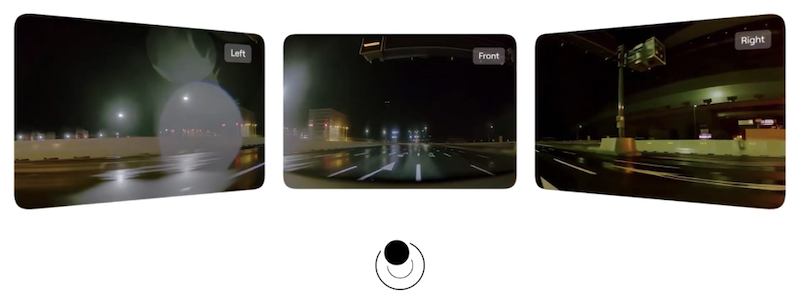
AI research lab Decart released Oasis 3 on June 10th, a system that generates realistic virtual driving environments in real-time. The technology allows companies to train autonomous vehicles in simulated worlds that look and behave like real roads, potentially reducing the need for expensive real-world testing.
Self-driving cars could be developed faster and more safely by training in virtual environments before hitting real roads, potentially speeding up their arrival in everyday use.
- 3
NVIDIA expands robotics tools with new humanoid robot platform and simulation software
NVIDIA launched Isaac GR00T, a reference platform for building next-generation humanoid robots, and rolled out Cosmos 3, a world simulation model for training AI systems. The tools target applications in healthcare automation, manufacturing, and autonomous vehicles.
More companies may be able to develop robots and autonomous systems using NVIDIA's standardized tools, potentially accelerating robot deployment in warehouses, hospitals, and factories.
- 4
Procter & Gamble partners on Saudi Arabia's first self-driving hydrogen truck
Consumer goods giant Procter & Gamble announced a partnership on June 5th to deploy Saudi Arabia's first autonomous hydrogen-powered truck. The project combines self-driving technology with clean energy for commercial transportation.
Major consumer brands are beginning to test autonomous delivery trucks, which could eventually change how everyday products reach stores and homes.
- 5
Study finds Waymo robotaxis drive empty nearly half the time, questioning traffic reduction claims
New research published June 3rd shows that Waymo's robotaxis in San Francisco drive without passengers for almost 50% of their miles. The data challenges industry claims that autonomous vehicles will reduce traffic congestion.
Robotaxis may not solve urban traffic problems as promised, since they spend significant time driving around empty looking for passengers or repositioning between rides.
- 6
Anthropic hires OpenAI's second chip engineer as AI companies build custom hardware
Clive Chan, who helped develop OpenAI's custom AI chips and previously worked on Tesla's Autopilot processors, joined Anthropic on June 7th. The move comes as both companies prepare for public stock offerings and consider developing their own specialized AI hardware.
AI companies are increasingly building custom computer chips rather than buying off-the-shelf processors, which could lead to faster and more efficient AI systems in consumer products.
What to Watch
Both OpenAI and Anthropic are preparing for initial public offerings (IPOs) that could happen later this year, which would allow ordinary investors to buy shares in the companies behind ChatGPT and Claude. NVIDIA's robotics push suggests more humanoid robots and autonomous vehicles may start appearing in real-world applications over the next 12-18 months.
Sources
- Decart’s Oasis 3 world model streams realism into robotic training environments
- Tesla Stock: FSD Approved In Denmark; Elon Musk Says This About AI Chips
- Decart’s new world model can simulate hours of photorealistic driving — with some caveats
- Procter & Gamble Partners on Saudi Arabia's First Self-Driving Hydrogen Truck
- How to build self-driving AI operations on Amazon Bedrock at scale | Artificial Intelligence
- Simulation tools in the ROS ecosystem: Testing and validating robots virtually
- NVIDIA’s Robotics And Physical AI Push What It Could Mean For Investors
- Anthropic poaches OpenAI's second-ever chip engineer as both companies race toward IPOs
- Buy This AI Stock to Own SpaceX Pre-IPO and Hold It Through the Robotaxi Boom
- Autonomous vehicles were supposed to cut traffic—what if they don't?
Share this with a friend
Send today's roundup to anyone who wants to keep up.
Get daily AI news free with AIToday
200+ AI sources, summarized in 1 minute. Email / LINE / Slack.
Sign up free