AI in Healthcare
Aug 16, 2026
The Gist
Major healthcare companies are accelerating AI adoption across diagnostics and drug development, with Thermo Fisher expanding cancer screening automation, Gilead and Eli Lilly integrating AI into operations, and Abbott partnering with Google on smart glucose monitoring. Investor enthusiasm is driving stock gains for AI-focused healthcare firms like HeartFlow, though valuations may be outpacing fundamentals in some cases. The healthcare industry is rapidly moving from AI pilots to clinical deployment at scale.
Today's Stories
- 1
Thermo Fisher expands NGS automation to all clinical labs for faster cancer care
Thermo Fisher's Clinical Sequencing Division is deploying fully automated next-generation sequencing (NGS) systems to clinical labs everywhere, moving genomics testing beyond specialized centers. The company's Genexus product enables end-to-end automation that allows any laboratory technician to run the tests locally. Automation and AI in NGS reduce the time for clinicians and patients to access cancer treatment decisions. By decentralizing genomics testing to local labs rather than specialty centers, patients no longer need to wait for samples to be sent away, accelerating precision medicine delivery where they live.
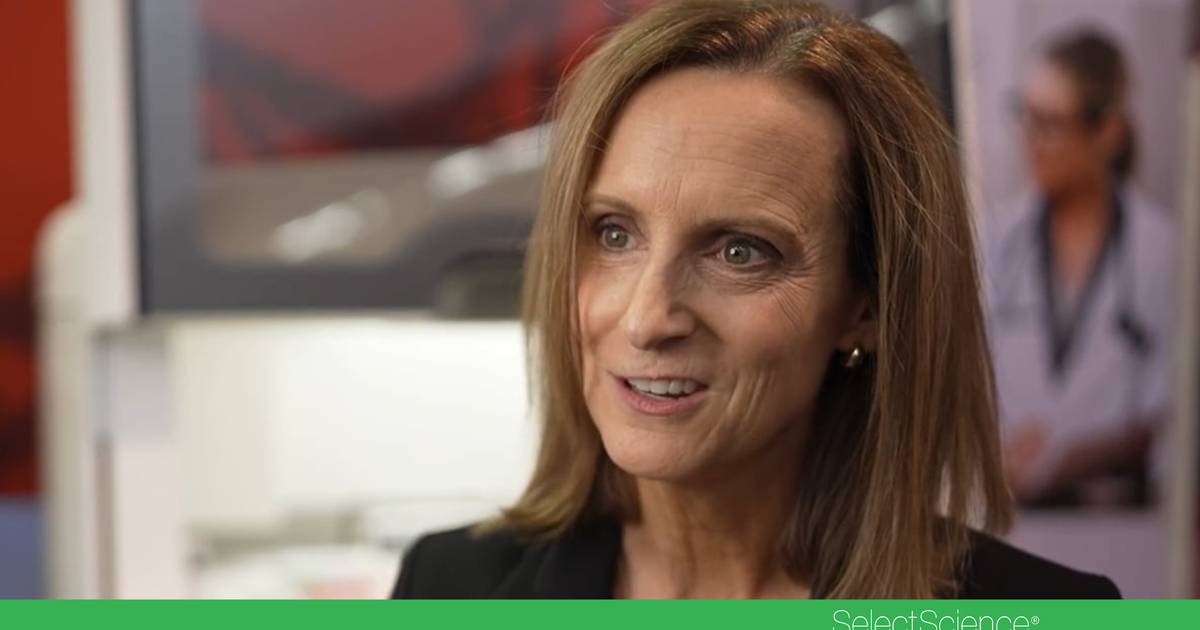
Kathy Davy, President of Thermo Fisher's Clinical Sequencing Division, projects that within five years, all patients with an actionable mutation will have access to precision medicine through products like Genexus. The company is balancing workflow simplification with ongoing innovation to keep pace with new biomarkers and evolving cancer science.
- 2
Gilead shares rise 5.56% on AI deal; stock may be 8% overvalued at $138
Gilead Sciences announced a collaboration with Nucleai, which uses AI-powered tissue analytics for antibody drug conjugate programs, alongside second-quarter earnings and updated guidance. The stock has risen 5.56% over the past 7 days and 13.6% year to date. Gilead is transitioning from a single-franchise HIV company into a multi-platform biopharma with growth drivers including lenacapavir and Trodelvy, plus cell therapy and immunology optionality. However, the most-followed narrative values the stock at $128 per share, suggesting it is 7.6% overvalued at the current price of $138.14, though market ratios point to potential undervaluation on a price-to-sales basis.
Analyst targets cluster near $157, while the stock currently trades at about $138. Key pipeline trials and the integration of recent acquisitions could shift the valuation narrative quickly if they disappoint or extend margin pressure longer than expected.
- 3
Eli Lilly commits to Veeva's AI platform for global commercial operations
On August 11, Eli Lilly committed to deploying Veeva Vault CRM globally. Vault CRM is Veeva's AI-driven commercial framework, called "agentic commercial," designed to modernize field engagement and speed medicine delivery. Veeva provides enterprise software infrastructure to life sciences companies; Eli Lilly is a pharmaceutical manufacturer experiencing explosive growth (Q2 2026 revenue surged 48% year-over-year to $22.97 billion, driven by demand for GLP-1 therapies Mounjaro and Zepbound). The partnership shows how technology and drug development are becoming deeply intertwined, and may strengthen Veeva's position as the tech engine driving efficiency in the sector.
Eli Lilly raised its full-year 2026 revenue guidance to $85.0–$87.0 billion. On August 10, the UK's MHRA authorized Foundayo (orforglipron), Lilly's once-daily oral GLP-1 pill with no food or water restrictions, positioning it as a major catalyst to expand treatment access globally.
- 4
Abbott, Google Partner on AI-Powered Glucose Monitoring
On August 11, Abbott Laboratories and Alphabet announced a multi-year partnership that integrates data from Abbott's Lingo continuous glucose monitor into the Google Health app, pairing real-time metabolic data with Google's AI Health Coach to deliver personalized recommendations on nutrition, sleep, and recovery. The deal demonstrates how health tech and AI are converging—Abbott's strong Q2 2026 performance (12.59 billion in sales, up 13.0% reported) and resilient Diabetes Care division position it to capitalize on preventive health trends, while Alphabet's explosive Q2 growth (revenue up 24% year-over-year to $119.8 billion, Google Cloud up 82%) shows AI demand is accelerating across sectors, including healthcare.
Abbott's Nutrition business declined 3.1% in Q2, and emerging-market pricing pressure could constrain margins if medical device growth slows; the partnership's ability to drive adoption of Lingo and translate AI insights into sustained user engagement will signal whether the collaboration can unlock new revenue streams in metabolic health.
- 5
Open-source tool evaluates oncology AI at clinical decision thresholds
A developer has released oncothresh, a free Python library and web dashboard designed to evaluate cancer AI models at the specific clinical cutoff where a patient gets flagged for biopsy or treatment—not just in aggregate. The tool measures sensitivity, specificity, positive/negative predictive value, confidence intervals, calibration, and net benefit at that exact threshold. Standard AI metrics (AUC, accuracy) show how well a model performs overall, but they don't answer what clinicians actually need: is this model reliable enough at the exact point where it makes a yes-or-no decision about a patient? Oncothresh closes that gap for tasks like tumor cellularity, Ki-67, TMB, and PD-L1 scoring, where a continuous model output must become a binary clinical decision.
The library is lightweight (built on numpy, scipy, scikit-learn, and pydantic) and comes with a no-code web dashboard, making it accessible to pathology teams without ML expertise. Existing benchmarks like PathBench evaluate AI models globally but do not assess performance at predefined clinical thresholds with uncertainty quantification.
- 6
Heartflow stock surges 35.7% on raised 2026 revenue guidance
Heartflow, a medical diagnostics company, raised its full-year 2026 revenue forecast to $246 million–$250 million (40–42% growth) from a prior forecast of 29–32% growth, and lifted its adjusted gross margin target to 82% from 81%. The company's Heartflow One platform uses AI to create 3D heart models from coronary images, helping doctors detect artery disease non-invasively. With revenue up 48% year-over-year to $64.1 million in Q2 and adjusted gross margin climbing to 83.3% from 75.6%, the company is demonstrating both strong demand and improving profitability as it scales—signaling a path toward sustained profitable growth, according to CEO John Farquhar.
Heartflow is not yet profitable overall, though its adjusted operating loss narrowed to $7.9 million from $11.5 million in the prior-year quarter. Investors should monitor whether the company reaches profitability as it executes on its 2026 guidance.
What to Watch
Watch for whether Thermo Fisher can deliver on its five-year vision of precision medicine reaching all patients with actionable mutations through Genexus, especially as pipeline trials and recent acquisitions determine if the stock's $157 analyst target becomes achievable or if margin pressure persists. Simultaneously, track Eli Lilly's ability to capitalize on Foundayo's UK approval to expand GLP-1 access globally, Abbott's success in converting Lingo AI insights into sustained metabolic health engagement, and whether HeartFlow reaches profitability—collectively signaling which companies are translating AI innovation into sustainable business growth in healthcare.
Sources
- Automated NGS and AI to advance precision medicine - SelectScience interview
- Gilead Sciences (GILD) Could Be 8% Overvalued As AI Deal And Q2 Results Lift Shares
- Can Veeva Systems Inc. (VEEV)’s AI Platform Keep Pace With Eli Lilly and Company (LLY)’s Explosive Growth
- Can Abbott Laboratories (ABT)’s Lingo Partnership With Alphabet (GOOG) Unlock a New Era of AI-Powered Health?
- Open-source Python library + no-code web dashboard for evaluating oncology AI models at clinical decision thresholds. [P]
- Why Heartflow Stock Soared Today
- Can AI Reduce the Costs of Healthcare and Aging?
- AI advances take safety to new heights
- Quantinuum, NVIDIA, and Pfizer Validate Generative Quantum AI (GenQAI) Framework for Pharmaceutical R&D
- How AI and self-driving labs could accelerate semiconductor materials discovery
- Enterprise AI Profile: Pfizer's Federated AI Pipeline
- Vinod Khosla Says AI Is Creating a ‘Hyperabundance’ of New Drugs, but Testing Is Still ‘18th-Century’
- Why Google killed its best argument for AI
- There’s a Fatty Liver Epidemic. AI Could Help Get Ahead of It
- Japan testing new tech to prevent heatstroke among elderly
- Oracle Health debuts revamped patient portal with an AI upgrade
Share this with a friend
Send today's roundup to anyone who wants to keep up.
Get daily AI news free with AIToday
Today's AI, for Today's work. Email / LINE / Slack.
Sign up free