Image Generation
Sep 1, 2026
The Gist
AI image tech is moving fast on two fronts: tiny models can now run on small devices like microcontrollers, while big-name benchmarks are adding Muse, Seedream, and Grok Imagine. In the art world, a controversial scraper of artists' work has turned around to help build a protection tool, and Disney concept art just sold for $3.43M at auction. Creatives should expect both more AI-powered tools in everyday hardware and a stronger push for artist safeguards.
Today's Stories
- 1
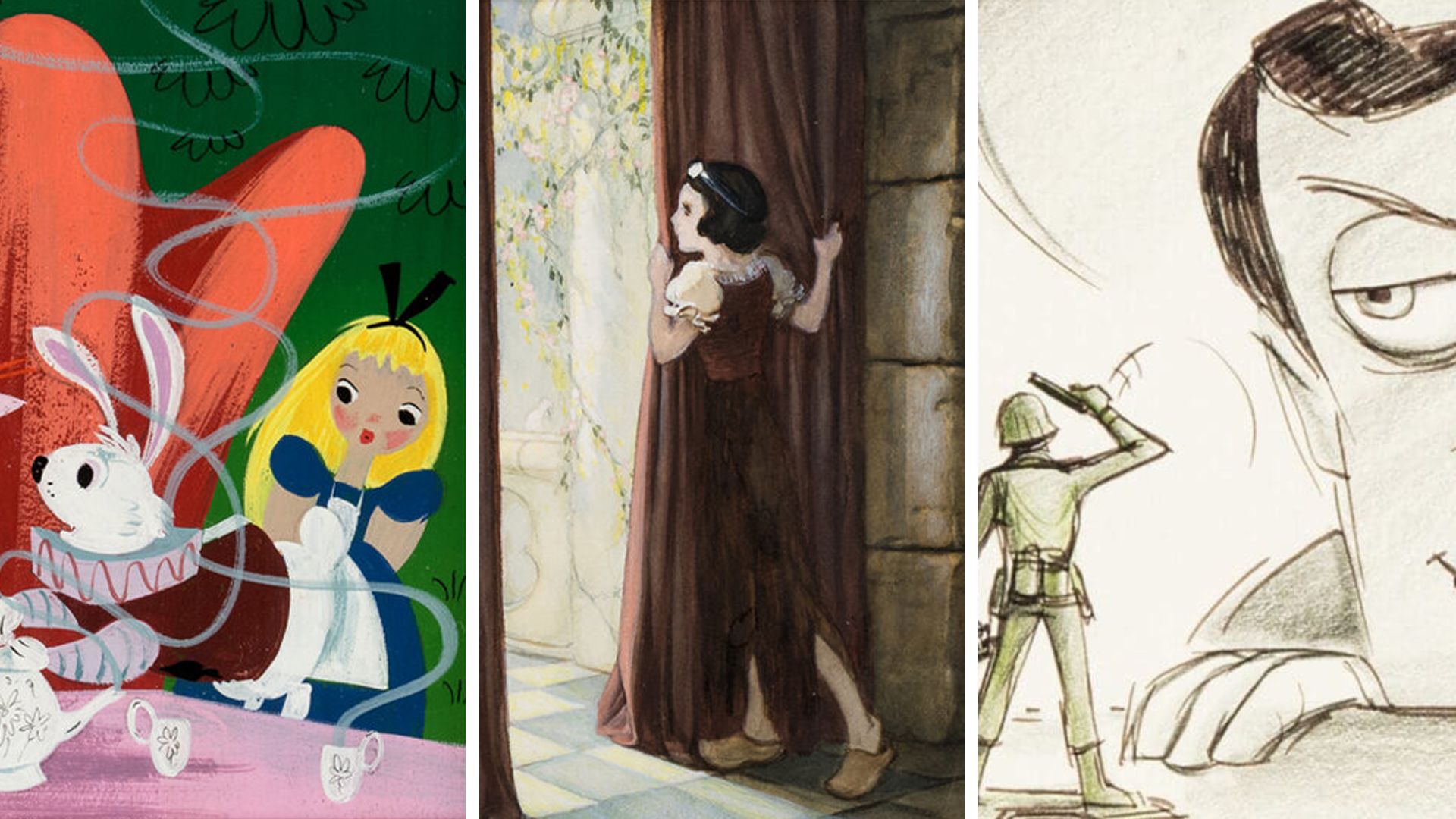
Disney concept art auction fetches $3.43M
Heritage Auctions' sale of Disney art last weekend generated $3.43 million across 1,346 lots. Gustaf Tenggren's concept painting for Snow White and the Seven Dwarfs fetched $85,400. The auction shows concept art holds artistic and monetary value, which contrasts with the use of AI for concept art. It raises the question of whether AI-generated art will be valued similarly in the future.
Whether the growing appreciation for animation art continues, as noted by Heritage's Jim Lentz. The article questions if anyone will appreciate AI-generated Spider-Man art in 50 years.
- 2
ESP32-P4 Reads Water Meter with AI
A hobbyist built a system that reads a water meter using the Makerfabs ESP32-P4 board with autofocus camera. They trained a dedicated model on real water meter images, focusing on the pointer and digit-reading area. After deployment, it correctly recognized the meter reading. This moves from a proof-of-concept 5-digit recognition demo to a practical application. It shows that AI-based image recognition can run directly on an embedded device for real-world tasks like utility metering.
The system's accuracy on more varied meter conditions, such as different lighting or wear, is not yet reported. Further real-world testing would show if it can be deployed widely.
- 3
Small AI image model runs on microcontroller
A developer created a tiny image generation model, a latent flow transformer with 12 layers, that runs fully on a microcontroller. It has only 2.4–4 million parameters, making it extremely small. The model generates 128x128 face images in about 20 seconds on a low-power microcontroller, demonstrating that complex AI tasks can run on minimal hardware. This could enable AI generation in devices where it was previously impossible.
The developer will share the repository, allowing others to reproduce and experiment with the model. The use of CFG and Relu² activation improved image quality and efficiency, hinting at future optimizations for such tiny AI systems.
- 4
AI image benchmark adds Muse, Seedream, Grok Imagine
A new episode of an AI image benchmark compares 33 image models from 8 providers, including Meta Muse Image 1.0, Seedream 5.0 Pro, and Grok Imagine Image 2.0. The cost per image generation ranges from $0.0025 (Flux Fast Schnell) to $0.25 (Recraft 4 Pro) — a 100x difference, highlighting how much pricing varies across providers.
The full report, including price, latency, and sample images, is available on the author's blog.
- 5
Massive Scraping of Artists' Works Leads to Perpetrator Helping Build Protection Tool
Image-sharing app Cara was hit by large-scale scraping attacks three times since August 13. The first incident saw 120,000 works published on Reddit as a 12-terabyte archive. Cara is a platform home to some 1.5 million artists opposed to unauthorized use of their work in AI training. Founder Jingna Zhang notes that legal protections have not kept pace and that scraping can be justified as “technically legal.” Domestic artists are also seen as potentially vulnerable to similar incidents.
The perpetrator of the first attack is a student named “Heft,” who is now co-developing an open-source tracking tool called “Lantern” with Zhang. The tool notifies artists when their work appears in new AI image datasets.
- 6
AWS Quick and fal unite for agentic creative workflows
AWS announced an integration where Amazon Quick, an agentic AI workspace, connects to fal's generative media platform via Model Context Protocol (MCP). This enables creators to run workflows like an eight-panel storyboard or a music-video concept within one interactive session. Creative teams face demand that exceeds capacity—78% of creative leaders report this—and faster generation alone doesn't solve workflow fragmentation. The integration retains context across steps, adds human approval gates, and packages repeatable processes as shareable Skills.
The setup requires a fal account and API key, plus permission to add a remote MCP connector in Amazon Quick. The storyboard workflow uses FLUX.1 Kontext for reference-guided panel generation.
What to Watch
Watch whether AI-generated art earns lasting cultural appreciation, and see if real-world testing proves these systems reliable beyond ideal conditions—while also tracking how open-source tools and community-driven efforts shape both creative workflows and artist protections.
Sources
- The $3.4m Disney auction is a reminder of what AI concept art takes from us
- From 5-Digit Recognition to Water Meter Reading with ESP32-P4
- I implemented a very tiny image generation model (latent flow transformer) on a RP2350 microcontroller - it can generate 128x128 images of faces [P]
- 33 image models from 8 providers compared
- He Scraped All of Their Art for AI. Now He’s Collaborating on a Tool to Help Them
- Build agentic creative workflows with Amazon Quick and fal
- Adobe is adding more AI to Photoshop
- Luce: Relightable Gaussians for 3D Asset Generation
- AI Slop Is Ruining Cute Animals on the Internet
- Netflix’s Hamnet Accused of Using AI, but the “Error” Has a Historical Explanation
- Stability AI, maker of image generator Stable Diffusion, raises $76 million in fresh funding
- STARFlow2: Bridging Language Models and Normalizing Flows for Unified Multimodal Generation
- アシックス---「AI-App クマ検知」を9月1日より提供開始 執筆 - Investing.com
- Hybrid collaborative filtering recommendation system for judging and suggesting books based on their covers [P]
- LINEヤフー、AIエージェント「Agent i」に写真から商品を探せる「ショッピングレンズ」追加 (日本ネット経済新聞)
- DeepSeek debuts multimodal language model competitive with Opus 4.8
Share this with a friend
Send today's roundup to anyone who wants to keep up.
Get daily AI news free with AIToday
Today's AI, for Today's work. Email / LINE / Slack.
Sign up free