Autonomous Driving
Jul 8, 2026
The Gist
The U.S. has deployed over 100 autonomous vehicles in Ukraine for combat operations, while the autonomous driving industry continues advancing with self-driving startup Turing securing AMD backing and integrating AMD AI chips into its systems. South Korea is positioning itself as a leader in autonomous driving by prioritizing world models as a competitive advantage in the self-driving sector.
Today's Stories
- 1
U.S. deploys 100+ autonomous vehicles in Ukraine combat
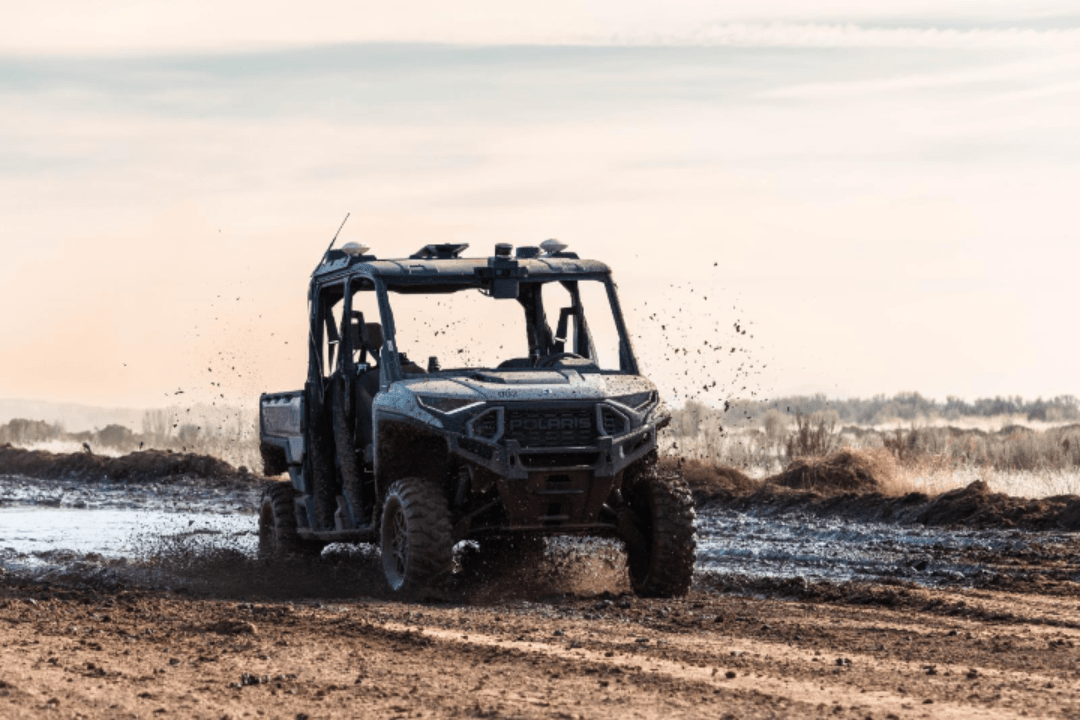
Forterra, a U.S. autonomous vehicle builder, has deployed more than 100 of its self-driving ATVs in Ukrainian conflict zones over the past nine months—what it claims is the largest deployment of autonomous ground vehicles in combat by any U.S. defense tech company. The Lancer vehicles, based on Polaris ATVs and equipped with custom sensors and computing hardware, have completed more than 1,100 missions, driven over 2,500 miles, carried 777,440 pounds of cargo, and evacuated 52 casualties. Ukrainian forces face constant aerial drone threats that make movement extremely dangerous, creating demand for remote-operated and autonomous ground vehicles to transport supplies, munitions, and wounded soldiers. Forterra's vehicles can carry 750 kilograms of cargo and run on gasoline, outperforming Ukraine's existing battery-powered vehicles, which carry only up to 250 kilograms. The real-world combat experience is teaching Forterra and competitors how autonomous systems must evolve to handle military conditions—lessons that will shape future U.S. defense contracts.
Ukrainian soldiers currently teleoperates the vehicles rather than relying on full autonomy, because autonomous systems cannot yet identify and react to unexpected enemy threats in real time. Forterra has raised more than $500 million(約800億円) in venture funding and faces competition from Scout AI (which raised $100 million(約160億円) earlier this year), Field AI, and Overland AI, all developing autonomous platforms for the military.
- 2
South Korea eyes world models as key to self-driving edge
An automotive tech researcher in South Korea has identified world models—systems that can reason through unknown scenarios—as the critical technology for advancing physical AI autonomy in self-driving vehicles, positioning this capability beyond end-to-end (E2E) self-driving approaches. As the global autonomous-driving industry competes fiercely on E2E self-driving technology, the emphasis on world models suggests a different technical pathway may be needed to solve the remaining challenges in full vehicle autonomy. This framing could shape how South Korea's automotive sector prioritizes its R&D.
The article does not specify funding, timelines, or concrete product rollouts; the significance lies in the strategic positioning of world models as a competitive advantage for South Korea's autonomous-driving ambitions.
- 3
Oak Ridge Lab reveals workforce maintaining AI research facilities
The US Department of Energy's Oak Ridge National Laboratory has disclosed that Facilities and Operations (F&O) workers form a crucial team behind autonomous science labs. These workers build and maintain the infrastructure that enables robotic systems, sensors, and automation to run research facilities with minimal human oversight. Autonomous laboratories represent a shift toward research that operates with little direct human involvement. The behind-the-scenes workforce maintaining this infrastructure is essential to the functioning of next-generation research facilities, though their role has largely remained invisible to public attention.
The article emphasizes that this workforce is a hidden component of AI-powered research infrastructure—highlighting the human labor that underpins what appears to be fully automated science.
- 4
Chip stocks lead market rally; Nasdaq, S&P 500 gain while Dow lags
The Nasdaq Composite rose 1.3% and the S&P 500 gained 0.7%, led by semiconductor stocks. The iShares Semiconductor ETF jumped 4.1% after a two-week losing streak. Broadcom announced its chip supply deal with Apple will extend through 2031, adding $78 billion(約12兆円) in market capitalization, while Advanced Micro Devices surged 8% on news that Japanese autonomous driving start-up Turing is using AMD graphics processors for about 10% of its AI training needs. The chip rally shows investor appetite for semiconductor and AI-related hardware remains intact, even after recent weakness. Broadcom's multi-year deal with Apple locks in revenue across multiple iPhone generations, signaling confidence in sustained demand for custom silicon. For businesses tracking tech spending, this suggests major tech companies are committing significant capital to AI infrastructure and chip development.
The Dow Jones Industrial Average fell 0.1% despite winners like Goldman Sachs and IBM, held back by sharp declines in Honeywell International (down 7.2% after a spinoff) and Amgen (down 2.6%). Microsoft dropped 1.4% after announcing 4,800 job cuts and a smaller Xbox division, signaling a shift toward AI infrastructure spending over headcount.
- 5
Self-driving startup Turing taps AMD as backer, deploys AMD AI chips
Self-driving tech developer Turing Inc. added AMD Ventures to its investor roster and has begun using Advanced Micro Devices Inc.'s AI accelerators in its systems. The partnership signals AMD's push to compete in AI infrastructure beyond Nvidia, and gives Turing access to alternative hardware for autonomous vehicle development — a capital-intensive field where chip choice affects both performance and supplier relationships.
No specific deployment timeline, pricing, or scale details were disclosed in the announcement.
- 6
Self-driving startup Turing gets AMD backing and adopts AMD GPUs
Self-driving startup Turing gets AMD backing and adopts AMD GPUs
What to Watch
As autonomous systems mature, watch whether teleoperated military vehicles—currently reliant on human operators due to the inability to handle unexpected threats—will eventually transition to true autonomy, while competing startups like Scout AI, Field AI, and Overland AI challenge Forterra's market position. Simultaneously, keep an eye on whether South Korea's strategic focus on world models as a competitive differentiator will translate into tangible autonomous-driving breakthroughs, and monitor how tech giants like Microsoft continue to reallocate resources from traditional workforce spending toward AI infrastructure investments that could reshape the autonomous vehicle landscape.
Sources
- The first American autonomous ground vehicles are fighting in Ukraine
- World models can lift South Korea in self-driving tech
- Oak Ridge National Lab reveals ‘hidden workforce’ behind AI-powered research facilities
- The Dow Couldn't Keep Up With Chip Stocks on Monday
- Self-Driving Startup Turing Gets AMD Backing, Adopts AMD GPUs
- Self-driving startup Turing gets AMD backing and adopts AMD GPUs
- Tesla's $1.4 trillion valuation rests on what happens next in one city
- Hollywood wants Seedance banned and reportedly also wants to keep using it
- Microsoft follows Anthropic and OpenAI into the AI super app race with overhauled Copilot and AutoPilot agents
- Tesla rolls out robotaxi service in Miami
Share this with a friend
Send today's roundup to anyone who wants to keep up.
Get daily AI news free with AIToday
200+ AI sources, summarized in 1 minute. Email / LINE / Slack.
Sign up free