Image Generation
Sep 5, 2026
The Gist
AI image generators still struggle with food, menus, and faces, leaving viewers with an "off" or unappetizing feel—a pattern that PR experts and science now explain. Meanwhile, World Labs' Atlas 3D model pushes image generation into full 3D worlds, and Jasper released a practical build guide, while AWS slashed its dashboard failure detection time from 72 hours to just one. Today, the gap between what AI renders and human perception is closing fast on engineering, but still wide on taste and emotion.
Today's Stories
- 1
Why AI food images look so unappetizing
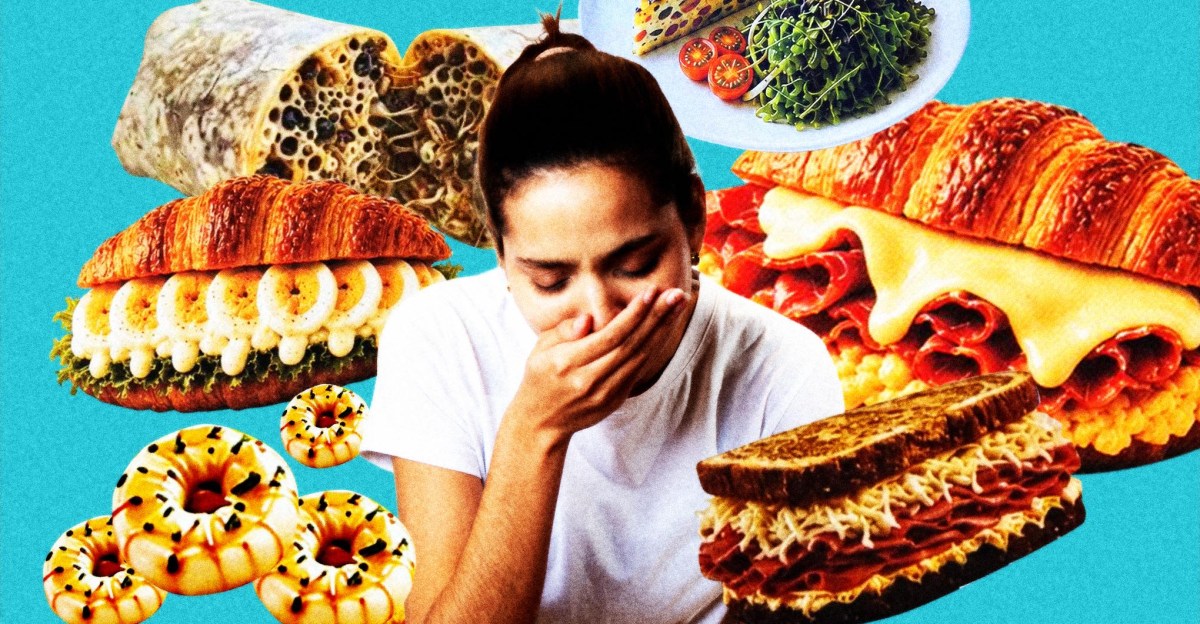
Restaurants, cafes, and brands are using AI to generate food images, but the results often look like 'slop'—for example, donut shrimp, wormlike noodles, and ice cream that resembles concrete. Diffusion models (which generate images by gradually removing noise) first recover coarse structures, then add fine details—this can corrupt the basic shape early on. Also, these models 'reproduce looks without proper knowledge about the world,' so they have no idea what a sandwich or burrito actually is.
AI's weakness lies in 'thin, continuous, terminating structures,' like noodles and tendrils, which leads to 'spaghetti-like artifacts.' Training on AI-generated content may cause 'model collapse,' resulting in visual degeneration and sameness.
- 2
AI-generated restaurant menus look off, and science explains why
AI-generated menus in restaurants often feature food that looks too perfect, symmetrical, and smooth, triggering unease in customers. This stems from AI models trained on a narrow, 'pleasing' aesthetic. Researchers at the University of Duisburg-Essen found these images create an 'uncanny valley' effect, where almost-real food looks more disgusting than obviously fake images. The homogenization happens because models optimize for 'pleasingness' and 'not being offensive,' which 'shaves off the edges.'
Restaurants may reconsider using AI menus due to customer backlash. However, the issue extends beyond food, affecting trust in visual evidence, as Reality Defender CTO Alex Lisle notes: 'The world has fundamentally shifted, for good or for ill.'
- 3
Why AI images feel "creepy": a PR expert explains
An ITmedia article explains why consumers find AI-generated images "creepy" (a common Japanese slang term for unsettling), with a public relations professional providing the analysis. For businesses and communicators, understanding this consumer discomfort matters because it affects how AI imagery is perceived in marketing and public communications, potentially influencing brand reception.
The article is presented as the first of two pages, so the explanation continues in the second part.
- 4
Fei-Fei Li's World Labs unveils Atlas 3D world model
World Labs, founded by Stanford professor Fei-Fei Li, unveiled Atlas, a multimodal world model that can generate, reconstruct, and simulate 3D environments from text, images, and video. This moves AI beyond 2D content into full 3D simulation, which could be important for robotics and immersive applications. The model is designed to help machines understand and interact with physical spaces, not just generate media.
Fei-Fei Li presented Atlas at the HumanX Conference 2026 in San Francisco, highlighting its role in advancing spatial intelligence for AI and robotics.
- 5
Jasper Research releases text-to-image build cookbook
Jasper Research released a cookbook explaining how to build a text-to-image model from scratch, sharing full reasoning and intermediate results. The cookbook is positioned as ideal for deep-diving into text-to-image models or for learning how frontier labs build them, making an advanced process accessible to a broader audience.
The release also includes a 100M-image dataset and a codebase with a tiny model, allowing readers to train a text-to-image model from scratch themselves.
- 6
AWS team cuts dashboard failure detection from 72h to 1h
An AWS team built an AI-powered content validation system that scans hundreds of dashboards on the AWS Insights application (powered by Amazon Quick) to catch missing or incorrect elements. It uses Anthropic Claude models on Amazon Bedrock to visually analyze screenshots and alert owners via Slack when issues are found. Traditional monitoring misses silent failures that only appear in what users see, such as blank charts or wrong numbers. Over 30 days, the system detected 802 content failure instances, and fewer than 1 percent had a user report. The solution reduced mean time to detection from up to 72 hours to less than 1 hour.
The system uses two parallel validation methods: one for visual integrity and one for numeric consistency. When a visual failure is confirmed, owners get a Slack notification with the affected section name, a screenshot, an AI confidence score, and a link to the monitoring dashboard.
What to Watch
As AI imagery edges toward photorealism, the battleground is shifting from generating pictures to verifying them—watch for sharper tools that flag subtle artifacts like spaghetti-like distortions, even as models risk degenerating when trained on their own output. Meanwhile, expect a growing backlash over AI’s role in visual trust, from restaurant menus to evidence, pushing researchers like Fei-Fei Li’s team to anchor progress in spatial intelligence rather than just pixel perfection.
Sources
- Why AI food looks like that
- The sameness problem behind those unappetizing AI-generated menus
- 生成AI画像はなぜ“キショい”のか 消費者が抱く違和感の正体 広報のプロが解説(1/2 ページ)
- Fei-Fei Li's World Labs unveils Atlas world model for 3D AI and robotics
- Detailed explanation of how to create a text-to-image model from scratch. [R]
- How an AWS team detects dashboard content failures at scale using Amazon Bedrock
- World Labs unveils Atlas, a single AI model that generates, reconstructs, and simulates 3D worlds from just a few photos
- フェイフェイ・リー氏のWorld Labs、空間知能オムニモデル「Atlas」発表 少数の画像から3D空間やバレットタイム映像を生成
- Fei-Fei Li’s World Labs debuts Atlas, a world model showcase for advanced spatial intelligence
- Google、AI画像生成・編集ツール「Google Pics」提供開始 特定オブジェクトの編集や文字翻訳も可能
- Claude Fable 5.1 made me a really nice animated pelican
- Google Pics is like Canva, but with even more AI
- Google’s answer to Canva is an AI tool where you prompt instead of design
- 生成AI画像はなぜ“キショい”のか 消費者が抱く違和感の正体 広報のプロが解説
- The $3.4m Disney auction is a reminder of what AI concept art takes from us
- From 5-Digit Recognition to Water Meter Reading with ESP32-P4
Share this with a friend
Send today's roundup to anyone who wants to keep up.
Get daily AI news free with AIToday
Today's AI, for Today's work. Email / LINE / Slack.
Sign up free