AI Safety & Alignment
Jun 30, 2026
The Gist
As AI systems become more autonomous, researchers are emphasizing the importance of keeping humans involved in decision-making processes rather than letting AI agents operate independently. The AI safety community is actively building educational resources and funding mechanisms to support this work, with figures like Austin Chen and Oliver Habryka backing new initiatives to advance the field. These efforts reflect growing recognition that establishing clear terminology, robust safety practices, and human oversight are critical as AI capabilities accelerate.
Today's Stories
- 1
Hacker News user seeks origins of AI jargon like 'System Card'
A Hacker News user posted a question asking where terminology commonly used in AI discussions—such as 'System Card', 'Alignment', and 'Safety'—originates from, and invited others to share their own questions about confusing AI-related terminology. The user noted they run tech workshops for newcomers and young people, and believes clearer understanding of this terminology would improve communication with those new to AI topics.
The post is framed as an open discussion thread inviting the community to collectively explore and explain the origins and meanings of AI jargon, with the goal of building shared clarity around these terms.
- 2
Research Agenda: Keeping Humans in Loop as AI Agents Accelerate
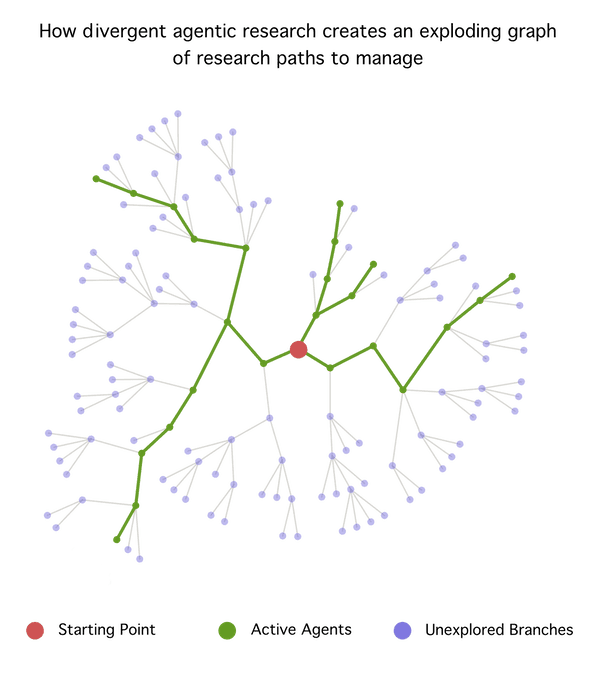
A research agenda has been proposed to address how humans can effectively interpret and guide research performed by autonomous agents as recursive self-improvement accelerates. The agenda identifies challenges including agents lacking taste or tacit knowledge, potential reward hacking, sandbagging, or sabotage. As agents work independently for extended periods in frontier labs, researchers need clear frameworks for prompting and overseeing agent swarms. The article frames this as a critical problem: vague instructions to powerful agents risk unintended outcomes, making human guidance during autonomous research cycles increasingly essential.
The core challenge outlined is determining what researchers should input to agent systems to ensure alignment with intended goals—essentially, how to avoid giving 'a magic genie vague wishes' as capability accelerates.
- 3
Reddit user seeks help debugging TTS model implementation
A developer shared on Reddit that they are attempting to implement Pocket TTS (a text-to-speech model from Kyutai Labs) from scratch because the team has not released training or fine-tuning code. They trained a smaller version on single-speaker datasets (LJSpeech and LibriSpeech clean subset) but encountered severe problems during inference—the model barely generates meaningful text even when given training-set examples. This reflects a common challenge for researchers and developers working with academic AI papers: when code is not publicly released, reproducing or adapting the work becomes difficult and time-consuming. The poster's struggle suggests potential gaps between the paper's presentation and practical implementation.
The developer tried multiple debugging techniques (scheduled sampling to reduce exposure bias, adding Gaussian noise to ground truth) without success, indicating the issue may require deeper investigation into the model architecture or training procedure itself.
- 4
Reddit thread discusses loss functions in machine learning research
A Reddit user posed a technical question about loss functions used in instance representation learning, specifically asking why researchers use Noise-Contrastive Estimation (NCE) to approximate a difficult objective rather than directly approximating the denominator in the original softmax formulation. The user cited Wu et al.'s work, where the standard Maximum Likelihood Estimation (MLE) approach becomes computationally infeasible with large datasets. The question touches on a core trade-off in machine learning: how to balance computational tractability with statistical accuracy when training models on large datasets. The user's confusion about why NCE offers an advantage over a simpler approximation reflects a genuine tension in the field between ease of computation and quality of the resulting gradient estimates.
The user reported consulting Claude (an AI assistant) for clarification on whether the direct approximation would be biased, indicating ongoing uncertainty about the theoretical justification for the NCE approach—a gap that may warrant clearer exposition in research or teaching materials.
- 5
AI safety researcher assembles reading list for generalist thinkers
An AI safety researcher has compiled an 18-document reading list of essays and blog posts designed to help generalists improve their work. The list draws heavily from authors including Paul Graham (cited 5 times), Ben Kuhn (4 times), Ethan Perez (2 times), and Greg Brockman (2 times), with fingerprints from Sam Altman and Eliezer Yudkowsky across the content. The author believes the AI safety community faces a shortage of generalists—people with broad, flexible thinking who can own and execute diverse projects that might otherwise not happen. By applying lessons from these curated essays, generalists working on projects they care about may improve more quickly than they otherwise would.
The list consists of 15 blog posts and other items (the body indicates 18 documents total). The author invites community feedback to improve and expand the reading list, suggesting it is a living resource rather than a final reference.
- 6
Austin Chen and Oliver Habryka discuss AI safety funding and new incubator
Austin Chen and Oliver Habryka held a recent conversation about improving the AI safety funding ecosystem, covering Habryka's plans for an improved S-Process platform and Chen's new incubator for EA/AIS software projects called Surplus, which has since launched. The discussion addresses how philanthropic funding works in the AI safety space, including perspectives on different funders and what kinds of founders might succeed in current conditions, which shapes how resources flow to safety-focused work.
The full conversation has been transcribed at peruse.sh/ep/austin-chen-and-oliver-habryka-on-funding-incubating-project; interested founders can apply to Surplus directly.
What to Watch
As AI systems grow more capable, watch how the community converges on clearer definitions of alignment terminology and practical methods for specifying goals to autonomous agents—two foundational challenges that will only become more urgent. Additionally, keep an eye on emerging resources and community-driven efforts like this reading list, as they will likely become essential guides for anyone building or understanding these systems.
Sources
- Ask HN: Where did the terminology (AI) "System Card" come from?
- Human-Guided Agentic Research: A Research Agenda
- I'm trying to implement CALM paper, and I have some questions. [P]
- Loss functions in Instance Representation Learning [R]
- A reading list for generalists
- Austin & Oli on funding and incubating projects
- Deployment Awareness Matters More Than Evaluation Awareness
- Marvell Technology (NasdaqGS:MRVL) Expands AI Push With Nvidia Deal And Two Acquisitions
- What did "scheming" and "mech interp" mean pre-2023?
- Deployment Awareness Matters More Than Evaluation Awareness
Share this with a friend
Send today's roundup to anyone who wants to keep up.
Get daily AI news free with AIToday
200+ AI sources, summarized in 1 minute. Email / LINE / Slack.
Sign up free