Robotics
Jun 23, 2026
The Gist
The FAA tapped Air Space Intelligence to modernize airspace management with data-driven tools as drone and aircraft traffic grows, while the FCC is quietly approving more foreign-made drones for U.S. operations through an opaque security review process. CreateMe, Avalo, and Laguna Fabrics launched a pilot program linking U.S. cotton farming, textile manufacturing, and robotic assembly to strengthen domestic apparel production, and a new SDK now enables voice AI systems to identify which person in a room is speaking, preventing multiple robots from responding simultaneously. Meanwhile, Ukraine's drone units are reshaping warfare by accounting for a third of Russian monthly casualties, and tech billionaires are funding autonomous weapons and surveillance systems that critics worry may be designed to protect the wealthy from social unrest.
Today's Stories
- 1
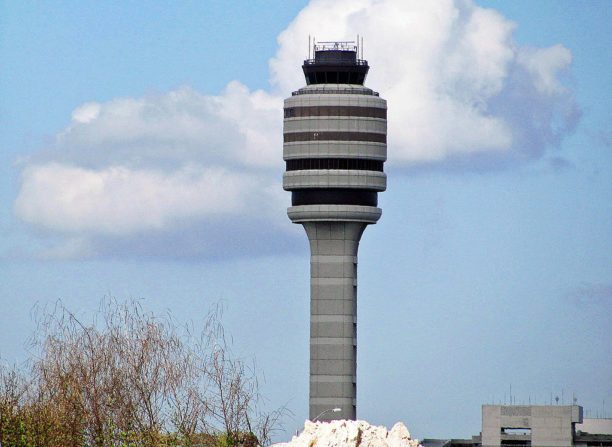
The FAA has selected Air Space Intelligence to modernize how it plans and manages the National Airspace System, equipping the agency with data-driven tools to handle growing demand from airlines, cargo operators, and emerging aircraft types.
In June 2026, the FAA named Air Space Intelligence as the provider for two new systems—SMART (System Management and Resource Tool) and FMDS (Flight Management Data Service)—designed to improve strategic planning around weather disruptions, airport capacity constraints, and airspace congestion. The FAA acknowledges that 'the way we plan the airspace today is not enough for tomorrow.' Commercial aviation, cargo operations, and Advanced Air Mobility vehicles are all expected to increase demand on the airspace system. While the new platform does not immediately affect drone operators, it reflects the agency's shift toward data-driven, predictive tools—an approach industry stakeholders view as necessary for long-term integration of drones and other emerging aircraft into a more crowded airspace.
The SMART program is focused on the FAA's broader ability to manage the National Airspace System picture, rather than replacing existing drone initiatives like UTM (UAS Traffic Management) or ongoing BVLOS rulemaking efforts. The modernization effort may signal how the agency intends to coordinate multiple aircraft types—traditional, cargo, and unmanned—as demand grows in the years ahead.
- 2
The FCC is approving a widening roster of foreign-made drones for U.S. use, revealing that the federal security review process accepts commercial platforms beyond military systems—but how reviewers decide which ones qualify remains largely opaque.
The FCC announced in June that the Department of War granted conditional approvals for drone systems from Real-Time Robotics and Ceres Air, exempting them from the Covered List through December 31, 2026. Since March, the FCC has issued a series of similar notices, and Appendix B of the latest notice now includes more than a dozen approved drone systems spanning industrial inspection, agriculture, logistics, warehouse automation, public safety, education, and tactical operations. The composition of approved systems challenges the assumption that federal review is primarily focused on military drones. Agricultural sprayers, indoor inventory systems, and infrastructure inspection aircraft all appear on the exemption list alongside defense-oriented platforms. This suggests the federal government is building a practical pathway for drone manufacturers to demonstrate trustworthiness and gain access to U.S. government and public safety markets—though the criteria for that trust remain largely undefined.
The federal government has not publicly described how component sourcing, software architecture, cybersecurity standards, ownership structures, or renewal criteria are evaluated. Manufacturers seeking to qualify under the framework face significant uncertainty about what characteristics the government actually requires.
- 3
CreateMe, Avalo, and Laguna Fabrics are launching Seed to System, a pilot program linking U.S. cotton farming, textile manufacturing, and robotic garment assembly to build a faster and more resilient domestic apparel supply chain.
CreateMe Technologies announced strategic partnerships with Avalo and Laguna Fabrics to introduce Seed to System, which connects climate-smart cotton from Texas, fabric production in California, and CreateMe's robotic assembly platforms (MeRA and Pixel) into a single integrated manufacturing ecosystem. The partners plan to continue development through the summer, with a planned Climate Week activation and capsule launch. The apparel industry has historically operated through fragmented systems with limited coordination between agriculture, textile manufacturing, and garment production. Decades of offshoring lengthened lead times, reduced visibility, increased emissions, and added inefficiencies between stages. Seed to System aims to demonstrate how a connected manufacturing framework can deliver faster production, greater local capacity, and supply chain resilience.
The pilot will initially launch in Texas and California, progressing through product design, material storytelling, and process visibility phases ahead of the planned Climate Week activation and capsule launch later in the year.
- 4
Ukraine's drone commander reports his elite unit accounts for one-third of Russian monthly casualties, reshaping modern warfare through unmanned systems.
Robert Brovdi, who commands Ukraine's drone forces—the world's first separate military branch for unmanned systems—says his unit of 2.5% of total military personnel has attacked more than one hundred thousand enemy personnel, over 350,000 enemy targets, 25% of enemy oil industry, and disrupted enemy air defense and logistics. Drones now reach distances up to two thousand kilometers and are deployed in what Brovdi calls a 'kill zone'—a roughly 25-kilometer-wide no-man's-land where operators eliminate targets from distance. Brovdi argues each dollar allied nations spend on Ukrainian drone units generates more than one hundred dollars in damage to enemy military targets, making it economically efficient. He frames Ukraine as both a buffer against Russian expansion toward NATO and a proving ground for unmanned warfare doctrine. The shift removes direct human contact with enemy forces, reducing risk to Ukrainian personnel while allowing long-range disruption of enemy fuel supply and morale.
Brovdi credits Netherlands funding as decisive—every FPV (First Person View) drone deployed in 2025 and 2026 is financed by Dutch support. He projects drone range will expand beyond the current two thousand kilometers in the near term, and notes his unit kills approximately one in every three Russian soldiers crossing the border.
- 5
Startup releases SDK that lets voice AI systems understand which person in a room is actually speaking to them, solving a longstanding problem where multiple robots or agents would all respond at once.
A team built SAA (Selective Auditory Attention), an SDK that sits in front of speech-to-text software and detects whether a device is being addressed without requiring a wake word. The system works by identifying shifts in attention patterns—body language and vocal cues—and supports scenarios ranging from one AI with multiple people to multiple AIs with multiple people. When multiple voice assistants or robots are in the same space, they typically all start talking at the same time because none of them know who is actually speaking to whom. This SDK aims to solve that coordination problem by giving each system the ability to recognize when it is—or isn't—the intended listener.
The team offers two model variants: one combining video and audio, and one using audio alone. They note that the challenge is significant because every person interacts differently with devices, and they recommend adding a wake word on top of the system for multi-AI, multi-human scenarios to further improve performance.
- 6
Tech billionaires are funding autonomous drones, lethal robots, and biometric surveillance—raising concerns they may be building security systems to insulate themselves from social unrest.
In the first quarter of 2026, almost $15bn of venture capital was invested in defense tech startups. Companies like Anduril are building swarms of autonomous combat drones, Palantir is collecting biometric and behavioral data, and Tesla, Boston Dynamics and others are competing to produce humanoid robots. Gated communities and work sites are already being patrolled by robot security guards. Historically, the wealthy have depended on human servants and security staff—creating a vulnerability if those workers turn against them during social upheaval. The author argues that tech plutocrats (Peter Thiel, Josh Kushner, Marc Andreessen among others) may be funneling billions into weaponized AI and robots precisely to eliminate this human dependency and make their compounds impregnable, ensuring their wealth concentration faces no threat from popular uprising.
Robot security guards are already deployed in some gated communities and work sites, and a Boston Dynamics robot dog can be purchased for about $100k. The real test will be whether these technologies are repurposed as personal security for billionaire estates once the defense-tech investments mature.
What to Watch
As the FAA's SMART program evolves to coordinate multiple aircraft types in increasingly crowded airspace, watch how the agency clarifies its sourcing and cybersecurity standards for manufacturers—details that could reshape the entire drone qualification landscape. Meanwhile, advances in autonomous systems, from AI-powered interfaces to robot security deployments, will reveal whether these technologies remain tools for infrastructure and defense or become status symbols for private security among the ultra-wealthy.
Sources
- FAA Modernizes Airspace Management as Demand Grows Across Aviation Sectors
- FCC Drone Exemption List Offers Clues to Trusted Supplier Requirements
- CreateMe partners with Avalo and Laguna Fabrics to bring resilience to apparel supply chains
- Ukraine's Drone Commander on Drone Warfare and Use of AI [Dutch]
- Show HN: We Help Voice AI Handle Group Conversations
- Are AI and robotics about to free the wealthy from the threat of revolt?
- Why physical AI 2.0 needs a reality check
- Faraday Future Unveils Its Second-Half Launch of the FF EAI Robot World, Including the Launch of Its New Mobile Manipulator, the All-New Futurist, and a Preview of FF’s EAI Robotics Industrial Ecosystem at Automate in Chicago
- Nvidia seeks to make humanoid AI robots safer around humans
- FORT and NVIDIA launch AI-driven Outside-In Safety blueprint
Share this with a friend
Send today's roundup to anyone who wants to keep up.
Get daily AI news free with AIToday
200+ AI sources, summarized in 1 minute. Email / LINE / Slack.
Sign up free