Robotics
Aug 20, 2026
The Gist
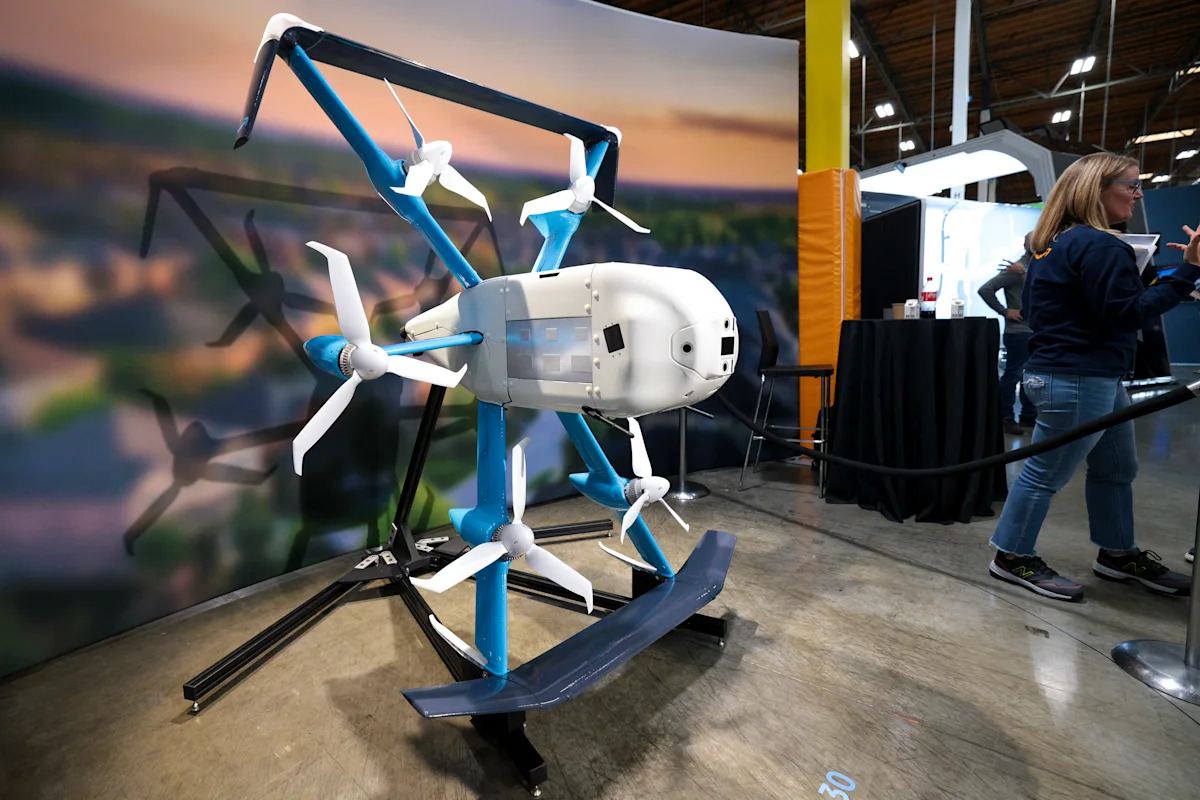
Amazon is aggressively expanding its Prime Air drone delivery service to 500 U.S. cities by the end of 2026, signaling a major shift toward autonomous last-mile logistics. Meanwhile, the robotics industry is experiencing a surge in innovation and investment, with Chinese manufacturer Unitree's Shanghai debut valuation reaching $51 billion and a new breakthrough enabling robots to learn tasks directly from video without additional training. These developments demonstrate that robotics technology is rapidly moving from laboratories into practical, commercial applications that will reshape how goods are delivered and how machines learn to perform work.
Today's Stories
- 1
Amazon targets 500 U.S. cities for Prime Air drone delivery by end of 2026
Amazon plans to expand its Prime Air drone delivery service to nearly 500 U.S. cities and towns by the end of 2026, a roughly sixfold increase from its current footprint. The expansion would bring drone delivery to tens of millions of people across the country, marking a significant shift in how packages reach customers in a much wider geographic range than today.
Amazon's ability to execute this expansion by the end of 2026, as regulatory approval and operational scaling of drone infrastructure at this scale remain complex challenges.
- 2
Kollmorgen outlines humanoid motion scaling at RoboBusiness
Yoshi Umeno, global director of business development for robotics at Kollmorgen (a brand of Regal Rexnord), will present "A Joint-by-Joint Guide to Humanoid Motion" at RoboBusiness on October 20–21 in Santa Clara, California. His session takes place at 11:30 a.m. PT on the first day. Humanoid robot makers face a critical bottleneck: while software iterates in weeks, motion hardware takes months to reach a functional sample and years to reach volume production. Umeno will reframe humanoid motion as a zone-by-zone architecture problem rather than one-size-fits-all, offering a practical framework for evaluating motion partners and scaling from prototype to production—a challenge that often blocks progress more than concept design itself.
Attendees can register for RoboBusiness 2026 before August 31 to save $200 on a full conference pass, which includes keynotes, technical sessions, and networking events including a Mix and Mingle reception on day one and a Women in Robotics Luncheon on day two.
- 3
Robot Learns Tasks From Video, No Extra Training Needed
Generalist AI, a robotics startup in Cambridge, Massachusetts, has built robot arms that learn to perform physical tasks after watching a short instructional video, without task-specific training. The robots improvise when conditions change—for example, switching grippers or using a dustpan as a brush when the original tool is unavailable. Traditionally, training robots for new tasks required thousands of examples and failed when conditions like lighting changed. Generalist's approach, built on large amounts of high-quality human-collected training data and custom AI models, appears to give robots a more flexible, human-like ability to adapt—potentially enabling faster deployment in manufacturing and other real commercial settings.
Current success rates are about 59 percent on average; Generalist says reliability is not yet dependable enough for deployment. The company has not disclosed its exact training method, but has gathered large amounts of data using special camera-equipped gloves that workers wear to demonstrate tasks.
- 4
Chinese robot maker Unitree surges 460% in Shanghai debut, valuing it at $51B
Unitree Robotics soared 460% on its first day of trading on the Shanghai exchange on Wednesday, reaching a market capitalization of about $51 billion. The valuation signals that humanoid robots are attracting serious investor capital. Unitree now sits well above Figure AI, which has been valued at almost $40 billion despite posting factory robot videos. For Musk and Tesla, which are developing their own humanoid robot (Optimus), Unitree's surge underscores that Chinese rivals are already commanding massive resources and market confidence in the space.
The trajectory of humanoid robot valuations and commercialization. Unitree's Shanghai listing opens the door for other Chinese robotics firms and may accelerate the timeline for real-world factory deployments by multiple companies.
- 5
Amazon expands drone delivery to 500 U.S. cities
Amazon is expanding its Prime Air drone delivery service to nearly 500 U.S. cities and towns, escalating the competition with Walmart and FedEx over rapid delivery speed. Drone delivery represents a significant shift in logistics infrastructure. For retailers and logistics companies, controlling last-mile delivery networks becomes a key competitive advantage in an increasingly speed-focused market.
The expansion targets nearly 500 U.S. cities and towns—a substantial scale-up that will test whether drone delivery can operate reliably across diverse geographies and weather conditions.
- 6
Unitree shares surge 600% on Shanghai debut
Shares in Chinese robotics maker Unitree soared more than 600% on their first day of trading in Shanghai, joining a surge of IPOs in China's stock markets. The debut reflects both strong investor appetite for Chinese tech firms and China's dominance in humanoid robot manufacturing — the country produced virtually all of the world's supply last year, making Unitree's entry a signal of the sector's momentum.
China's IPO market is rebounding sharply; the number of IPOs in Shanghai and Shenzhen rose by almost 40% in the first half of the year compared to the same period in 2025, with firms raising almost twice as much.
What to Watch
As Amazon races to expand drone delivery to nearly 500 U.S. cities by the end of 2026, watch whether the company can overcome regulatory hurdles and scale its infrastructure reliably across diverse geographies—a test that will define the viability of autonomous delivery at mass scale. Meanwhile, keep an eye on China's surging robotics IPO market, where Unitree's Shanghai listing is poised to accelerate humanoid robot commercialization and real-world factory deployments globally, even as Western firms like Generalist work to improve AI-driven robot reliability beyond current 59 percent success rates.
Sources
- Amazon Prime Air maybe coming to a city near you
- Kollmorgen to give a joint-by-joint guide to humanoid motion at RoboBusiness
- I Saw the Future of AI in a Robot That Can Learn on the Spot
- The Unitree of It All: Why China IPO Surge Is Good News for Tesla
- Amazon to Bring Drone Delivery to 500 Cities, AI Be Damned
- Robotics giant Unitree's shares surge in Shanghai debut
- X Square Robot showcases full embodied AI portfolio at WRC 2026
- Amazon Prime Air Plans Drone Delivery Expansion to Nearly 500 U.S. Cities and Towns
- Pudu Robotics launches new MP2000 autonomous forklift
- What motivates AI companies to automate things humans actually like doing?
- anyone actually using AI tools on a job site or is it all just hype for office people
- The Next Massive Robotics IPO Is Coming. Will Robotics Stocks Be 2027’s Biggest Investing Trend?
- Amazon to Expand Drone Delivery Service to Nearly 500 Locales
- Which Investors Have Backed The Most 2026 Unicorns?
- Faraday Future’s RoboShare takes first paid robot rental order
- YC is betting on robotics and physical AI startups
Share this with a friend
Send today's roundup to anyone who wants to keep up.
Get daily AI news free with AIToday
Today's AI, for Today's work. Email / LINE / Slack.
Sign up free