Robotics
Sep 28, 2026
The Gist
NVIDIA is expanding its physical AI platform with new partners including FANUC and Sony, while ZEALS is betting on a mass-produced humanoid robot priced around 5 million yen. Robot assembly performance is improving sharply with new training methods, and AI assistants like GPT-6 Astra are already handling household chores on robots such as the Unitree G1.
Today's Stories
- 1
NVIDIA: FANUC, Sony, 7 more on physical AI platform
NVIDIA announced in July 2026 that FANUC, Fujitsu, Hitachi, Kawasaki Heavy Industries, Kubota, NEC, SoftBank, Sony and Yaskawa are using its physical AI platform, and launched Cosmos 3 Edge on Jetson Thor. It shows the chipmaker's physical AI platform is being adopted by manufacturers, chip suppliers and robotics firms, who gain a common technology base for robotics and industrial machines.
Qualcomm, which announced in August 2026 a long-term robotics investment initiative and plans for a Qualcomm Japan Robotics Center, may emerge as a rival platform for the same robotics and industrial automation work.
- 2
ZEALS bets on mass-produced 500万円 humanoid robot
ZEALS, a Japan-based company, is pursuing a mass-production strategy for humanoid robots priced at 500万円, which it describes as half the market price. If ZEALS can build these robots at 500万円, it would undercut the going rate for humanoid robots by half, a gap that could matter for buyers weighing whether to deploy them at all.
The plan hinges on whether ZEALS can actually mass-produce at that price, since volume is what turns a 500万円 sticker into a strategy rather than a one-off.
- 3
240 rollouts lift robot assembly from 24% to 88%
Dream Machines fine-tuned Physical Intelligence's open-source π0.5 model on an industrial assembly task; 240 human recovery rollouts raised success from 24% to 88% with under two hours of training data, and Real Time Chunking settings reached ninety-eight percent insertion success. Human corrections and data diversity beat raw demonstration volume for reliability, suggesting robotic automation teams can cut machine-training spend by targeting edge-case interventions rather than recording dozens of repetitive hours.
The 88% figure comes from the team's physical evaluations, so whether it holds outside that setup is the test; watch how Real Time Chunking parameters and execution blending carry into other tasks.
- 4
HomeBody: GPT-6 Astra runs a Unitree G1 kitchen tidy-up
Researchers from Stanford and Caltech built HomeBody, letting a Unitree G1 robot autonomously navigate an unfamiliar kitchen, tidy up, and fetch items using GPT-6 Astra calling directly into a skill library. Skipping the usual trained control layer suggests a general language model can drive a robot's grasping and navigation, making robot skills easier to swap and extend.
The approach still faces Astra's latency, overheating finger servos, and high compute costs, so real-world use hinges on whether those are resolved.
- 5
Air Force's Meink targets 500 MMA drones by 2032
After the $10 billion CCA award, the Air Force is planning a separate MMA drone contract worth $5 billion, aiming for 100 drones by 2029 and 500 by 2032, with General Atomics and Swarm Aero among possible builders. Meink says contracts after 2032 will be 'much higher than that' if Congress funds the program, so the companies that win the early awards could be positioned for far larger orders.
The Air Force's target of $10 million per MMA drone is a goal, not a signed price, so the program hinges on whether builders can hit that cost. Watch the first batch of 100 MMA drones targeted for 2029.
- 6
John Deere Rolls Out New AI Assistant
John Deere introduced a new AI assistant, as reported by Lancaster Farming. The AI assistant may help farmers with equipment-related tasks, though details are not provided.
Further information on the AI assistant's capabilities and availability is not yet available.
What to Watch
Keep an eye on whether Qualcomm’s new robotics push turns into a true rival platform for industrial automation, and whether ZEALS can mass-produce its robot at the promised price. Also watch whether Real Time Chunking’s 88% success rate holds in new tasks and settings, whether Astra’s latency, overheating fingers, and high compute costs get solved, and whether the Air Force’s first 100 MMA drones in 2029 actually hit the $10 million target.
Sources
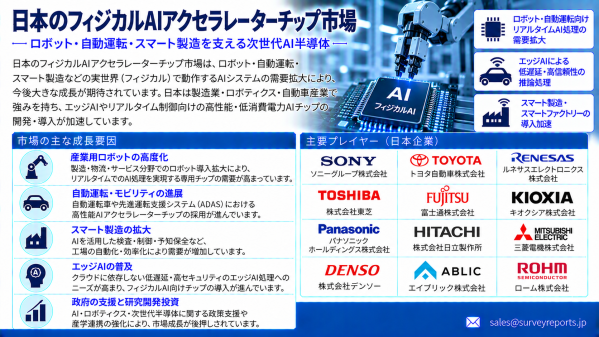
- 日本のフィジカルAIアクセラレーターチップ市場:エッジインテリジェンス、ロボティクス・コンピューティング、主権型AIイ
- 「市場の半値」500万円のヒト型ロボ 日本発のZEALSが挑む量産戦略
- Manufacturers Staying Stable Under Friction
- ers plug GPT-6 Astra directly into a robot and let it clean up an unfamiliar kitchen
- Anduril Isn't the Only Private Defense Contractor Building Advanced Air Force Drones
- John Deere Rolls Out New AI Assistant and More Ag Equipment News
- 日本のヒューマノイドロボット半導体市場:AIコンピューティング、先進センサー、パワーエレクトロニクスが新たな成長機会を創出
- トヨタ、フィジカルAIロボット導入に向け新組織「トヨタ ロボティクス」立ち上げ 志賀武文 モノづくり技術本部長がリーダーに
- Prediction: Robotics Will Be the Biggest Opportunity Within the AI Supercycle. 1 Dividend Growth Stock to Own
- Anduril's $5 Billion Air Force Contract Finally Has a Name
- Tesla workers balk at training Optimus humanoid robots as replacements
- Tesla vs. Nvidia: Which Physical AI Stock Has the Bigger Robotics Payoff by 2030?
- Caterpillar partners with FieldAI to advance physical AI and autonomous robotics
- GE Aerospace Stock Gains as $225 Million Funds Physical AI
- ダイフクの世界最高水準のフィジカルAI、巨大半導体製造工場向け自動搬送システムの全体像
- ダイフク AI自律制御のロボット仕分け検証 JDSCと共同開発 | ロジスティクス | ニュース
Share this with a friend
Send today's roundup to anyone who wants to keep up.
Get daily AI news free with AIToday
Today's AI, for Today's work. Email / LINE / Slack.
Sign up free