Autonomous Driving
Jul 2, 2026
The Gist
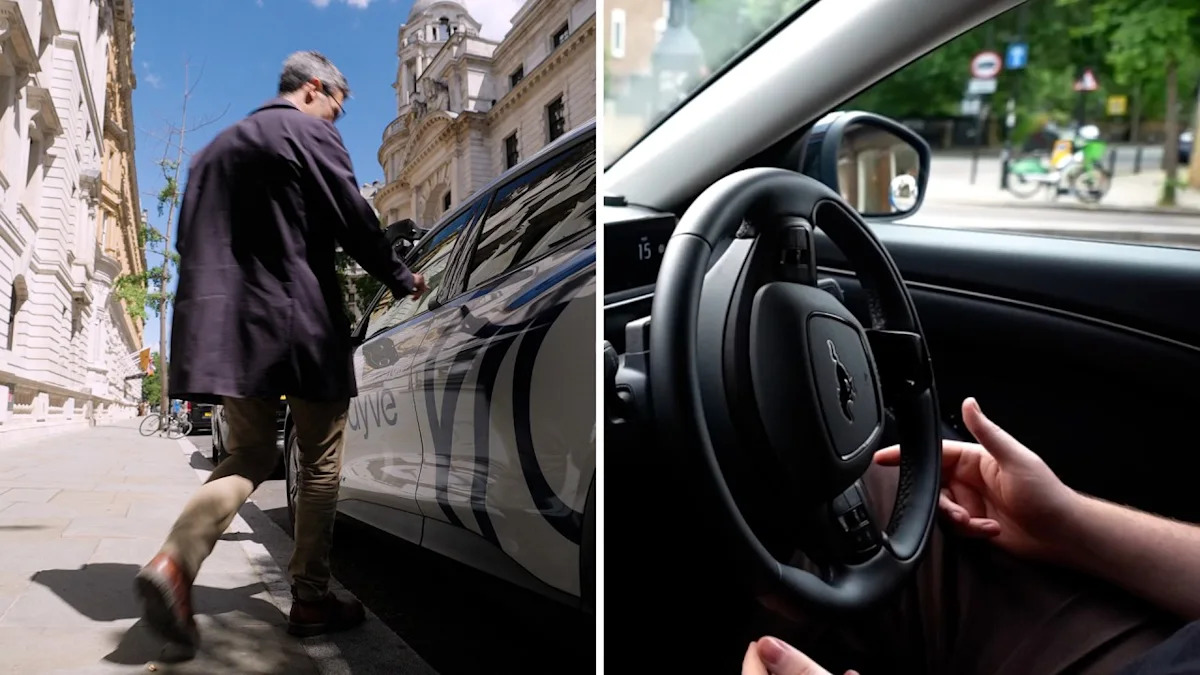
Wayve is emerging as a serious competitor to Tesla and Waymo, launching robotaxis in London this summer after successfully demonstrating autonomous driving through the city's busiest streets. Meanwhile, Uber is ramping up its autonomous vehicle ambitions as the company experiences strong growth, while the UN is establishing the first global autonomous vehicle rules set to take effect in 2027.
Today's Stories
- 1
The AI Startup Challenging Tesla and Waymo in the Race to Automate Driving
The AI Startup Challenging Tesla and Waymo in the Race to Automate Driving
- 2
I Let Wayve's AI Car Drive Me Through London's Busiest Streets
I Let Wayve's AI Car Drive Me Through London's Busiest Streets
- 3
Uber's Gross Bookings Are Up 25% and It Just Launched an Autonomous Vehicle Unit. Is This the Transportation Stock to Own in 2026?
Uber's Gross Bookings Are Up 25% and It Just Launched an Autonomous Vehicle Unit. Is This the Transportation Stock to Own in 2026?
- 4
U.N. sets first global autonomous vehicle rules for 2027
The World Forum for Harmonization of Vehicle Regulations at the United Nations agreed on a global regulatory framework for vehicles with fully autonomous driving systems. The framework requires manufacturers to meet strict testing, safety governance, and continuous performance monitoring standards, and is expected to enter into force in January 2027. Automakers have faced fragmented national regulations that threaten to block vehicles developed for one market from entering others. This unified global standard removes that barrier and may help accelerate robotaxi rollouts, which have grown significantly—private robotaxi fleets in China and the United States combined more than doubled in 2025 to reach 8,000 vehicles across more than two dozen major cities.
The IEA forecasts between 700,000 and 3 million robotaxis will operate in 40 to 80 major cities by 2035. The new framework was backed by all major auto markets including the United States, China, the European Union, Japan, and Britain, and some manufacturers are already preparing for implementation.
- 5
Wayve launches London robotaxis this summer
British start-up Wayve, in partnership with Uber, will begin commercial robotaxi rides in London this summer with a human operator on board initially. US rival Waymo, which already operates in 11 US cities, is expected to follow shortly after. China's Baidu, partnering with Lyft, will test in the coming weeks before launching in London later this year. London's complex streets—with 20 times more road construction than San Francisco and 10 times more vulnerable road users—present a real test of autonomous vehicle technology. Britain's government has sped up regulation to move ahead of the EU, and expects the autonomous vehicle sector to generate 38,000 jobs and £42 billion ($55 billion(約8.8兆円)) by 2035. However, companies face public trust challenges after high-profile mishaps, including Baidu vehicles stalling in central China and Waymo recalling nearly 4,000 cars after robotaxis entered closed-off highway construction areas.
Londoners can take their first commercial rides with Wayve this summer, with fares likely to be "pretty similar" to traditional taxis at launch. The sector's complexity means companies may collaborate in some cities while competing in others.
- 6
Intel surges 5% on Apple chip partnership deal
Intel gained nearly 5% after President Trump announced Apple would collaborate with the company on U.S.-based chip development and manufacturing. Separately, Nebius completed its acquisition of AI optimization specialist Eigen AI and posted a 10% weekly gain, while RUM Group finished its purchase of Germany-based Northern Data and launched its Quake AI platform. Ondas announced its sixth acquisition of 2026, agreeing to buy Cyberhawk for about $125 million(約200億円) to expand its drone inspections and critical infrastructure monitoring capabilities. Investors are watching companies that control hardware for AI computing and domestic chip production as governments and corporations prioritize securing their own semiconductor capabilities. The flurry of deals and partnerships reflects a strategic shift toward building AI infrastructure at scale and reducing reliance on overseas manufacturing, which appears to be reshaping where investors see long-term demand.
While most semiconductor and AI infrastructure stocks declined during the week—UBER, TSLA, and ASTS fell between 1% and 7%—retail investor interest surged on some names (RUM message volume jumped 86%, MRVL message volume up 12%). Geopolitical tensions between the U.S. and Iran also lingered, though negotiators reported meaningful progress during talks in Switzerland on Monday, with hopes to finalize a broader agreement within the next two months.
What to Watch
As regulatory frameworks solidify globally and companies like Wayve prepare to launch commercial robotaxi services in major cities this summer, the next critical milestone will be watching whether fares remain competitive with traditional taxis and how quickly the technology scales from initial launches to the IEA's projected millions of vehicles by 2035. Investors should also monitor geopolitical developments and semiconductor supply chains, as these will significantly impact both the timeline for autonomous vehicle deployment and the profitability of companies racing to dominate this emerging market.
Sources
- The AI Startup Challenging Tesla and Waymo in the Race to Automate Driving
- I Let Wayve’s AI Car Drive Me Through London’s Busiest Streets
- Uber's Gross Bookings Are Up 25% and It Just Launched an Autonomous Vehicle Unit. Is This the Transportation Stock to Own in 2026?
- First global rules adopted for self-driving cars, U.N. says
- Race for robotaxi market arrives in London
- Why Retail Traders Couldn’t Take Their Eyes Off These Stocks Last Week: INTC, RUM, NBIS, ASTS, ONDS
- An Interview with Michael Morton About E-Commerce in the Age of AI
- 🔬 The Self-Driving Lab — Joseph Krause, Radical AI
- フィジカルAIで創薬が変わる Self-Driving Labのご紹介 | AWS Summit 2026 Healthcare & Life Sciences ブース
- HITL in Claude Code is too noisy and repetitive
Share this with a friend
Send today's roundup to anyone who wants to keep up.
Get daily AI news free with AIToday
200+ AI sources, summarized in 1 minute. Email / LINE / Slack.
Sign up free