AI in Healthcare
Sep 15, 2026
The Gist
Intuitive reports that its Force Feedback technology helped 63% of patients recover within a day versus 28% without it, while intismeran autogene became the first AI-designed cancer vaccine to clear Phase 3. Pfizer showcased its AI pipeline at the Morgan Stanley conference, Daiichi Sankyo linked AI face analysis to health signals, and Obama pressed for AI safety action as insurers face scrutiny.
Today's Stories
- 1
Force Feedback study: 63% recover in a day, vs 28% without, Intuitive says
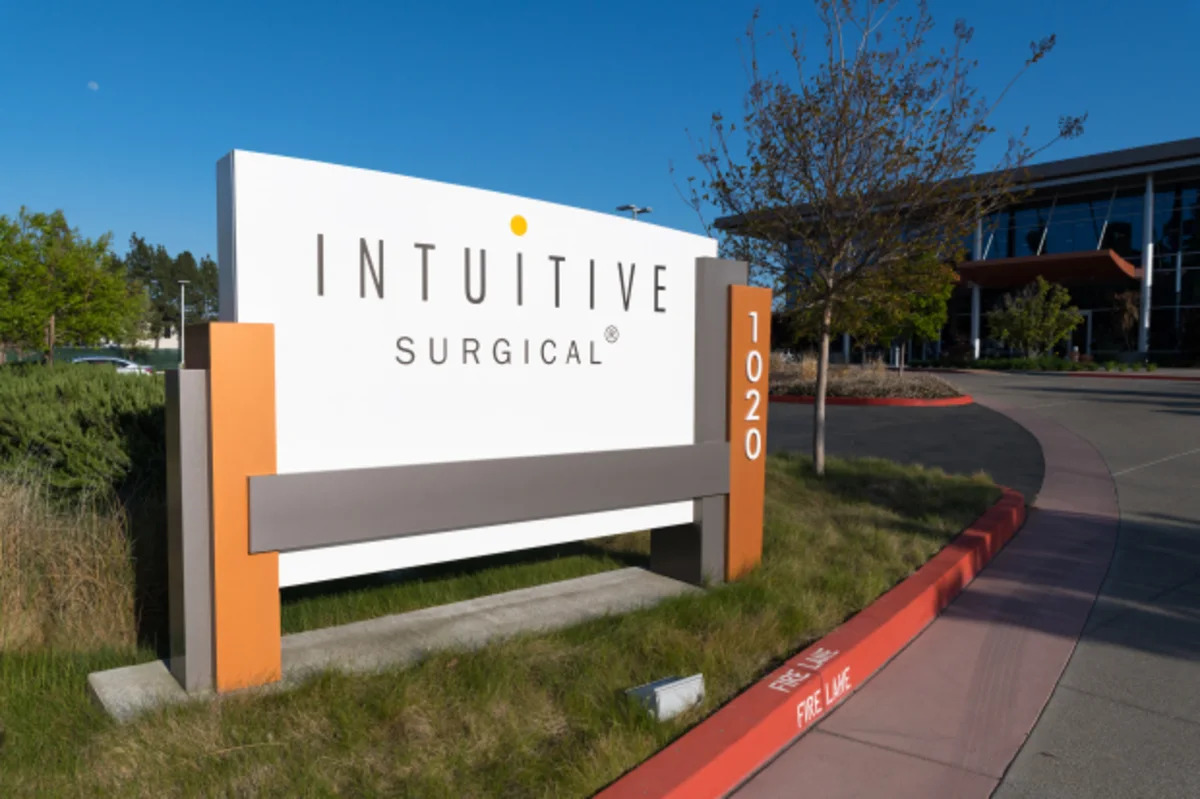
Intuitive Surgical reported a prospective study tying Force Feedback to faster bowel function recovery after partial and radical nephrectomy — 63% of patients recovered within one day versus 28% without it. The company is building out da Vinci 5's software and AI features to widen its lead over hardware-only rivals, and in Q2 its My Intuitive Surgical+ renewal cohort saw no customers opt out.
More than 100 planned da Vinci 5 updates, starting with telepresence, simulation-based training and care-team workflow, will test whether recurring software can drive a multi-year upgrade cycle.
- 2
Pfizer spotlights pipeline, AI, China at Morgan Stanley conference
Pfizer appeared at a Morgan Stanley conference and put its drug pipeline, its use of AI, and its China focus at the center of the discussion. The three themes frame how Pfizer is positioning itself with investors, with China and AI now sitting alongside its pipeline as part of the story it tells.
The test is whether those three themes turn into concrete pipeline, AI or China developments. The body does not give dates, figures or product names to track.
- 3
intismeran autogene clears Phase 3, first for AI-built cancer vaccine
Moderna and Merck said Aug. 19 that intismeran autogene met its primary endpoint in melanoma patients whose tumors had been surgically removed — the first positive Phase 3 result for a single-patient-designed cancer therapy. AI is now a direct input into the medicine, not just a research shortcut. Each dose is built from a patient's sequenced tumor, with machine learning predicting which mutations trigger a strong immune response.
The Phase 3 answers whether the approach works medically; whether it works economically hinges on scaling one unique dose per patient on a rolling four-to-eight-week turnaround. Watch the 1,137-patient trial size against roughly 112,000 expected U.S. melanoma diagnoses in 2026.
- 4
Obama Urges AI Safety Action As Insurers Face Scrutiny
Barack Obama told House Minority Leader Hakeem Jeffries and Democratic donors that AI is "moving very fast in private hands" and that Democrats should make AI safety a "central agenda" in January. House Democrats' AI policy framework, due this fall, does not yet mention health insurance by name, even though insurers like UnitedHealth already use algorithms in coverage decisions with almost no oversight.
UnitedHealth is spending $1.5 billion on AI in 2026 alone and credited that investment for a 270 basis point drop in its medical care ratio this year.
- 5
Daiichi Sankyo Healthcare: AI face analysis links skin signs to health
Daiichi Sankyo Healthcare studied face images from 310 healthy adults and ran deep-learning analysis and statistical checks, reporting possible links between visible features and internal or mind-body indicators. The company says the findings point to a new use for face images — turning them into self-awareness of one's own condition, since test values and scores alone are hard for people to feel.
The results were presented as possibilities, not proven diagnostics, so the test is whether larger samples and more advanced analysis methods improve accuracy. Watch for the stated next steps on expanding participants and refining the method.
- 6
Colossal CEO Ben Lamm to debate AI de-extinction at Disrupt 2026
Ben Lamm, Co-Founder and CEO of Colossal Biosciences, will join the "Can We Engineer Nature's Comeback?" fireside chat at TechCrunch Disrupt 2026 on the Real World AI Stage. The session moves the debate from lab science to open question — whether engineering nature is a conservation breakthrough or a distraction from protecting existing ecosystems, at a time when Colossal is described as a billion-dollar startup.
The discussion hinges on how AI's role in de-extinction is framed for founders in deep tech and life sciences. Disrupt runs October 13–15 at Moscone West in San Francisco, with passes discounted up to $200.
What to Watch
For the AI in healthcare story ahead, watch whether Intuitive’s promised da Vinci 5 software updates move from features into real pipeline, AI, and China milestones, and whether UnitedHealth’s $1.5 billion AI bet keeps showing up in margins. But the clearest tests are still clinical and economic: whether the 1,137-patient Phase 3 trial can prove both medical benefit and a scalable one-dose-per-patient model, and whether larger samples and better analysis turn early AI diagnostic “possibilities” into proven accuracy.
Sources
- Can AI Keep ISRG Ahead of Rising Robotic Surgery Competition?
- Pfizer at Morgan Stanley conference: pipeline, AI and China focus
- Moderna’s AI-Built Cancer Vaccine Clears Phase 3 With Merck
- Washington Wants AI Regulation. It Should Start With Health Insurers
- AIによる顔画像解析で、顔に現れるサインと体内・心身状態との関連を確認
- Hear how AI can engineer nature’s comeback at TechCrunch Disrupt 2026
- 「ChatGPTを見て病院に来た」患者に医師が苦言…韓国・ネットで賛否
- AI in biopharma requires strong data, human oversight
- ASUS xHIS aims to become digital backbone for AI-ready healthcare
- How to Build the Unified Data Foundation Drug Discovery AI Depends On
- Future of diagnostics: AI, automation and partnerships - SelectScience interview
- SimpleDesign: A Joint Model for Protein Sequence and Structure Codesign
- How This Doctor-Turned-Startup-Founder Decided To Fix The Healthcare Staffing Crunch: Make Employers Apply
- Data Aggregation Drives AI's Impact on Clinical Supply Chains
- AIの主導権を自国に取り戻す「ソブリンAI」― 特定国・企業への依存を回避 | サイエンス リポート | TELESCOPE magazine
- Shinkong Synthetic Fibers partners with Earthbook, Jedsy to tap Taiwan's medical drone logistics market
Share this with a friend
Send today's roundup to anyone who wants to keep up.
Get daily AI news free with AIToday
Today's AI, for Today's work. Email / LINE / Slack.
Sign up free