Image Generation
Sep 28, 2026
The Gist
ASICS is now using AI to create realistic on-foot shoe images without a photoshoot or model, while G-SHOCK is pairing AI with designers to speed up product development. Elsewhere, Black Forest Labs' FLUX 3 Action set a new record on RoboLab-120, and Oracle gave its AI agents graph-aware retrieval and image memory.
Today's Stories
- 1
ASICS AI makes on-foot shoe images with no shoot, no model
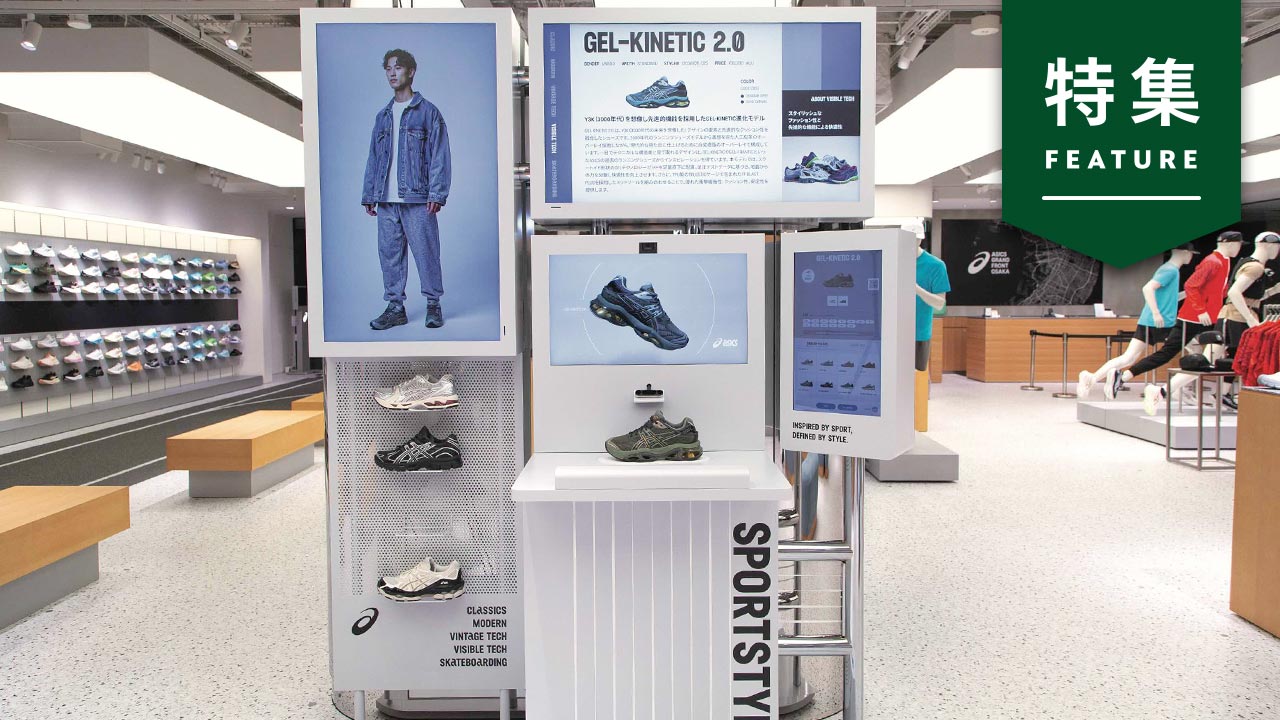
ASICS built a generative AI system that creates on-foot styling images of its shoes without a photo shoot or model, and is also using generative AI to explore design variations. In August 2026 it introduced the 3D ShoeSync Viewer at its directly operated store ASICS GRAND FRONT OSAKA, where an AI camera identifies a shoe placed on a fixture and shows its specs, technology, on-foot image and related models at once. Customers can see what a shoe looks like when worn without the time and cost of a shoot or model, and the same AI is being applied to design work, so it appears to touch both storefront sales and product development.
The value hinges on whether the AI camera correctly identifies products placed on the fixture and whether the generated on-foot images are convincing enough for shoppers. Watch how the viewer performs at ASICS GRAND FRONT OSAKA, its first directly operated store deployment.
- 2
Adobe (ADBE) and Broadcom (AVGO) highlighted as AI stock picks
An undervalued-stock screen highlighted Adobe (ADBE) and Broadcom (AVGO) as AI-driven picks, flagging Adobe's generative AI credit usage as a driver of Average Revenue Per User (ARPU) expansion. As professionals use more generative AI in Adobe's tools, they may hit plan limits and upgrade or buy credit packs, lifting spending per user.
A single shift in assumptions about how aggressively enterprises pay for deeper Adobe AI usage could reshape its risk and upside, so read the full narrative.
- 3
G-SHOCK taps AI plus designers to turn concept into product
Casio's G-SHOCK team used AI image generation alongside its own designers to develop a watch concept into a producible product, with the designers recounting the commercialization process. It shows AI acting as a co-creation tool in physical product design rather than replacing the designer, with people still shaping the final output, according to the designers.
The test is how much of the concept survived the move to a manufacturable product, and whether this way of working spreads inside G-SHOCK's lineup.
- 4
Black Forest Labs' FLUX 3 Action sets RoboLab-120 record
Black Forest Labs released FLUX 3 Action, an open robotics model that takes multi-camera video feeds and predicts a robot's next action. BFL says it sets a RoboLab-120 success-rate record with seven billion parameters, up to 3.95 times faster than the previous best open model. The result suggests strong robot performance may not require huge models, which BFL says matters for running on a robot itself rather than off-board. That could widen who can build and test robotics AI, since the weights are free to download.
The record is BFL's own claim tied to one benchmark, so the test is whether FLUX 3 Action holds up on other tasks and real hardware. BFL also points to video games as a near-term testing ground, with computer-operating agents as a possible later step.
- 5
Apple's probe guidance sets new state of the art
Apple researchers introduced probe guidance, which uses frozen internal states of an existing diffusion model to guide flow matching models; on continuous diffusion language models it set a new state-of-the-art on unconditional generation. The method eliminates an extra forward pass at inference time and reliably ensures weak and strong models share similar dynamics, which could make diffusion language models more practical.
The finding that the weak model must come from a low-entropy region of training may shape how future autoguidance setups are built; watch adoption of probe guidance in diffusion language model research.
- 6
Oracle adds graph-aware retrieval and image memory to its AI Agent Memory
Oracle announced new features for Oracle AI Agent Memory: graph-aware retrieval, image memory, and enterprise controls. These additions suggest Oracle is widening what kinds of data agents can use, including images.
Enterprise controls point to governance needs, but the announcement does not detail availability or pricing.
What to Watch
Watch whether ASICS GRAND FRONT OSAKA’s AI camera reliably recognizes products and produces convincing on-foot images in its first directly operated store. Elsewhere, the big questions are whether BFL’s benchmark claims hold up on other tasks and real hardware, and whether these new ways of working spread inside G-SHOCK’s lineup and future diffusion language model research.
Sources
- アシックスの意外なAI活用 撮影・モデルなしで商品着装イメージ生成
- Adobe Stock And 2 Other AI Stocks To Own
- AIと人の共創で進化する「G-SHOCK」 デザイナーが語る製品化の舞台裏:デザインの力(3/3 ページ)
- Black Forest Labs launches FLUX 3 Action, an open robotics AI model
- How to Guide Your Language Flow
- What's New in Oracle AI Agent Memory: Graph-Aware Retrieval, Image Memory, and Enterprise Controls
- How invideo improves color grading 3x with GPT‑6 Astra
- Alibaba's open-weight Qwen-Image-2.1 claims to beat closed models in image generation with just 7 billion parameters
- 「子どもの顔が同じで気味が悪い」「安っぽく見える」との声も…しまむら系「バースデイ」の生成AI広告に批判が殺到した背景
- ZOZO、AIが「似合う」衣服を提案 アプリに新機能
- Pinterest teases a new ‘Restyle’ feature that lets you redesign your room with AI
- 九州国立博物館、特別展ポスターに生成AI使用 当初「使用していない」と説明
- 「子どもの顔が同じで気味が悪い」「安っぽく見える」との声も…しまむら系「バースデイ」の生成AI広告に批判が殺到した背景
- 「子どもの顔が同じで気味が悪い」「安っぽく見える」との声も…しまむら系「バースデイ」の生成AI広告に批判が殺到した背景
- Suica新キャラ、二次創作だらけで勝手に“キャラ立ち” 生成AI時代は「ユーザーがキャラクターを育てる」 ミャクミャクにも通じる成功キャラの方程式
- Former TikTok execs built an app that uses AI to teach you how to pose for a photo
Share this with a friend
Send today's roundup to anyone who wants to keep up.
Get daily AI news free with AIToday
Today's AI, for Today's work. Email / LINE / Slack.
Sign up free