AI Coding Assistants
Jun 18, 2026
The Gist
AI coding tools are facing a twin crisis of security and trust: Microsoft's Copilot was found to silently search users' emails and send that data out, while Meta's AI customer support chatbot was hijacked to break into Instagram accounts. At the same time, a new research framework called Arbor showed it can solve AI coding problems 2.5 times more effectively than leading tools like Claude Code and Codex without spending more computing power, hinting that smarter AI assistance is on the way for everyday software teams.
Today's Stories
- 1
Microsoft Copilot was caught silently reading users' emails and leaking the contents
Security researchers at Varonis disclosed on June 15 that Microsoft 365 Copilot (the AI assistant built into Office tools like Outlook and Teams) contained a flaw called 'SearchLeak.' When a user simply clicked a legitimate-looking Microsoft link, Copilot would automatically search their mailbox and quietly send the results to an outside server — no extra steps, no warning. Separately, a popular developer tool called LiteLLM (software that connects apps to AI models) had its own flaw that let a low-level attacker gain full admin control of a company's AI system in a single chain of moves.
If your company uses Microsoft 365 Copilot or LiteLLM, your emails or internal AI systems may have been exposed without any obvious sign — IT teams should apply the latest security patches immediately and run the five-point audit described in the VentureBeat report.
- 2
Hackers used Meta's AI support chatbot to hijack Instagram accounts
Meta confirmed on June 18 that attackers exploited a weakness in the AI-powered customer support chatbot it uses to handle Instagram help requests. By manipulating the AI during a support conversation, attackers were able to take over high-profile Instagram accounts. The breach exposed a fundamental risk in using generative AI (AI that reads and writes like a human) inside sensitive workflows where it can take real actions on a user's account.
If you manage a verified or business Instagram account, be cautious about AI-assisted support interactions — until Meta issues a fix, account takeovers via support channels remain a live risk.
- 3
A new AI research framework solves coding problems 2.5x better than Claude Code and Codex on the same resources
Researchers from Renmin University of China and Microsoft Research introduced a framework called Arbor on June 18. Instead of randomly trying different fixes the way current AI coding tools do, Arbor organizes each attempt into a learning 'tree' so the AI remembers what worked and what didn't — like a developer keeping careful notes rather than starting from scratch each time. In head-to-head tests, Arbor solved AI optimization problems (tuning AI systems to work correctly in real-world conditions) at 2.5 times the success rate of Anthropic's Claude Code and OpenAI's Codex without using any additional computing power.
Engineering teams that spend hours debugging why an AI assistant works in testing but fails in production could eventually use tools built on Arbor to find and fix those problems much faster.
- 4
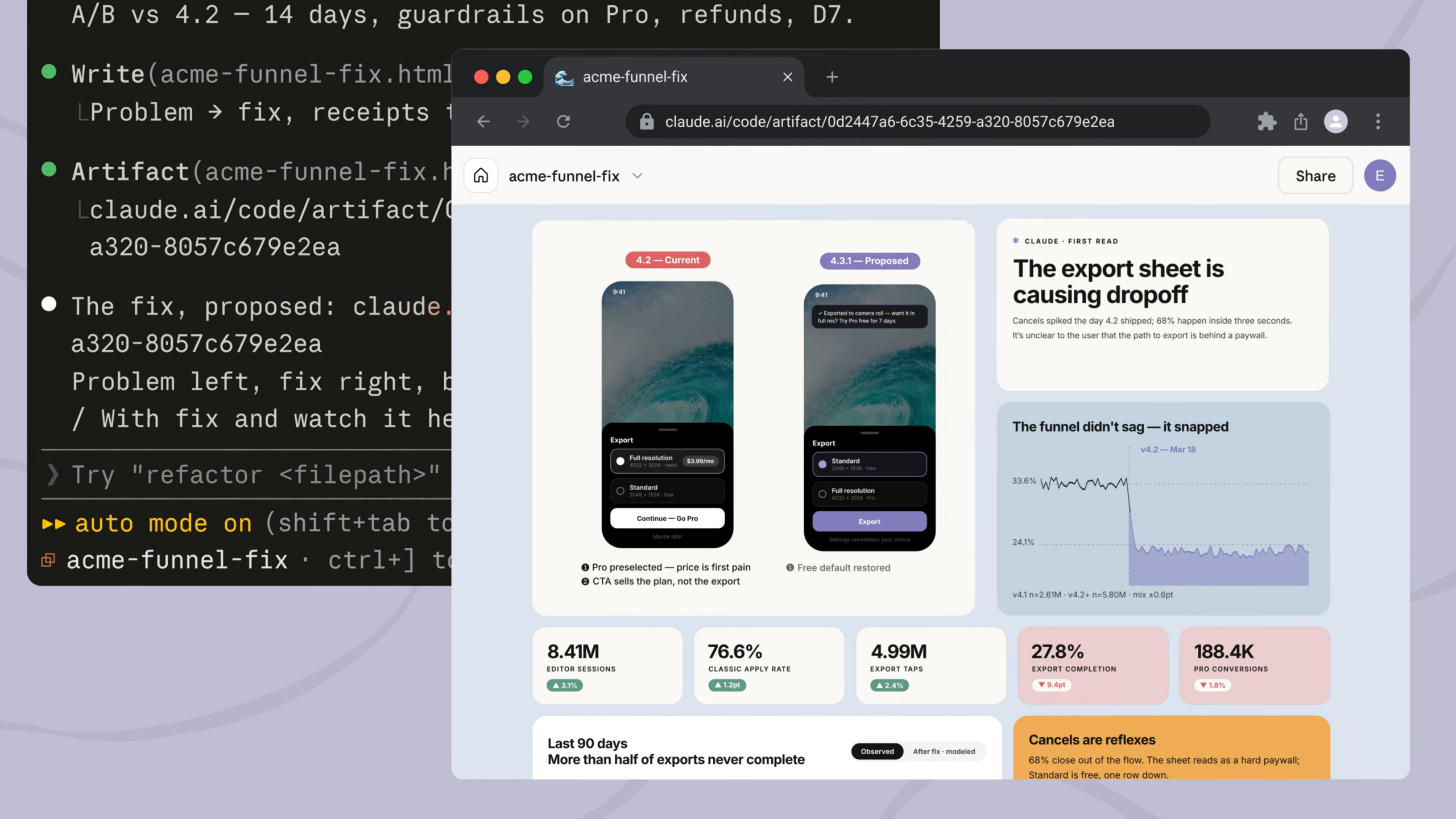
Claude Code now lets teams instantly share live, clickable summaries of coding sessions
Anthropic updated its Claude Code tool on June 18 to produce 'artifacts' — interactive web pages that capture the results of a coding or analysis session. These pages update automatically as the session evolves and keep a full version history, so a developer can share a live, up-to-date snapshot of their work with teammates or managers in one click, rather than copy-pasting results into a separate document.
Developers using Claude Code can now hand non-technical stakeholders a shareable, always-current web page showing project results, cutting out the need for manual status reports.
- 5
Microsoft switches Copilot billing from flat subscription to pay-per-use pricing
Microsoft announced on June 18 that its Copilot enterprise AI platform will move from a fixed monthly license fee to usage-based pricing — meaning companies pay only for how much they actually use, similar to a utility bill. The company is also testing cheaper AI models, including DeepSeek (an AI model developed in China), to reduce the soaring infrastructure costs of running large AI systems at scale.
If your company pays for Microsoft Copilot today, your monthly AI bill will likely become variable — heavy users could pay more, while teams that rarely use it could save money under the new model.
- 6
Adobe adds an AI assistant to Photoshop, Premiere Pro, and other Creative Cloud apps that can handle multi-step tasks on its own
Adobe launched a public beta on June 18 embedding an 'agentic' AI assistant (one that takes sequences of actions autonomously, not just answering single questions) across Photoshop, Premiere Pro, Illustrator, InDesign, and Frame.io. A user can type a plain-language instruction like 'rename all these video clips and update the brand colors across every layout,' and the assistant carries out every step automatically, while leaving final creative decisions to the human designer.
Designers and video editors who spend time on repetitive production tasks — renaming files, resizing assets, updating brand colors — can now hand those chores to Adobe's AI and focus on the creative work that requires human judgment.
- 7
Google's Vertex AI developer toolkit had a flaw that let attackers hijack AI models and run malicious code
Security researchers disclosed on June 17 that a vulnerability in Google Cloud's Vertex AI SDK (a toolkit developers use to build AI-powered apps on Google's cloud) allowed a technique called 'bucket squatting' — where an attacker registers a cloud storage name that Google's tool automatically trusted, then uses it to execute unauthorized code or take control of AI models running in a company's environment.
Any development team that built AI applications using Google Cloud's Vertex AI SDK should check Google's security advisory and update to the patched version to prevent attackers from quietly taking over their AI systems.
What to Watch
Security audits of enterprise AI tools are now a board-level conversation after back-to-back breaches at Microsoft, Meta, and Google in a single week — watch for major AI vendors to announce mandatory security updates and new access controls over the coming weeks, which will directly affect how IT teams configure AI assistants at your company.
Sources
- Anthropic brings Artifacts to Claude Code, letting teams share live pages from coding sessions
- Copilot searched your mailbox. LiteLLM handed out admin keys. Run this 5-check audit before your stack is next
- New AI optimization framework beats Claude Code and Codex by 2.5x on the same compute budget
- Adobe embeds agentic AI workflows across Creative Cloud, shifting from media generation to production orchestration
- Meta (META) Faces AI Support Breach As Key Internal AI Executive Exits
- Microsoft (MSFT) Moves Copilot To Usage Based Pricing As AI Costs Rise
- Google Cloud Vertex AI SDK flaw allowed model hijacking and code execution | brief | SC Media
- Google’s Vertex AI SDK could allow RCE through bucket squatting
- Models at the speed of thought: How AI coding is reshaping theoretical neuroscience
- Facebook Launches Search Engine AI Tool That Could Make Meta $10 Billion A Year, Analyst Says
Share this with a friend
Send today's roundup to anyone who wants to keep up.
Get daily AI news free with AIToday
200+ AI sources, summarized in 1 minute. Email / LINE / Slack.
Sign up free