AI in Healthcare
Jul 3, 2026
The Gist
Genesis AI's PEARL model has achieved breakthrough accuracy in drug discovery, while Meta's non-invasive brain-reading AI is dramatically improving communication for patients who cannot speak, with error rates dropping to 39%. Meanwhile, major pharmaceutical players including Eli Lilly are investing heavily in AI-powered drug development, with Anthropic launching its own drug discovery program and MindWalk patenting new tools to support the field.
Today's Stories
- 1
Genesis AI model PEARL shows drug discovery can finally work—hitting real-world accuracy thresholds
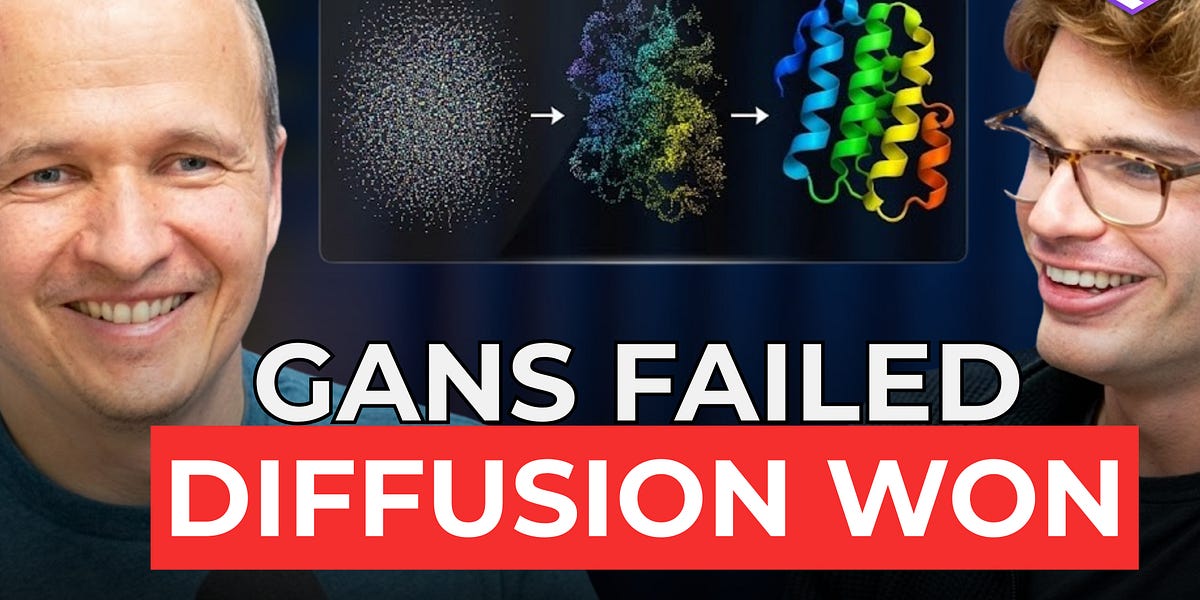
Genesis Molecular AI's PEARL model demonstrated on the OpenBind benchmark that it can accurately predict how small molecules bind to proteins, including modeling protein flexibility and induced-fit effects without fine-tuning on target-specific data. The model outperformed public competitors across evaluation metrics on 802 never-before-seen molecular complexes. Small-molecule drug discovery has long struggled because there are 10^60 drug-like molecules to search, and the properties that make a strong binder often conflict with those needed for the drug to reach its target in the body. PEARL's ability to model both ligand placement and protein adjustment together suggests that agentic drug-discovery loops—where AI iterates like a chemist, forming hypotheses and testing candidates—may now be practically feasible, potentially enabling 24/7 automated discovery cycles when paired with lab partners.
The field has conventionally benchmarked poses at "2 Angstrom RMSD" accuracy, but Genesis argues that 1 Angstrom RMSD is the real threshold needed to correctly model molecular interactions like hydrogen bonds (which span only 0.6Å). PEARL's recent results suggest the community may be ready to abandon the weaker standard and pursue genuinely harder validation targets.
- 2
Meta's non-invasive brain-reading AI cuts word errors to 39%, closing gap with implants
Meta researchers released Brain2Qwerty v2, which reconstructs typed sentences from brain signals measured outside the skull using magnetoencephalography (MEG). The system achieves a 39 percent word error rate, compared to 55 percent for previous methods, and requires ten times more training data than its predecessor to work without knowing exact keystroke timing. Invasive brain implants currently achieve below two percent word error rate, but they require surgery. This non-invasive approach—which works with portable room-temperature MEG sensors—offers a potential path toward clinical brain-to-text communication without surgery, though significant gaps remain and the system is not yet real-time capable.
For the best participant, 28 percent of sentences decoded perfectly, and 47 percent contained at most one wrong word. The researchers found that collecting more recordings is a straightforward way to improve accuracy further, with no performance ceiling visible yet. Tests showed that even half the sensors deliver nearly full performance.
- 3
MindWalk Files Patent for AI Drug Discovery Data Layer
MindWalk Holdings (NASDAQ: HYFT) announced the filing of European patent application EP26187897.9, which covers high-dimensional data structures for biological subsequences and property inference. The patent is intended to protect the enriched biological representation architecture that underpins MindWalk's HYFT® Technology, ReefIQ™ biological context layer, and LensAI™ reasoning workflows. As AI models become more widely available, the company believes lasting advantage in life sciences will come from the data layer—the structured, domain-specific biological representation that lets models and AI agents retrieve, compare, and reason over biology with traceable context. Spending on AI in drug discovery is projected to grow from approximately US$5 billion(約8000億円) in 2026 to more than US$8 billion(約1.3兆円) by 2030, sitting atop the more than US$250 billion(約40兆円) the pharmaceutical industry invests in research and development each year.
The new filing builds on MindWalk's foundational HYFT patent (EP3881326A1) and protects a distinct computational layer—organizing biological meaning around characteristic patterns into a form that can be reused across MindWalk's infrastructure, customer programs, and AI workflows. Recent public work on scientific agents, including NVIDIA's BioNeMo Agent Toolkit and AstraZeneca's ChatInvent system, points to the need for domain-specific context, structured tool interfaces, and reliable input/output schemas when AI agents are deployed in real scientific workflows.
- 4
Eli Lilly backs AI drug startup Absci with $40M bet on injectable antibodies
Eli Lilly led a $100 million(約160億円) stock offering in Absci, an AI drug company, investing $40 million(約64億円) itself. Absci designed ABS-201, an injectable antibody targeting hair loss and endometriosis, using generative AI. The deal closed the same day Absci released positive Phase 1 safety data. Lilly is betting that AI-designed drugs can succeed where traditional approaches haven't—no approved injectable antibody currently treats either condition ABS-201 targets. The deal signals confidence in Absci's strategy to use AI plus lower-cost clinical trials in China to compress development costs from $150 million(約240億円) to $15–$20 million(約32億円), potentially reshaping drug economics.
Absci's broader ambition is to eventually combine ABS-201 with a GLP-1 compound (used for weight loss) into a single shot. The injectable market is projected to be a $650 billion(約100兆円) opportunity in 2026, with GLP-1s alone projected to hit $190–$200 billion(約32兆円) by 2030. Whether ABS-201 becomes the first AI-designed antibody to prove efficacy in humans remains unknown.
- 5
Anthropic launches AI drug discovery program
Anthropic launches AI drug discovery program
- 6
Japanese startup to test pig kidney transplants in humans by 2028
PorMedTec, a startup spun out of Meiji University, announced it will conduct clinical trials transplanting pig kidneys into patients at two hospitals—Hokkaido University Hospital in Sapporo and Shonan Kamakura General Hospital in Kamakura—as early as 2028. The pigs are genetically engineered by U.S. biotech firm eGenesis and have undergone 69 gene edits to suppress immune rejection and reduce disease transmission risk. Japan faces a severe organ shortage, with more than 300,000 people on dialysis and roughly 15,000 waiting for a kidney transplant, while only about 200 transplants from brain-dead donors occur annually. Cross-species transplants could significantly expand access to organs. The Japanese government has designated this field as a key investment priority in its public-private roadmap.
Four clinical trials in the United States have already shown promise, with patients reportedly avoiding dialysis treatment for around nine months at the longest. PorMedTec aims to secure production and marketing authorization after confirming safety in the Japanese trials.
What to Watch
Watch for whether the field's protein-folding standards will genuinely shift toward stricter accuracy thresholds—driven by PEARL's results—and whether this raises the bar for all downstream drug discovery work. Separately, track Absci's ABS-201 as a pivotal test case: if it becomes the first AI-designed antibody to succeed in human trials, it could unlock the broader vision of combination therapies in the multi-hundred-billion-dollar injectable market.
Sources
- 🔬 The Coolest Diffusion Research Isn't in LLMs — Evan Feinberg & Sergey Edunov, Genesis Molecular AI
- Meta's non-invasive brain-to-text AI is closing the gap with surgical implants
- MindWalk (NASDAQ: HYFT) Files Patent for High-Dimensional Biological Data Architecture Powering AI Drug Discovery
- Eli Lilly just placed a $40 million bet on the next injectable boom
- Anthropic launches AI drug discovery program
- Two hospitals in Japan to conduct pig-to-human kidney transplant clinical trials in 2028
- Robot Talk Episode 162 – The robot doctor will see you now
- How FDA Clearance of AI Opioid-Respiratory Monitoring Could Shape Danaher’s (DHR) Clinical Data Advantage
- Stanford researchers will discuss their agentic 'scientists' that are on course to reshape drug discovery at VB Transform 2026
- Shared infrastructure, isolated tenants: Pool model multi-tenancy with Amazon Bedrock AgentCore
Share this with a friend
Send today's roundup to anyone who wants to keep up.
Get daily AI news free with AIToday
200+ AI sources, summarized in 1 minute. Email / LINE / Slack.
Sign up free