Robotics
Jul 29, 2026
The Gist
Agricultural robots are becoming more efficient, with AI-powered farm technology reducing fertilizer usage by 30% and driving the industry toward a $17.20B market by 2033. Meanwhile, warehouse and logistics automation is accelerating—UNIT AI raised $12M for modular systems, LPP Logistics deployed 948 robots in Romania, and DoorDash earned FAA certification for its drone airline. Advances in robotic hardware are also progressing, with Tacta Systems introducing a human-like robotic hand for manufacturing while Claude Fable 5 outperforms competitors in AI physics testing.
Today's Stories
- 1
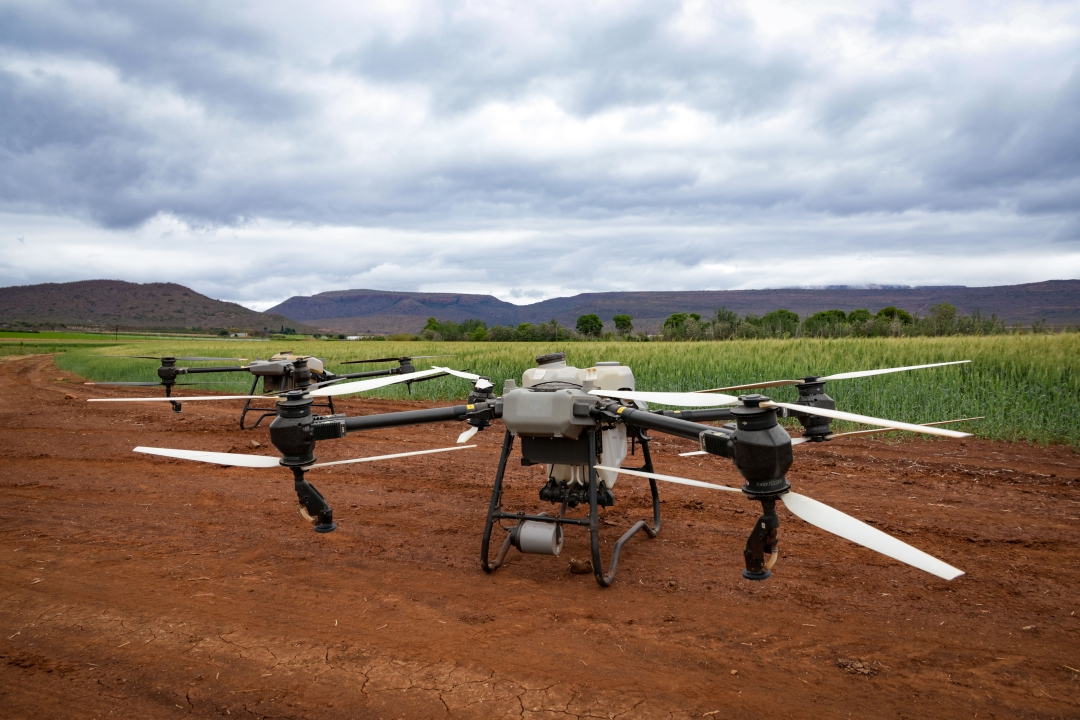
AI farm tech cuts fertilizer use 30%, market headed to $17.20B by 2033
Variable-rate application (VRA)—AI that uses satellite imagery, soil sensors, and real-time data to apply seed, fertilizer, and water precisely to each patch of a field—is driving growth in the Global Precision Farming Market, projected to expand from USD 11.38 billion in 2025 to USD 17.20 billion by 2033 at a CAGR of 5.5%. Equipment makers including John Deere, AGCO, CNH Industrial, and Trimble are embedding this technology directly into tractors and sprayers. Field studies show AI-driven VRA cuts fertilizer use by 10–30% while maintaining or improving yield, and pesticide use drops up to 20%. For growers, fertilizer cost volatility and environmental pressure to reduce nutrient runoff make this efficiency critical; for manufacturers, it marks a shift from precision farming as an add-on service to a built-in machine capability that improves farm economics at scale.
The U.S. leads with 31.2% market share, followed by China at 13.8%, while India (3.8% share) represents an emerging growth opportunity through drone subsidies and digital agriculture programs. Variable Rate Technology (14.7% share) and IoT (13.4%) are expanding fastest as growers seek to optimize input costs.
- 2
UNIT AI raises $12M for modular warehouse automation
UNIT AI raised $12M in funding from Prologis Ventures and Dynamo (an investor in sennder) to advance modular warehouse automation technology. Warehouse automation has traditionally required large upfront capital and custom engineering; modular approaches could make the technology more accessible and cost-effective for a wider range of logistics operators and facility owners.
The funding underscores investor confidence in modular automation as a path to scaling warehouse operations beyond the largest facilities that can afford bespoke systems.
- 3
LPP Logistics deploys 948 robots in Romanian fulfilment centre
LPP Logistics, the logistics arm of fashion retailer LPP Group, deployed Hai Robotics' HaiPick System 3 at its new fulfilment centre near Bucharest, Romania. The system combines 278 automated case-handling robots with 670 autonomous mobile robots, providing over 625,000 automated storage locations with capacity to store up to 7.5 million garments and accessories. The installation addresses rising e-commerce order volumes across Southeastern Europe (Romania, Bulgaria, Serbia, Greece, and Hungary) while allowing LPP Logistics to expand capacity without disrupting operations. The system reduces warehouse operators' walking distance by bringing storage containers directly to picking stations, improving picking productivity and workflow consistency.
The facility can process more than 80,000 customer orders each day and handle more than 9,400 totes per hour. The centre was designed with scalability in mind, allowing additional robots and workstations to be added as demand increases without major infrastructure changes. Deployment took less than six months.
- 4
DoorDash Builds Drone Airline, Earns FAA Carrier Cert
DoorDash earned an FAA Part 135 air carrier certificate and launched DoorDash Air, becoming the eighth drone operator in the United States with that approval. The company is building its own aircraft, airline operations, ground infrastructure, routing systems, and merchant tools rather than relying solely on delivery partnerships. DoorDash has completed more than 10 billion lifetime deliveries and identified a key gap: orders between three and five miles take nearly 25% longer to fulfill because they are harder to match with drivers. The company's internal data shows drones can complete deliveries under five miles in an average of less than 25 minutes, and businesses in its pilot programs saw order volume rise by roughly 30%. By owning the full delivery stack—from aircraft to merchant infrastructure to dispatch—DoorDash is positioning itself to scale drone delivery across its existing marketplace more tightly than standalone drone operators can.
DoorDash's Autonomous Delivery Platform now assigns each order in real time to a Dasher, Dot (its ground robot), a drone, or an outside delivery partner based on the order, route, and available options. The company is also building merchant tools like SmartScale, which confirms order accuracy and weight to determine drone suitability. As a Part 135 air carrier, DoorDash must now maintain approved operating procedures, maintenance programs, safety systems, training, and regulatory compliance—a larger responsibility than simply partnering with other operators.
- 5
Claude Fable 5 tops GPT-5.6 models in physics-based AI test
JuliaHub tested four frontier AI models (Claude Fable 5, GPT-5.6-terra, GPT-5.6-sol, GPT-5.6-luna) on five physics modeling and simulation problems. Claude Fable 5 scored 0.889 on the weighted difficulty scale, highest in the group; GPT-5.6-terra scored 0.786, sol 0.814, and luna 0.727. Fable was the only model to solve all twelve trials on the four core problems and led on the hardest problem (NASA's HL-20 flight vehicle), where no model fully succeeded. Physical AI systems must encode correct physics, not just produce code that compiles—a failure mode that agentic AI amplifies. JuliaHub's independent evaluation tests against sealed ground truth rather than relying on vendor self-reported benchmarks, revealing which models actually handle real-world engineering constraints. Fable's superiority comes at a cost: $9.60 per trial ($124.76 for the full study), three to eight times the price of the GPT variants, while GPT-5.6-sol offers a middle ground at a fifth of Fable's cost with the second-highest score.
The study's inverse experiment showed that the harness (the AI agent framework and tooling) matters more than model choice alone—varying the harness while holding the model constant produced a 0.366-point score gap, more than double the 0.162 gap between the best and worst models. The choice between models reflects different tradeoffs: Fable prioritizes correctness through deep verification; sol balances performance and cost; terra economizes on speed and price but cuts margins; luna trails on all axes.
- 6
Tacta Systems unveils robotic hand with human-like touch for manufacturing
Tacta Systems launched TactaBot, a robotics platform combining a 15-joint robotic hand, a wearable skill-capture glove, and an AI engine designed to perform complex manufacturing tasks. The company plans to begin deploying the technology with manufacturing customers in early 2027. The system addresses three longstanding obstacles in industrial robotics—building a hand capable of industrial-scale performance, giving robots tactile feedback, and collecting human manipulation data to train AI. This may open automation to precision electronics assembly, connector insertion, and wire harness assembly, tasks that have remained difficult for robots to perform reliably.
Tacta has raised $75 million(約120億円) from investors including SoftBank, Matter Venture Partners, and Woven Capital. The company plans to launch first with electronics, AI infrastructure, and automotive manufacturing, then expand into medical devices, aerospace, and defence.
What to Watch
Watch for India's robotics sector to accelerate as government drone subsidies and digital agriculture investments mature, potentially reshaping global market dynamics beyond the current U.S.-China dominance. Meanwhile, the rapid scaling of modular automation platforms—demonstrated by companies like DoorDash expanding autonomous delivery across multiple vehicle types and facilities deploying robots in under six months—suggests we're entering an era where robotics can finally serve mid-sized operations, not just massive enterprises.
Sources
- AI Is Teaching Tractors to Think Field by Field, Not Farm by Farm
- UNIT AI raises $12M from Prologis Ventures and sennder-backer Dynamo to modularise warehouse automation
- Case study: Hai Robotics helps LPP Logistics scale automated e-commerce fulfilment in Romania
- DoorDash Is Building More Than a Drone Delivery Service
- GPT-5.6 vs. Claude Fable 5 for Physical AI, which performs best?
- Tacta Systems unveils AI-powered robotic hand for high-value manufacturing
- Sapphire launches AMD-powered robotics platform for physical AI applications
- mimic robotics introduces ‘frontier video-action models’ to the factory floor at Audi
- Neura Robotics expands global physical AI training network in partnership with RWTH Aachen University
- New 3D-printed barracks open at Fort Bliss AI
Share this with a friend
Send today's roundup to anyone who wants to keep up.
Get daily AI news free with AIToday
200+ AI sources, summarized in 1 minute. Email / LINE / Slack.
Sign up free