AI Coding Assistants
Aug 29, 2026
The Gist
Google DeepMind’s AI Co-Scientist can now run lab experiments and draft papers, while tools like Harness are adding AI review and auto-patching to code repositories. Meanwhile, the rise of "vibe coding" means even non-programmers and students are building apps, shifting engineers' roles toward managing AI agents. The bottom line: AI is moving from suggesting code to owning entire development and research workflows.
Today's Stories
- 1
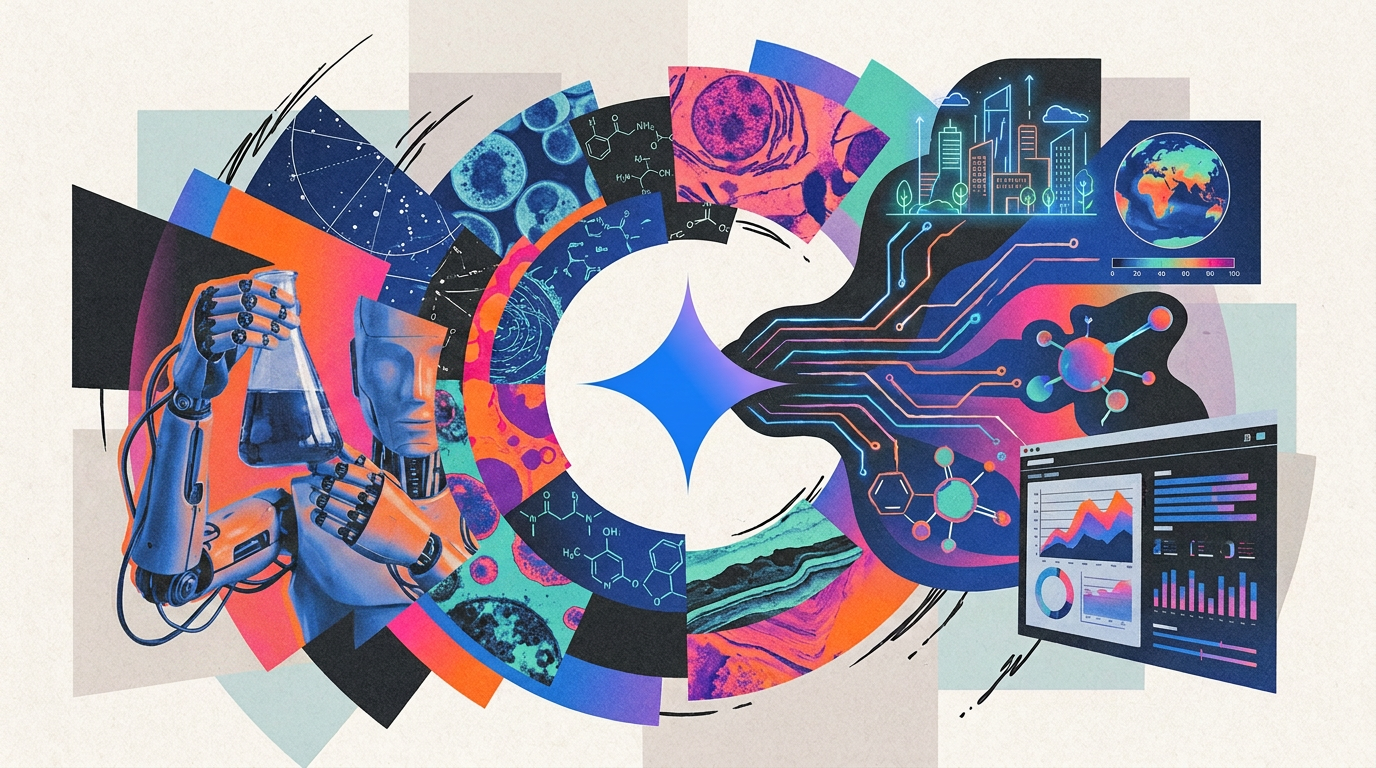
Google DeepMind's AI Co-Scientist now runs lab experiments and writes papers
Google DeepMind has expanded its multi-agent system Co-Scientist into a lab-integrated research partner. It now plans experiments, writes code, controls lab equipment, and generates scientific manuscripts, not just hypotheses. The system has delivered experimentally validated results across three disciplines—materials science, biology, and computer science. Reliability modules cut fabricated key results down to 4 percent, compared to 90 percent for a comparison system.
In a fully autonomous computer science experiment, the system designed an AI architecture that outperformed six frontier models on health benchmarks after correction, but only showed a significant advantage over the baseline in one of nine categories under human evaluation. The gap between lab assistant and autonomous researcher remains wide.
- 2
Vibe coding enables self-taught app development
A Nikkei newsletter describes how people are using vibe coding, a method of developing apps by describing what they want in natural language, to teach themselves app development without formal training. This approach reportedly makes app creation accessible to non-engineers, and the article suggests it can be an interesting starting point for those who take the first step. The newsletter is part of Nikkei's News Catch Up, which delivers five curated news stories to subscribers.
The article highlights the experience of diving into vibe coding, framing it as an enjoyable entry point, though it does not provide specific outcomes, numbers, or technical details beyond the concept itself.
- 3
AI coding agents turn every engineer into a manager
With AI tools like Claude, Codex, Grok, and Kimi handling code writing, software engineers (ICs) now manage teams of bots instead of writing code directly. This shift means ICs face manager-like challenges such as multitasking and tracking many concurrent work threads, making deep focus less important than coordinating agents toward outcomes.
The traditional split between ICs and managers may blur further as the role of an engineer evolves toward overseeing AI agents.
- 4
Harness launches agent-ready code repository and AI review
Harness Inc. today announced Agent-Ready Harness Code Repository and AI Code Review. These tools are designed for teams using AI coding agents that produce code faster than humans can review and deploy. CEO Jyoti Bansal says today's code management expects humans to write and review code, a model overwhelmed by AI agents that generate volumes in minutes. Harness aims to rebuild this layer to handle thousands of pull requests at once, with each agent inheriting permissions from its human trigger.
Internal testing over the last month saved an estimated 10,000 hours. The system uses Model Context Protocol and command-line interfaces, enabling programmatic control and lower AI token costs.
- 5
MCA final-year student seeks real-world AI project ideas
An MCA student with experience in Python, LangChain, Chroma, HuggingFace, and FastAPI is asking for real-world AI project ideas that companies like IBM or Google would actually need solved, not generic tutorials. The student's project guide wants a problem with genuine business value, enough depth to defend under tough viva questioning, and something realistic for one person to build in a few months without being trivial.
The student is looking for projects that impressed committees or recruiters, seeking ideas that stand out from typical final-year submissions like sentiment analysis or spam classifiers.
- 6
Visa ships security AI that auto-patches code
Visa's open-source security harness now finds vulnerabilities, writes fixes, and runs an adversarial panel on its own patch before any human review. The full loop ships on by default, running all 11 stages and editing source files unless capped at detection. The default is the opposite of what Steve Wilson, Exabeam's Chief AI and Product Officer and OWASP Top 10 for LLM Applications co-lead, advised two days earlier: 'put an authorization gate outside the model.' This could raise concerns about AI autonomy in security.
The release follows Tenet Security's GhostJacking demo at DEF CON 34, where an agent read a payload from a log file and rewrote DNS with a valid credential—illustrating risks that Visa's harness aims to counter.
What to Watch
Watch for the next wave of AI coding tools to shift from assisting humans to acting more independently—and for the security guardrails around those autonomous agents to become just as important as their productivity gains.
Sources
- Google Deepmind's AI Co-Scientist now plans experiments, runs lab equipment, and writes scientific papers
- バイブコーディングで独学アプリ開発 「踏み出してみると面白い」
- Every Engineer a Manager
- Harness tackles influx of agent-delivered code with Code Repository and AI Code Review
- MCA final year — need a real-world-scale AI project idea, not a toy/tutorial-level one[D]
- Visa ships a security AI that patches production code before any human reviews it
- 2035年、AI推論需要の半分は「コード生成」に 推論市場の今と未来
- #501 – DHH: Future of Programming, AI, Agentic Engineering, Vibe Coding & Linux
- AI vs. SaaS: Will vibe-coded apps replace Salesforce and ServiceNow?
- GitHub Copilot app for Beginners: Automate Dependabot pull request triage
- Evaluate any agent framework with Amazon Bedrock AgentCore Evaluations
- IBM drops open-weight Granite 4.2 family with built-in agentic capabilities under Apache 2.0
- How loveholidays is making everyone a builder with Codex
- Looking for people to follow designing systems to ship code with AI agents
- Kraftapp AI – Describe it. We build it. Customers find it
- How we built a SOTA search engine using PostgreSQL, pgvector, and Qwen3 embeddings [P]
Share this with a friend
Send today's roundup to anyone who wants to keep up.
Get daily AI news free with AIToday
Today's AI, for Today's work. Email / LINE / Slack.
Sign up free